Background
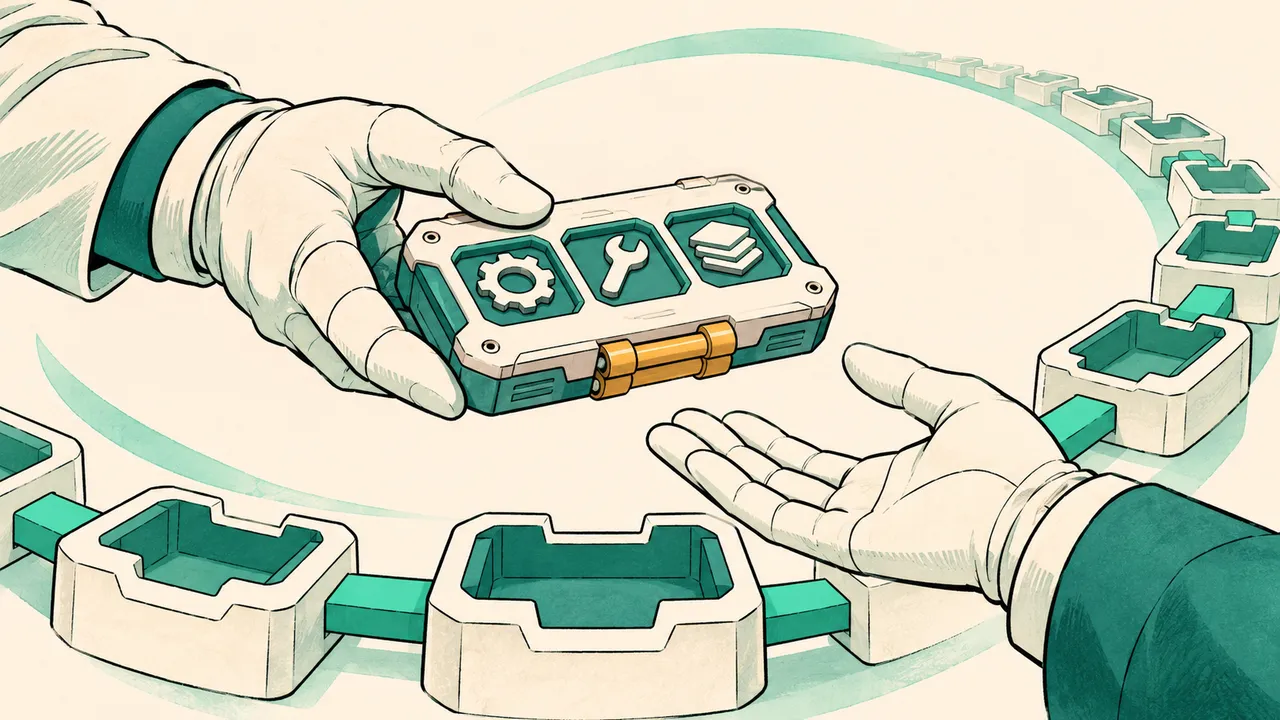
A model that only produces text can suggest code. An agent has to run it. In practice that means editing files inside a project, typing commands into a terminal, opening a page in a browser to read documentation, and then reading what came back before deciding on the next step. Handing a program that much freedom raises an obvious problem: a wrong command can delete files, break the environment, or reach the network in ways nobody intended. An agent platform therefore has to supply both capability and containment.
What happened
On 23 July 2024 a preprint describing a platform of this kind was submitted to arXiv, numbered 2407.16741[1]. At that point the project was still called OpenDevin[1]. The paper presents an open platform for AI software developers, built to serve as a generalist agent[1].
How the platform is put together
The three capabilities the paper describes are writing code, using a command line and browsing the web, all inside sandboxed environments[1]. A sandbox is an isolated execution space: the agent gets a working system with a shell, a file tree and network access, but what happens inside is separated from the machine that hosts it, so a bad command costs a container rather than a workstation. Keeping the agent inside that boundary is what makes it practical to let it act on its own for many steps — reading an error message, editing a file, running the code again — without a person approving every move.
An open project
The authors report more than 2.1K contributions from over 188 contributors[1]. That figure describes something different from a typical research prototype, which usually arrives with a short author list and a fixed codebase. A contribution count in the thousands implies that the platform was developed in the open, with outside developers adding capabilities, fixing bugs and adapting it to their own uses while the paper was being written.
Why it matters
The hard part of putting an agent to work on software is often not what the model generates but the engineering around it: how actions are executed, how they are isolated, how multiple steps are chained together, and how the system recovers when a step fails. Writing that layer up as a paper and releasing it openly lets other people see those choices, compare against them, or take the platform and modify it.
What came after
The work was later accepted at ICLR 2025[1]. The project's site now presents OpenHands as an open platform for agentic software development, offering a managed cloud service alongside an enterprise edition[2]. The paper appeared under the name OpenDevin; the name the project now uses is OpenHands[1][2].
Sources
- 1
- 2
Cite this page: OpenHands platform published. TellWorld, https://www.tellworld.net/news/openhands-2024. Updated 2026-11-08