1987–1992 · 13 key events · 19 related people, organisations and concepts
Second AI winter
The specialised hardware market collapses and interest fades again.
1988
ALVINN: An Autonomous Land Vehicle in a Neural Network
A 3-layer back-propagation network that takes camera and laser range finder images and outputs the direction to steer, trained on simulated road images and tested on Carnegie Mellon's autonomous navigation test vehicle.
John McCarthy receives the 1988 Kyoto Prize
In 1988 the Kyoto Prize in Advanced Technology went to John McCarthy, honoured for founding artificial intelligence and for inventing LISP, the programming language built for symbol manipulation rather than numerical calculation.
Learning to predict by the methods of temporal differences
Richard Sutton's 1988 paper introduced temporal-difference learning, a family of incremental prediction methods that assign credit from changes between successive predictions and are shown to be more economical and accurate than conventional supervised approaches on most prediction problems.
1989
Backpropagation Applied to Handwritten Zip Code Recognition
In 1989 LeCun and colleagues at AT&T Bell Laboratories trained a convolutional network with backpropagation to read handwritten zip-code digits from U.S. mail, reaching 5.0% test error. The work showed that the convolutional design could be learned end to end on a real task.
1990
Chinook becomes the first program to win the right to play for a human world championship
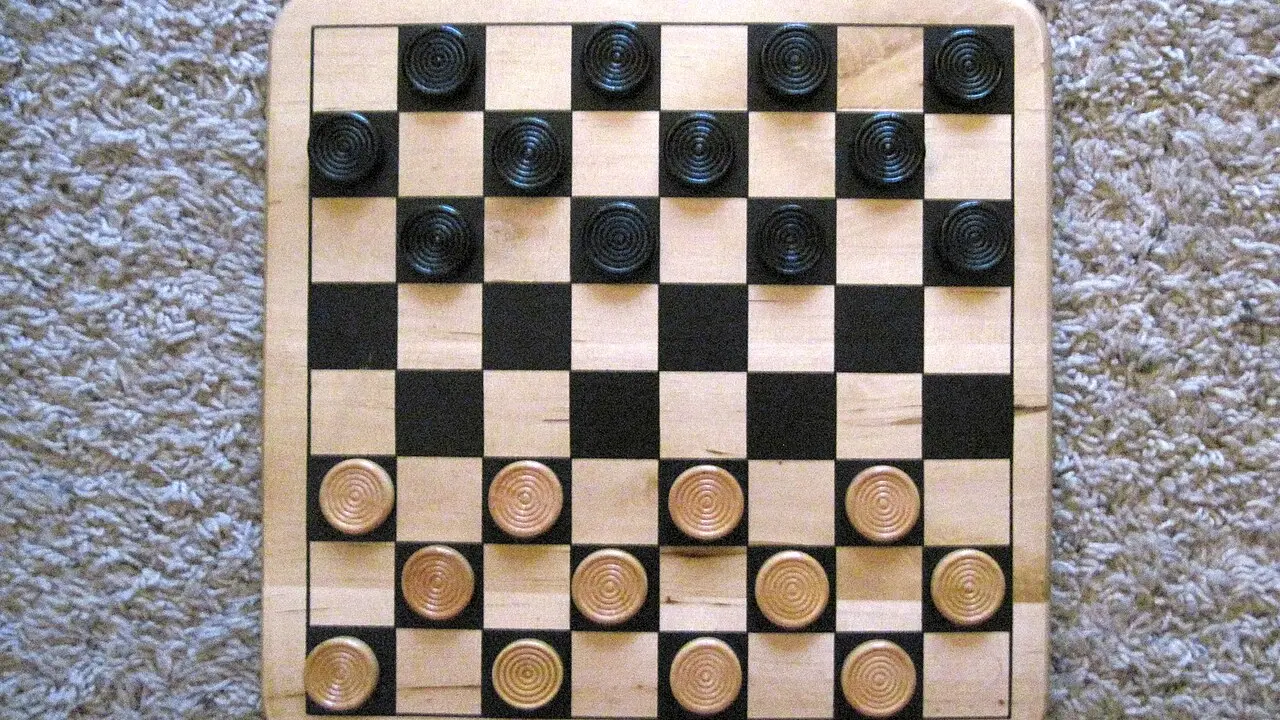
In 1990, Chinook became the first program in any game to earn the right to play for a human world championship, beginning a path that led to a championship and, later, a solved checkers game.
Hugh Loebner establishes the Loebner Prize
In 1990, New York philanthropist Hugh Loebner offered $100,000 for the first machine to pass a restricted Turing Test, launching a public contest hosted by The Computer Museum.
Elephants Don't Play Chess
Rodney Brooks's 1990 paper argued for building artificial intelligence from the ground up, with ongoing physical interaction with the environment as the main constraint on design, rather than through the abstract manipulation of symbols that had dominated the field for roughly thirty years.
1991
The first Loebner Prize competition is held
On 8 November 1991 the first Loebner Prize competition was held at The Computer Museum, where Joseph Weintraub's PC Therapist fooled five of ten judges and won a $1,500 award and a bronze medal.
1992
Q-learning
A 1992 technical note by Watkins and Dayan that set out Q-learning, an incremental and computationally light way for an agent to learn optimal action values, and proved it converges to the optimum with probability 1.
TD-Gammon developed at IBM
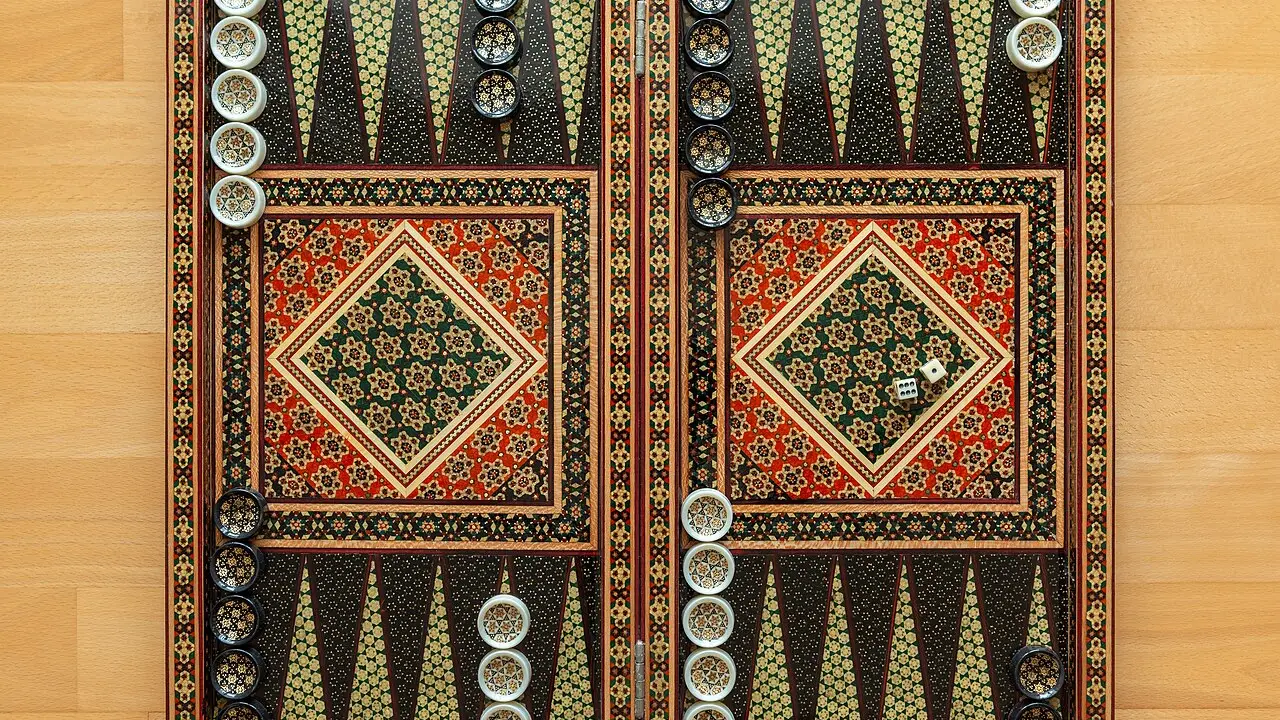
TD-Gammon was an IBM backgammon program built by Gerald Tesauro that taught itself to evaluate positions by playing against itself with temporal-difference learning, reaching a level just below top human players and becoming an early landmark for reinforcement learning.
Robot soccer is proposed as an AI grand challenge
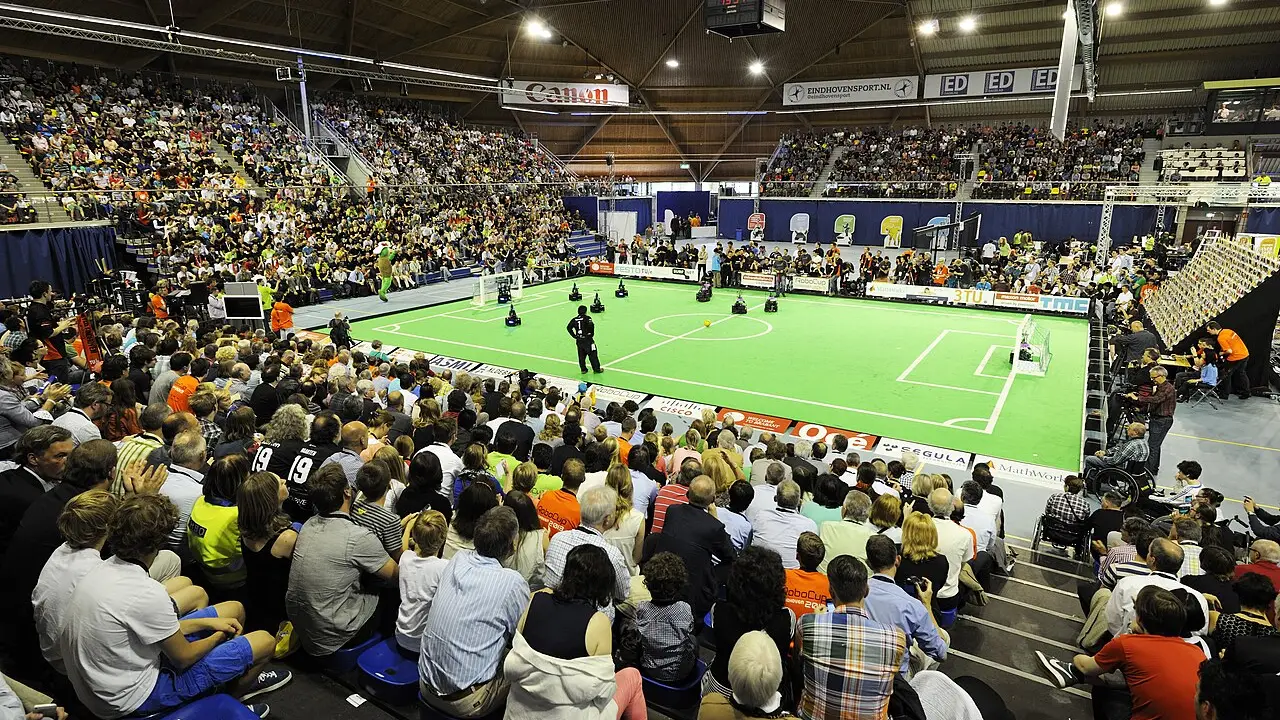
In 1992, Alan Mackworth's paper on seeing robots and a Tokyo workshop on AI grand challenges independently put forward robot soccer as a way to drive AI and robotics research.
Practical issues in temporal difference learning (TD-Gammon)
Gerald Tesauro's 1992 paper tested whether temporal difference learning could master a complex real-world task, using self-play backgammon as the case study.
A Training Algorithm for Optimal Margin Classifiers
Published in 1992, this paper by Boser, Guyon and Vapnik presents a training algorithm that maximizes the margin between training patterns and the decision boundary, with experiments on optical character recognition.[^1]