1956–1972 · 14 key events · 35 related people, organisations and concepts
Golden years
Early programs solve puzzles, prove theorems and hold simple conversations; expectations run high.
1958
The Perceptron: A Probabilistic Model for Information Storage and Organization in the Brain
In 1958 Frank Rosenblatt described the perceptron, a model whose connection strengths change with training so that it learns to classify stimuli by trial and error. It became the starting point for trainable neural networks.
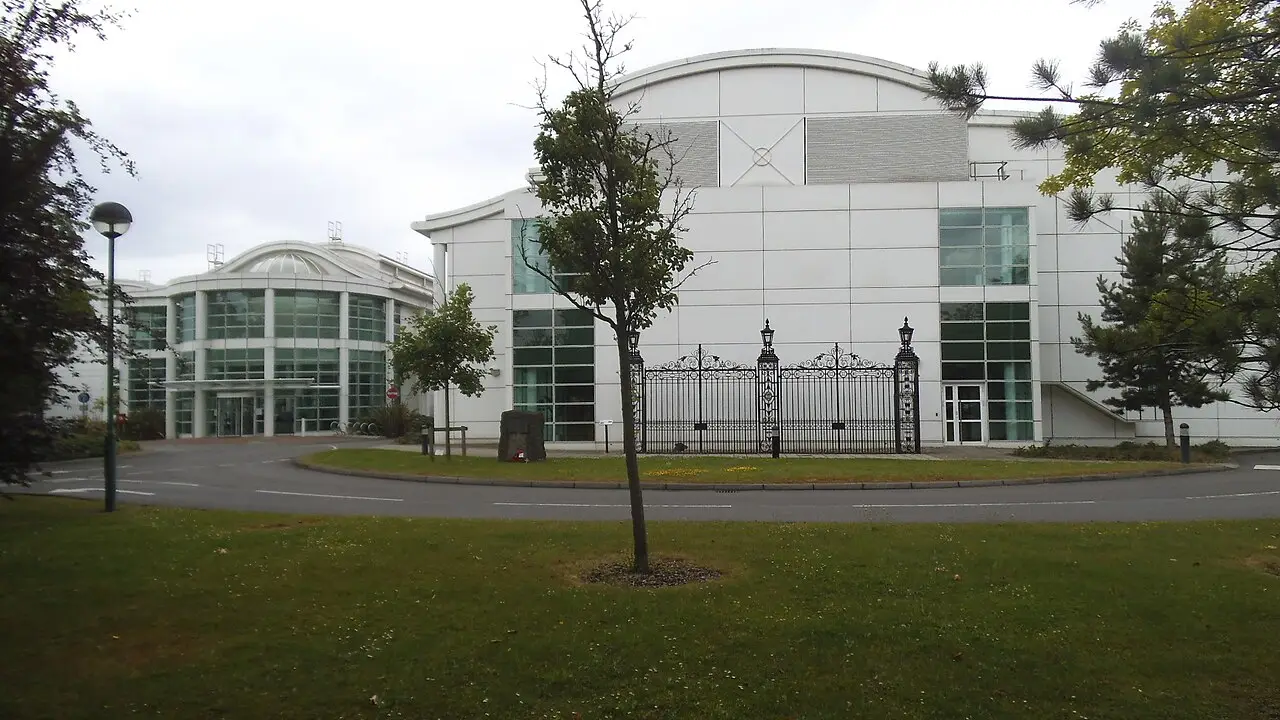
Symposium on the Mechanization of Thought Processes is held at the National Physical Laboratory
A four-day symposium held at the National Physical Laboratory in November 1958, where Minsky, McCarthy, Selfridge, Rosenblatt, Backus and Hopper presented early work on machine intelligence; its two-volume proceedings appeared in 1959.
1959
Programs with Common Sense
John McCarthy's 1959 paper proposing the advice taker, a program that would solve problems by manipulating sentences in formal languages and act when it deduced an imperative — an early statement of logical AI.
Some Studies in Machine Learning Using the Game of Checkers
A. L. Samuel's 1959 paper reporting experiments in which a checkers program, given only the rules of the game and an imperfect set of parameters, learned in 8 to 10 hours of playing time to beat the person who wrote it.
1961
Unimate enters the General Motors assembly line
In 1961 a Unimate robot began unloading a die-casting press at a General Motors plant in Trenton, New Jersey, becoming the first industrial robot on an assembly line and opening factory work to automation.
Steps Toward Artificial Intelligence
Marvin Minsky's 1961 survey in Proceedings of the IRE organized heuristic programming into five problem areas — search, pattern recognition, learning, planning and induction — and argued that machines would need to build models of their environments.
1962
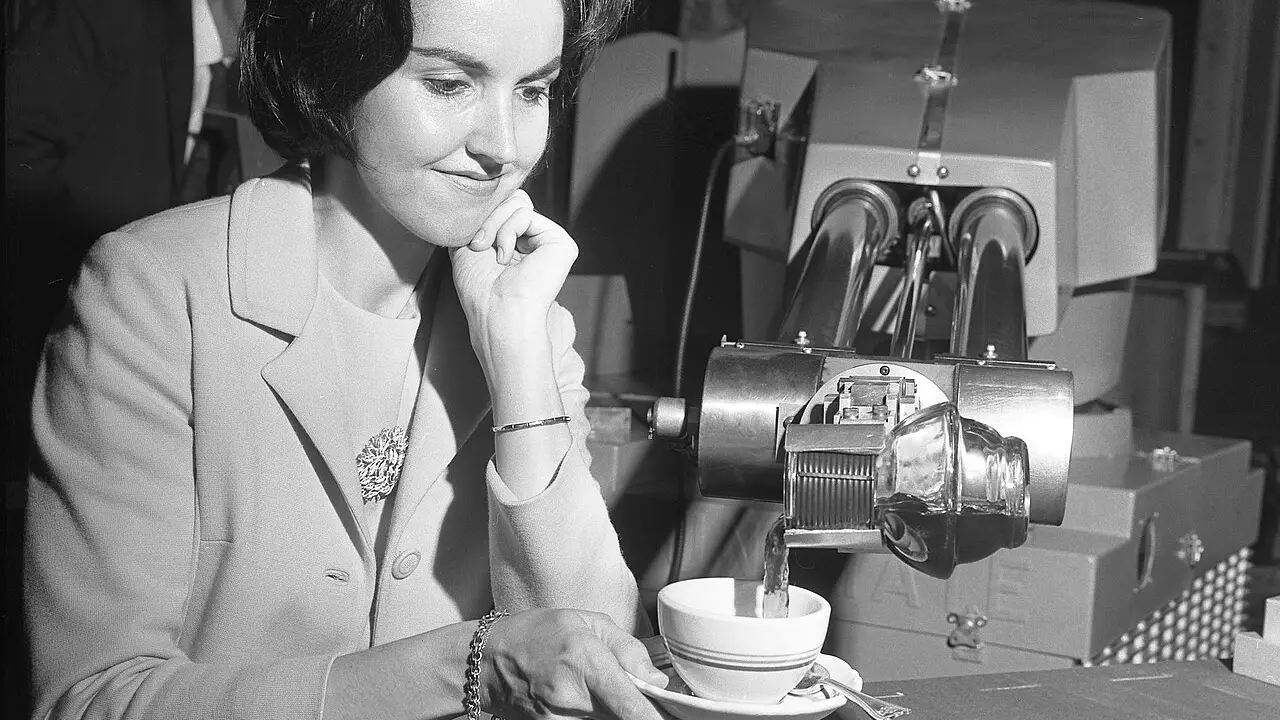
ACL founded as the AMTCL in 1962
On 13 June 1962, nine researchers founded the Association for Machine Translation and Computational Linguistics, which in 1968 became the Association for Computational Linguistics — the professional society that organises the field's meetings and publications.
1966
The ALPAC report on machine translation
The 1966 report of the Automatic Language Processing Advisory Committee, a seven-scientist panel led by John R. Pierce, judged machine translation slower, costlier and less accurate than human translation, and was followed by a sharp cut in US funding.
ELIZA - A Computer Program for the Study of Natural Language Communication Between Man and Machine
A January 1966 paper by Joseph Weizenbaum presenting ELIZA, a program on MIT's MAC time-sharing system that used keyword-triggered decomposition and reassembly rules to enable certain natural-language conversations between people and computers.
1969
Minsky and Papert publish "Perceptrons"
In 1969 Marvin Minsky and Seymour Papert published Perceptrons, a mathematical analysis of what perceptrons cannot compute. The book is often credited with contributing to a decline in neural-network research.
Perceptrons: An Introduction to Computational Geometry
A 1969 book by Marvin Minsky and Seymour Papert that proved mathematical limits on what single-layer perceptrons can compute — notably that they cannot compute parity or connectedness — and has long been credited with steering research away from neural networks.
Marvin Minsky receives the 1969 ACM Turing Award
In 1969 the ACM named Marvin Minsky a Turing Award laureate for his central role in creating and shaping artificial intelligence. He had co-founded MIT's AI laboratory and written an early paper that put symbol manipulation at the centre of the field.
The First International Joint Conference on Artificial Intelligence is held in Washington, DC
The First International Joint Conference on Artificial Intelligence was held in Washington, DC, from 7 to 9 May 1969, with proceedings covering theorem proving, robotics, natural language parsing and heuristic search; it began a conference series held every other year since.


1971
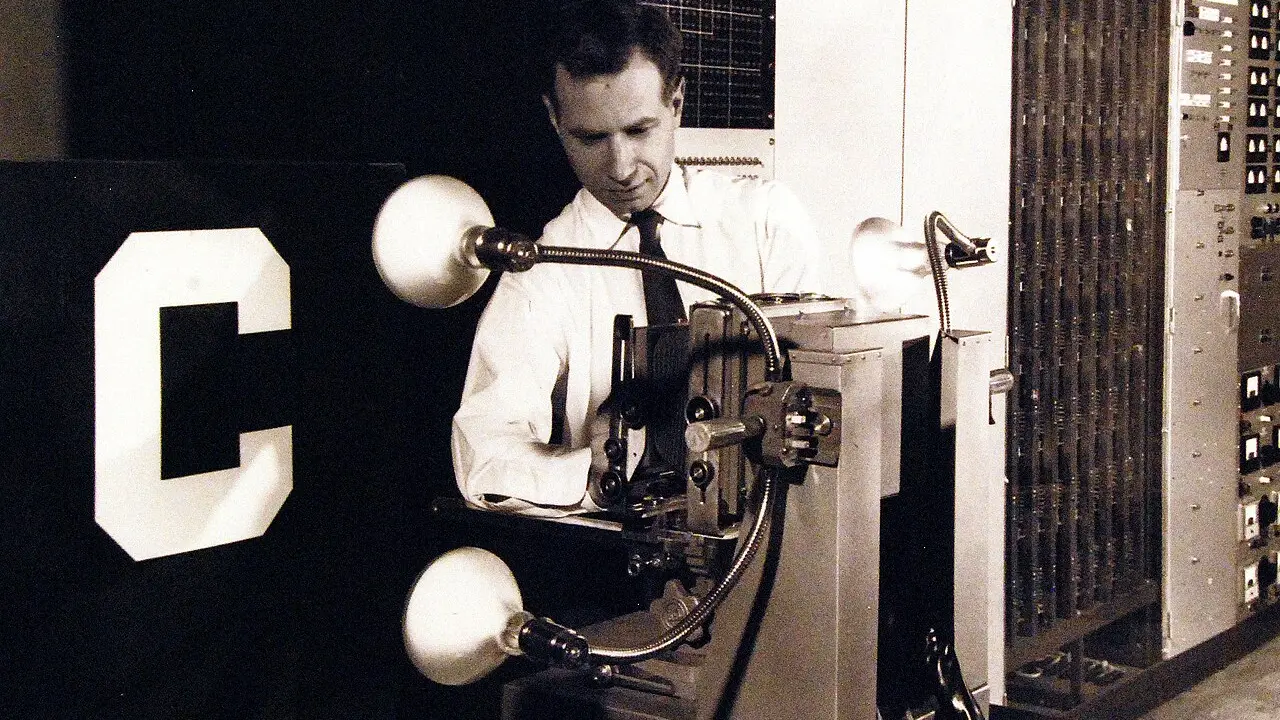
John McCarthy receives the 1971 ACM Turing Award
In 1971 the ACM gave John McCarthy the A.M. Turing Award, honouring the researcher who named artificial intelligence, co-founded MIT's AI Project and created the LISP language.