Background
Assembly-line work rests on a simple arrangement: the product moves, the worker stays put, and each station repeats one motion. Some of those motions are easy; many are not. A die-casting press is one of the harder cases. It forces molten metal into a steel mould under pressure, and what comes out is a part that is already in its final shape but is still extremely hot. Someone has to take that part out of the machine and move it along.
What happened
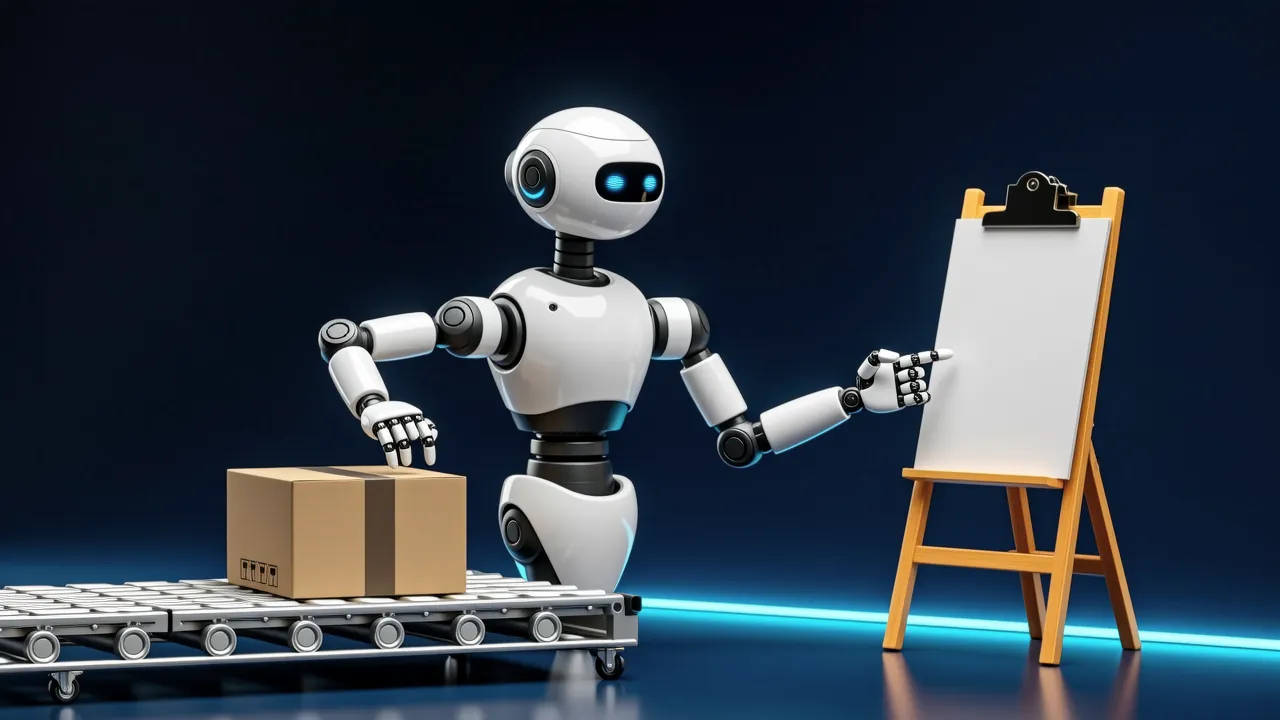
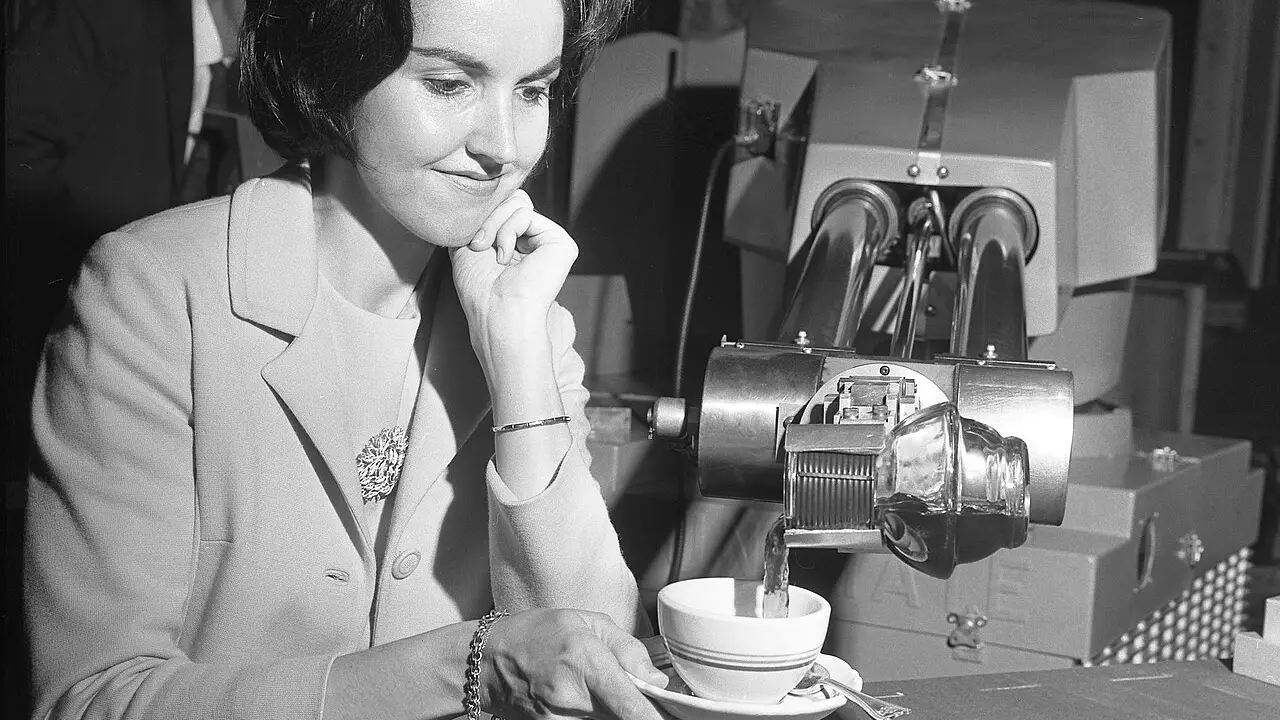
In 1961 the first Unimate was installed on an assembly line at a General Motors plant in Trenton, New Jersey [1]. The robot's job was to unload a die-casting press [1]. One account describes a working Unimate joining a General Motors assembly line in the spring of 1961 and feeding hot die-cast parts, door handles among them, into a coolant bath [3].
The job it took over
The task had been done by people before the machine arrived. The same account describes that work as physically demanding and hazardous for human operators, because of the hot metal [3].
The coolant bath is the part of the sequence that makes the hazard concrete. A part coming straight out of a die is too hot to be handled or stacked, and it has to be cooled in a controlled way so that it settles into its final shape rather than distorting. Dropping it into a bath of coolant does both jobs at once. Doing that by hand, at the pace a press runs, means reaching into the same hot spot over and over.
That repetition is exactly what a machine is good at. A press cycles at a steady rhythm, and the arm serving it can keep the same rhythm for a whole shift: the same reach, the same grip, the same release. The weak part of the loop is the human body, which tires and which is at its least careful right next to hot metal. Putting a robot at that point separates the person from the heat and keeps the press fed at a constant rate.
The company behind it
Devol and Engelberger founded Unimation in Connecticut in the same year [3]. Other manufacturers followed the first installation: Chrysler, Ford and Fiat later became buyers of Unimate robots [3].
Why it matters
What makes the Trenton installation worth recording is that the robot was doing ordinary production work on a line rather than being demonstrated. Unimate's adoption opened the way for heavy, repetitive and monotonous factory tasks to be done by industrial robots [2]. That is a narrower claim than it may sound, and a more durable one: the tasks that moved to machines first were the ones that were dull, physically punishing or dangerous, and that could be specified in advance as a fixed sequence of motions. A machine set up for one job does that job and nothing else, which is why it suits a press that makes the same part all day and suits poorly anything that needs judgement. The line of reasoning that began with unloading a die-casting press, however, is the one that later factory automation kept extending.
Sources
- 1
- 2工业机器人科普中国
- 3史海回眸:1959年,机器人首入汽车生产线环球时报 / 人民日报全国党媒信息公共平台
Cite this page: Unimate enters the General Motors assembly line. TellWorld, https://www.tellworld.net/news/unimate-1961. Updated 2026-11-08