Background
The crash involved a prototype Uber self-driving car built on a Volvo XC90, running in autonomous mode on a public road in Arizona with a human safety backup driver in the driving seat [1]. How such testing was overseen by the state later became part of the investigation's findings [2].
What happened
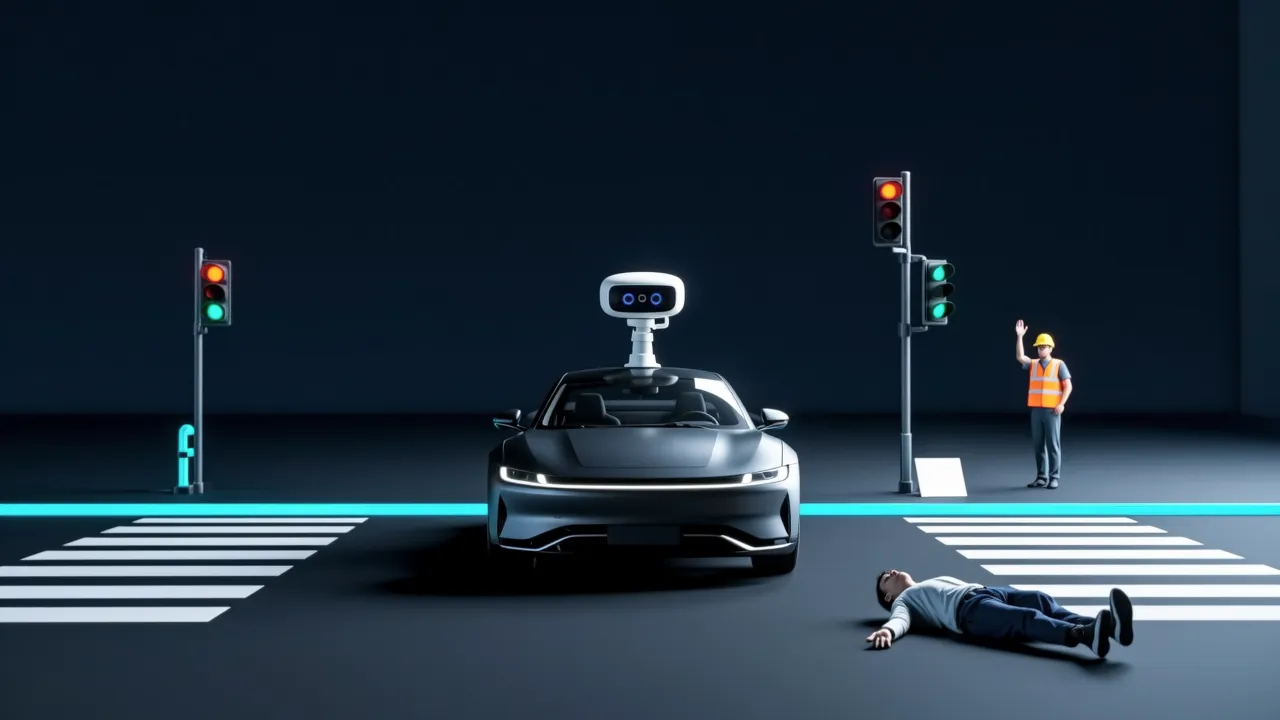
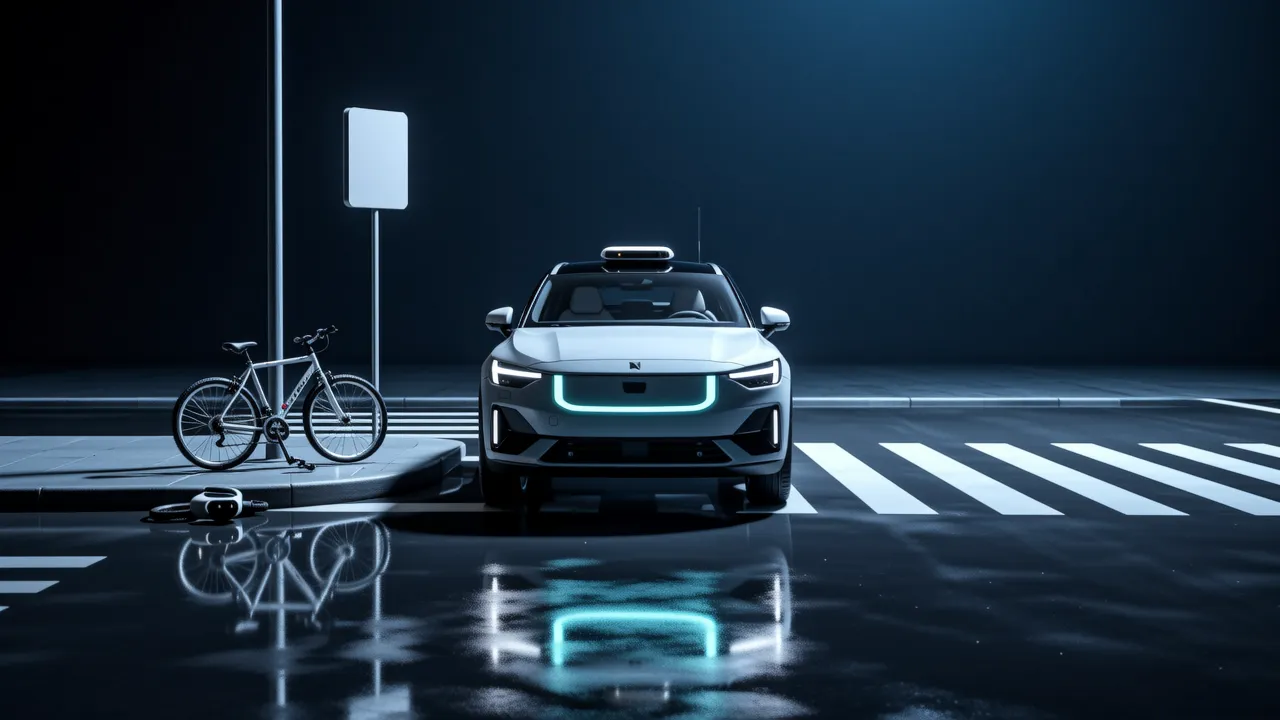
The collision occurred late in the evening of 18 March 2018 in Tempe, Arizona, at approximately 9:58 pm MST [1]. Elaine Herzberg, aged 49, was pushing a bicycle across a four-lane road when she was struck by the prototype Uber vehicle [1]. The car had been operating in autonomous mode since 9:39 pm, nineteen minutes before the collision [1]. A human safety backup driver, Rafaela Vasquez, was in the driving seat and did not intervene in time [1].
What the system saw and did
The National Transportation Safety Board (NTSB) released a preliminary incident report on 24 May 2018 [1]. Its investigation is numbered HWY18MH010 and the final report is HAR-19-03 [2].
According to the final report, the automated driving system recorded the SUV approaching the collision site in the right lane at 45 mph [2]. The board's findings also state that the vehicle was travelling 43 mph when Herzberg was first detected, 6 seconds before impact, and that for 4.7 seconds the self-driving system did not infer that emergency braking was needed [1]. The final report puts the first detection at 5.6 seconds before impact and notes that the system never accurately classified her as a pedestrian or predicted her path [2].
Telemetry showed repeated reclassification. The system first treated her as an unknown object, then as a vehicle, then as a bicycle, each with a different predicted path [1]. By the time the system determined that a collision was imminent, the situation exceeded the response specifications of its braking system [2].
Braking was also constrained by design. The software ordered braking 1.3 seconds before the collision, but emergency braking manoeuvres were not enabled while the vehicle was under computer control [1]. The system design precluded activation of emergency braking for collision mitigation and relied instead on the human operator to intervene [2]. Telemetry showed that the operator moved the steering wheel less than a second before impact and engaged the brakes less than a second after impact [1].
Cause
The NTSB found the probable cause to be the operator's failure to monitor the road, because she was visually distracted by her personal cell phone throughout the trip [2]. The board cited as contributing factors Uber ATG's inadequate safety risk assessment, ineffective oversight of vehicle operators, and lack of mechanisms for addressing automation complacency — the tendency of a human monitor to stop paying attention once a system appears to be handling the task [2]. It also cited the pedestrian's crossing outside a crosswalk while impaired, and insufficient oversight of automated vehicle testing by the Arizona Department of Transportation [2].
Consequences
The NTSB issued six new safety recommendations: two to NHTSA, two to the state of Arizona, one to the American Association of Motor Vehicle Administrators and one to Uber ATG [2]. The two addressed to NHTSA were numbered H-19-47 and H-19-48 and concerned safety self-assessment reports for testing on public roads [2].
The incident is recorded as the first known case of a pedestrian fatality involving a self-driving car, which is why the details of what the software did in the final seconds have been examined so closely [1].
Sources
- 1Death of Elaine HerzbergWikipedia
- 2HWY18MH010 investigationNational Transportation Safety Board
Cite this page: Uber self-driving test car kills a pedestrian in Tempe. TellWorld, https://www.tellworld.net/news/uber-fatal-crash-2018. Updated 2026-11-08