Background
A driverless car is one in which the automated driving system, not a person, performs the driving task. Operating such vehicles on public streets is not simply a technical matter: companies need permission from state regulators — in California, the Department of Motor Vehicles (DMV) — while at the federal level the National Highway Traffic Safety Administration (NHTSA) oversees vehicle safety and investigates crashes. In the autumn of 2023, Cruise was running vehicles in San Francisco with no driver behind the wheel, relying on the car's own software to handle the streets.
What happened
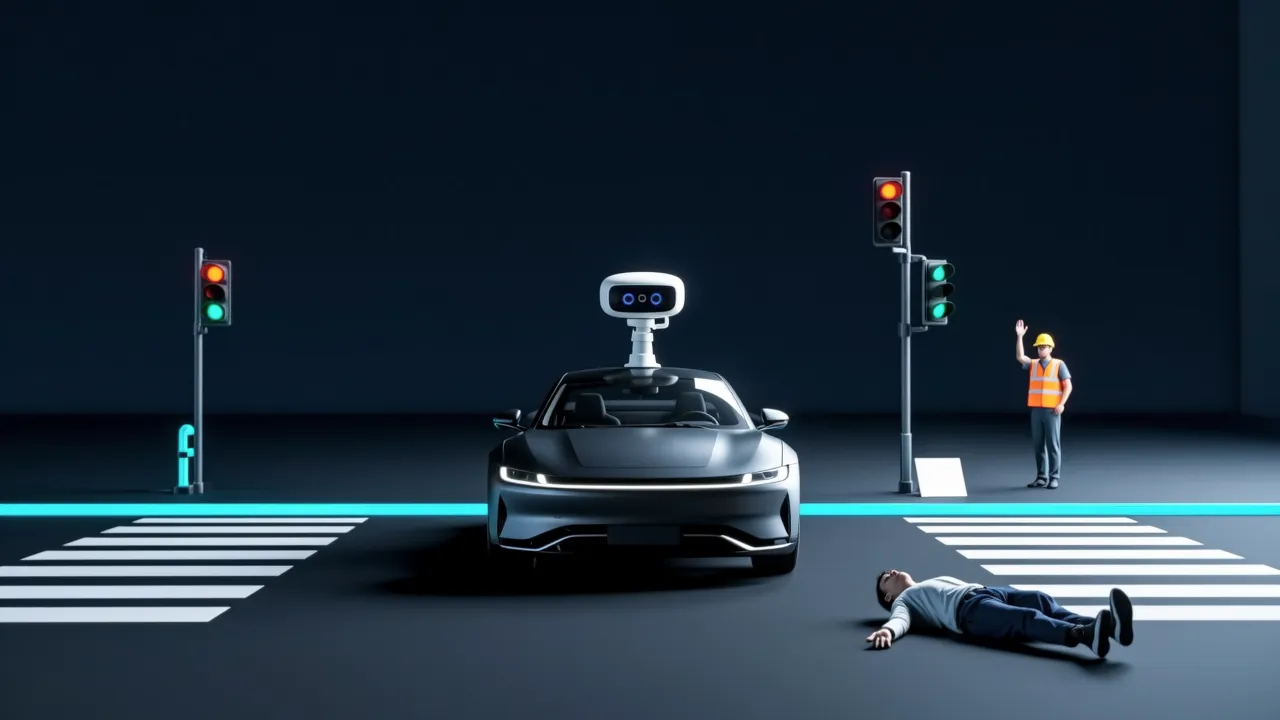
On 2 October 2023, one of those vehicles — equipped with an automated driving system and operating without a driver in San Francisco — struck a pedestrian[1]. NHTSA's account of the crash states that the vehicle then dragged the pedestrian approximately 20 feet before coming to a complete stop[1]. That second detail, the distance travelled after the initial impact, became the part of the incident that regulators and the public fastened on: the question was not only why the car failed to avoid the person, but what the system did in the moments afterwards.
The company's response
The crash had immediate consequences for how Cruise operated. The company suspended driverless operations nationwide[2]. A month after the incident, Cruise recalled all 950 of its cars to update software, the Associated Press reported[2]. A recall of that kind means the whole fleet is treated as needing a fix; here the fix was a software update rather than a mechanical part, and the number — every car the company had — indicates the remedy was not limited to the single vehicle involved.
The state regulator steps in
Three weeks later, the California DMV suspended Cruise's driverless permits, saying the vehicles were not safe for public operation[3]. The department did not rest its decision on safety alone. It also cited a finding that the manufacturer had misrepresented information related to the safety of its autonomous technology[3]. The DMV listed four regulatory grounds for the suspension, including two provisions of section 228.20 of title 13 of the California Code of Regulations[3].
The suspension thus had two strands running through it. One concerned the behaviour of the cars on the road. The other concerned the information the company had given the regulator about that technology — a reminder that permission to run driverless vehicles rests on what a company tells its regulator as much as on how the system performs.
Why it matters
The episode showed how quickly a single crash can move through every layer of oversight. Within weeks there was a company-wide halt to driverless operations, a recall covering the entire fleet, and a state-level withdrawal of the permits that allowed the cars to run without a driver at all. Each step came from a different actor — the company itself, and then the state DMV — and each had a different scope: national operations, the whole fleet, the permits for public roads in California.
It also made visible what a driverless permit actually depends on. Federal and state regulators rely on companies to report accurately what their vehicles do, especially in a crash. When the DMV concluded that information about the safety of the technology had been misrepresented, that finding entered the record alongside the question of whether the cars were safe to operate at all — and it was cited as one of the grounds on which the permits were pulled[3]. For an industry whose case for public trust rests on the claim that its vehicles are safer than human drivers, the incident became a case study in how a crash, and the account given of it afterwards, can shut down a driverless service.
Sources
- 1
- 2NHTSA Cruise GMAssociated Press
- 3DMV statement on Cruise LLC suspensionCalifornia Department of Motor Vehicles
Cite this page: A Cruise driverless car drags a pedestrian in San Francisco. TellWorld, https://www.tellworld.net/news/cruise-sf-pedestrian-incident-2023. Updated 2026-11-08