Background
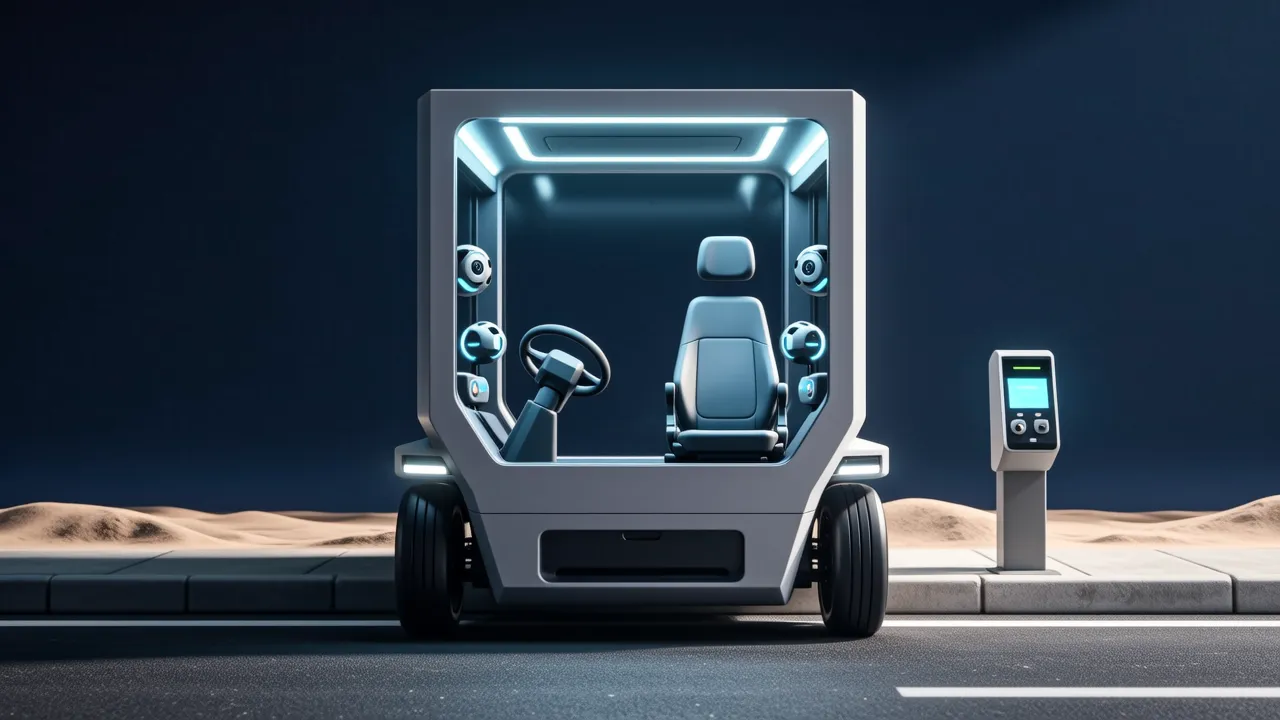
A purpose-built robotaxi is a vehicle designed from the start to run without a human driver, rather than an ordinary car with self-driving equipment bolted on. Because such vehicles may have no steering wheel or pedals, they do not fit neatly into safety rules written on the assumption that a person sits behind the wheel. In 2025 the US National Highway Traffic Safety Administration (NHTSA) opened a new exemption pathway for domestic manufacturers building vehicles without traditional manual controls[1]. Zoox was the first autonomous vehicle company to receive a demonstration exemption under that process, in August 2025[1]. A demonstration exemption lets a company put vehicles on the road for showing and testing; it is not the same as permission to run a paid service.
What happened
On 30 July 2026 Zoox announced that it had received the first-ever commercial exemption for a purpose-built autonomous robotaxi from NHTSA[1]. The company said the exemption gives it federal regulatory approval to charge for its robotaxi service[1]. That step — from demonstrating vehicles to selling rides — is the part of the process that the earlier demonstration exemption did not cover.
Key details
With the commercial exemption in hand, Zoox said it could move toward charging fares in Nevada and California[1]. The company said it would begin charging fares in Las Vegas the following month[1]. Zoox also said it had carried more than half a million riders, with another half a million people on its waitlist[1]. Those figures describe a service that has already been giving rides at scale, before any fares were collected.
Zoox said it would keep working with NHTSA on updating the Federal Motor Vehicle Safety Standards themselves[1]. That is a separate task from the exemption: the standards are the rules that apply to vehicles generally, while an exemption is a permission granted to a particular manufacturer for a particular kind of vehicle. As long as the standards assume manual controls, vehicles built without them depend on exemptions rather than on rules written with them in mind.
Why it matters
US federal vehicle safety rules were written around cars that people drive. A robotaxi without manual controls therefore cannot simply be certified the way an ordinary car is; it needs a regulator to agree to set some requirements aside. NHTSA's 2025 pathway created a way to do that for domestic manufacturers, and the demonstration exemption showed the route could be used[1]. The commercial exemption is the point at which a company can begin to earn revenue from such vehicles rather than only testing them.
For Zoox, the practical effect is that paid service becomes possible in two states, starting with Las Vegas[1]. For the wider field, the announcement marks the first time this commercial step has been taken for a purpose-built robotaxi[1]. The company's stated plan to keep working on the underlying standards suggests that, for now, vehicles of this kind reach the road one exemption at a time rather than under rewritten rules[1].
Sources
- 1
Cite this page: Zoox wins the first NHTSA commercial exemption for a purpose-built robotaxi. TellWorld, https://www.tellworld.net/news/zoox-nhtsa-commercial-exemption-2026. Updated 2026-11-08