Background
XPENG held its 2025 AI Day in Guangzhou on 5 November 2025 under the theme "Emergence"[1]. The event was built around what the company calls physical AI: artificial intelligence that acts in the physical world rather than only producing text or images. At the event, He Xiaopeng announced that XPENG had repositioned itself as a mobility explorer in the physical AI world and a global embodied intelligence company[1].
What was announced
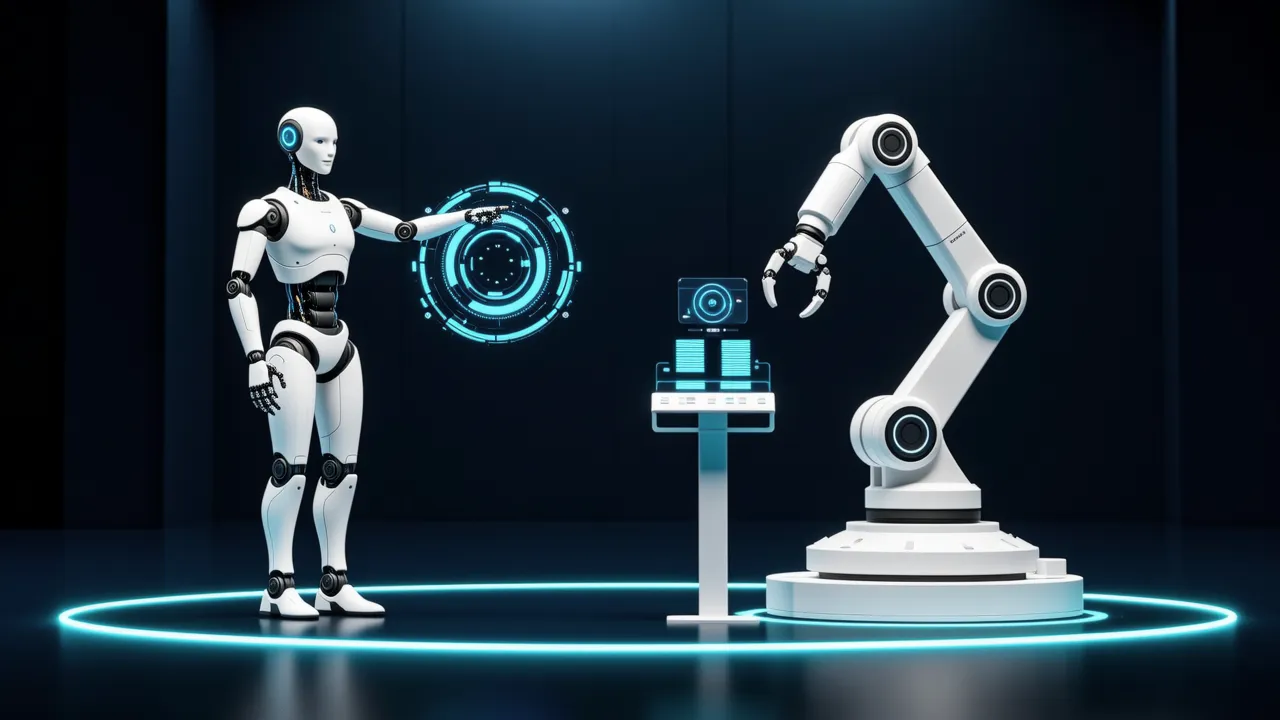
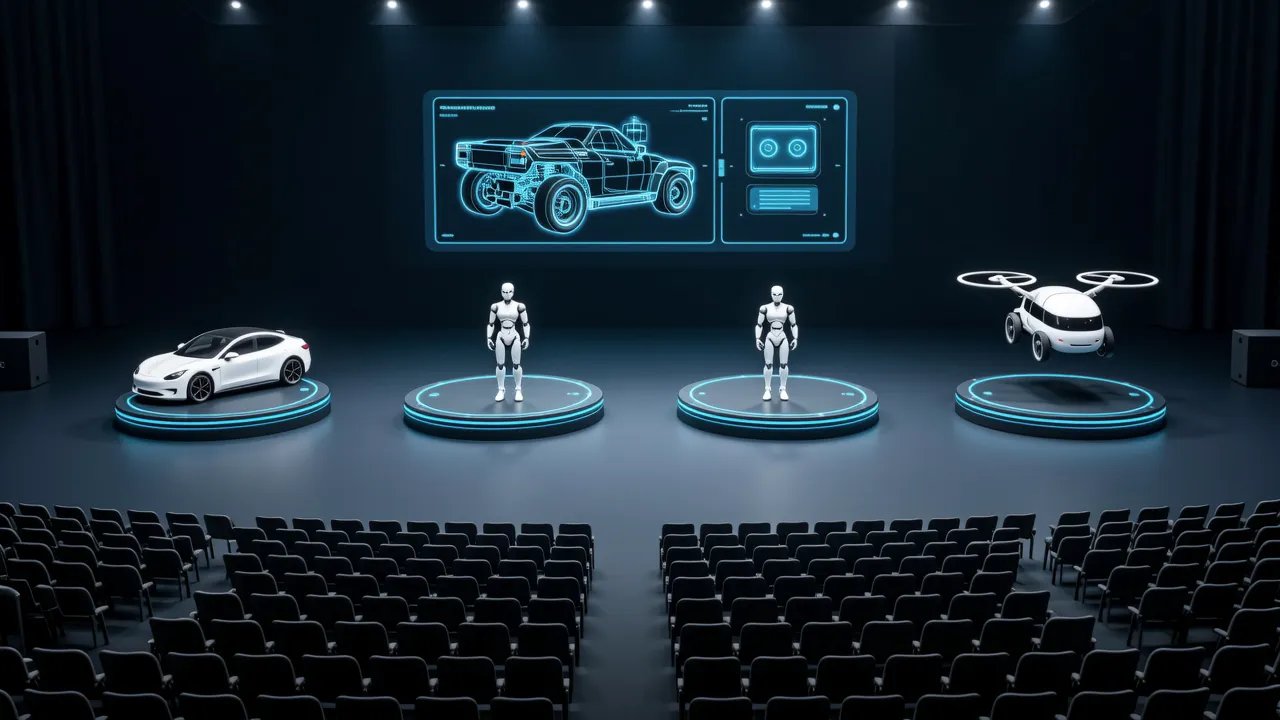
XPENG unveiled four products at the same event: VLA 2.0, its Robotaxi, the next-generation IRON humanoid robot, and two flying systems from ARIDGE[1]. The company said all four applications have clear mass production plans[1]. That claim is the part worth watching, because demonstrations of robots, self-driving cars and flying vehicles are common in the industry, while firm schedules for building them in volume are not.
VLA 2.0 and the Turing chip
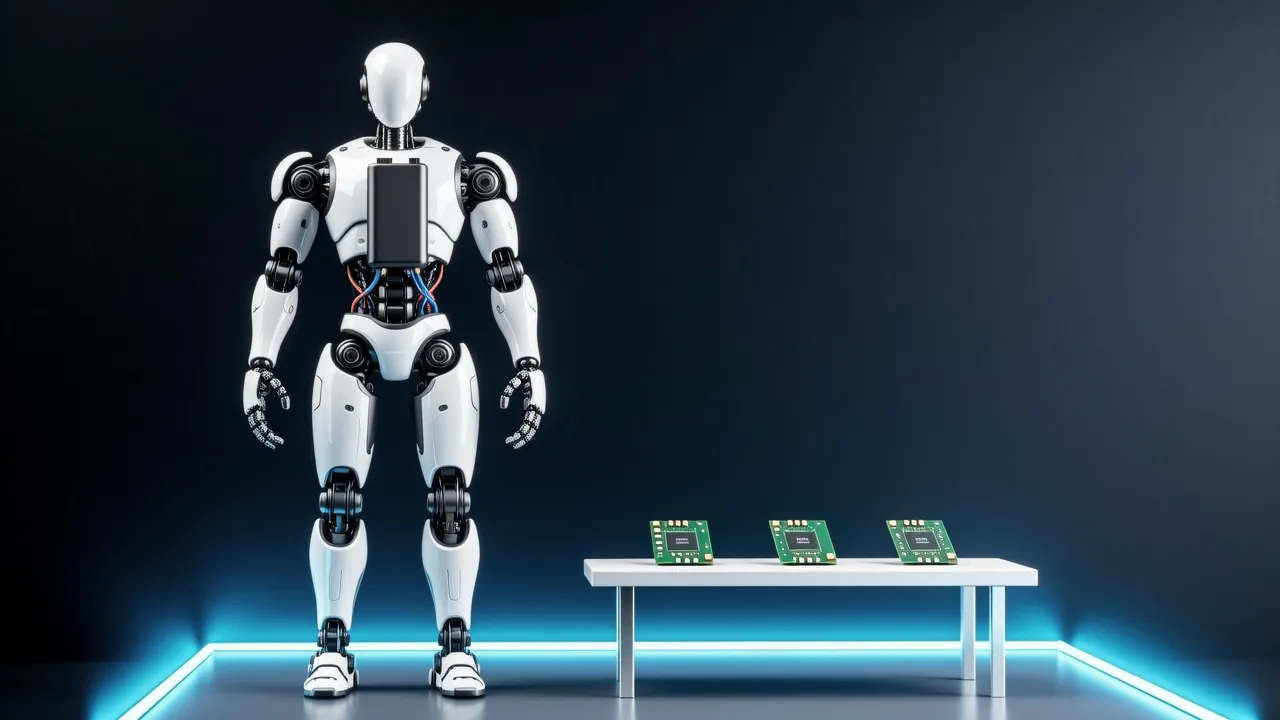
VLA stands for vision-language-action. A model of this kind takes in camera images and a spoken or written instruction and outputs actions directly, rather than first describing a scene and then handing it to a separate control program. XPENG said VLA 2.0 runs at billion-parameter scale on its Ultra models, with 2,250 TOPS of compute[1]. Parameter count describes the size of a neural network; TOPS, or trillions of operations per second, is a measure of how much arithmetic the on-board computing hardware can perform.
XPENG also said it would open-source VLA 2.0 to global commercial partners and named Volkswagen as its first customer[2]. Separately, it said its Turing AI chip had received a design win from Volkswagen[2]. A design win means a customer has selected a component for a product it intends to build, which is an earlier stage than a shipping contract.
The Robotaxi plan
XPENG said it would launch three Robotaxi models in 2026 and start trial operations[1]. A Robotaxi is a vehicle that carries paying passengers without a human driver at the wheel. Trial operations are the stage in which such a service runs on real roads, usually in a limited area, before being opened more widely.
Why it matters
Three things stand out. First, the announcements link four different form factors — a driving model, an autonomous vehicle service, a humanoid robot and flying systems — to a single computing and model strategy, which is what the "physical AI" framing is meant to convey[1]. Second, open-sourcing a driving model to commercial partners is an unusual step: it turns the model into something other carmakers can license rather than a feature kept inside one brand's vehicles, and naming Volkswagen as first customer gives that plan a concrete counterpart[2]. Third, the Turing chip design win shows the company trying to sell not only vehicles and software but also the silicon underneath them[2].
What the event did not settle is timing. Only the Robotaxi plan carries a stated year, 2026, and only for the launch of three models and the start of trial operations[1]. For the humanoid robot and the flying systems, the company stated that mass production plans exist without giving dates in this announcement[1]. Readers following the field should treat the four products as a roadmap whose progress will be measured by whether those plans turn into shipped hardware.
Sources
- 1
- 2
Cite this page: XPENG unveils VLA 2.0, a Robotaxi plan and a new IRON robot at AI Day. TellWorld, https://www.tellworld.net/news/xpeng-ai-day-2025. Updated 2026-11-08