Background
Most public demonstrations of humanoid robots happen in laboratories or at trade fairs: short runs, fixed scripts, and onlookers who know when to step aside. A convenience store is a different proposition. It stays open around the clock, shelves empty, customers arrive without warning, and cleaning has to happen alongside food preparation. Putting robots into a shop that is genuinely trading means every mistake lands on the shopkeeper and on whoever is standing in the aisle.
The trial was the closing event of AGIBOT's AI WAVE technology showcase, which opened on 22 October 2026 [1].
What happened
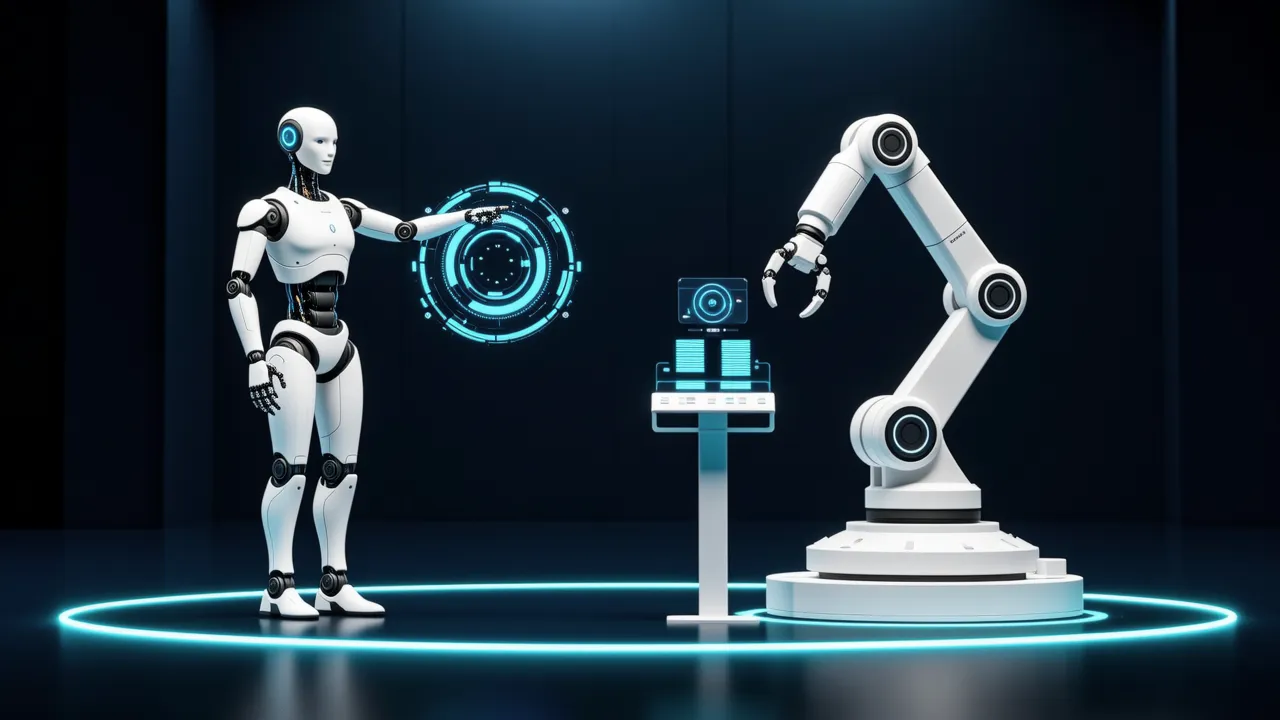
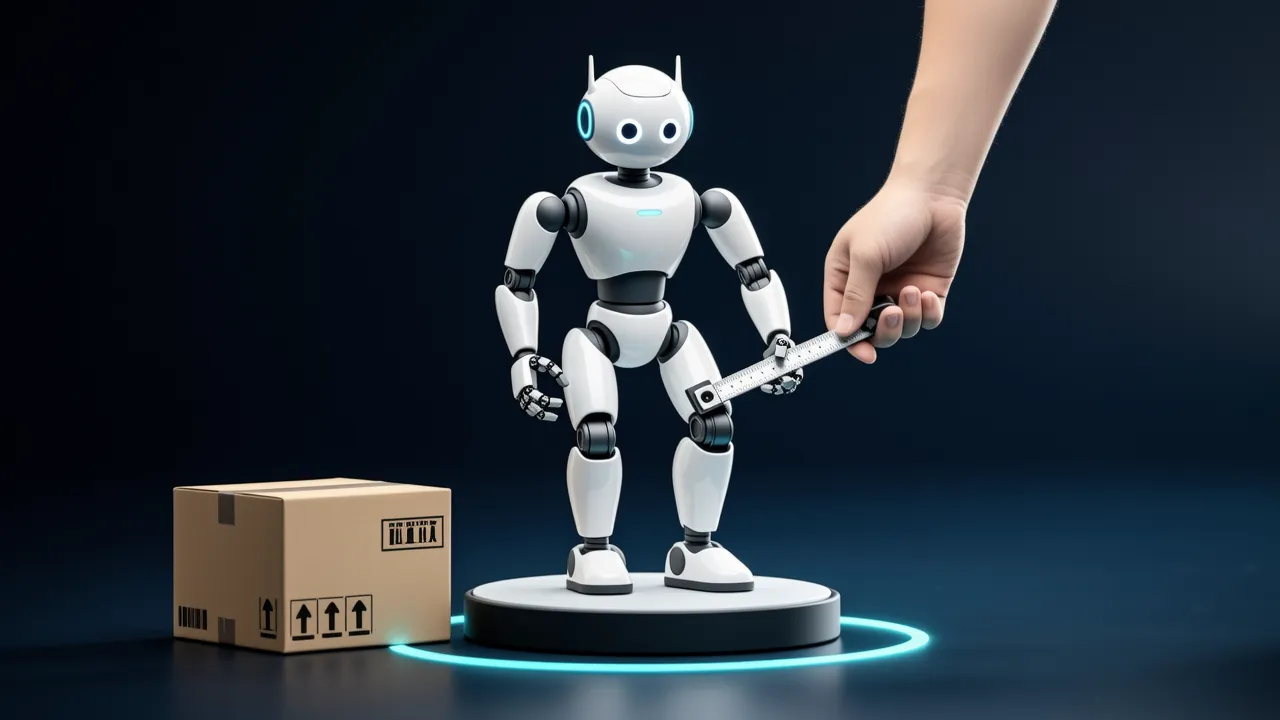
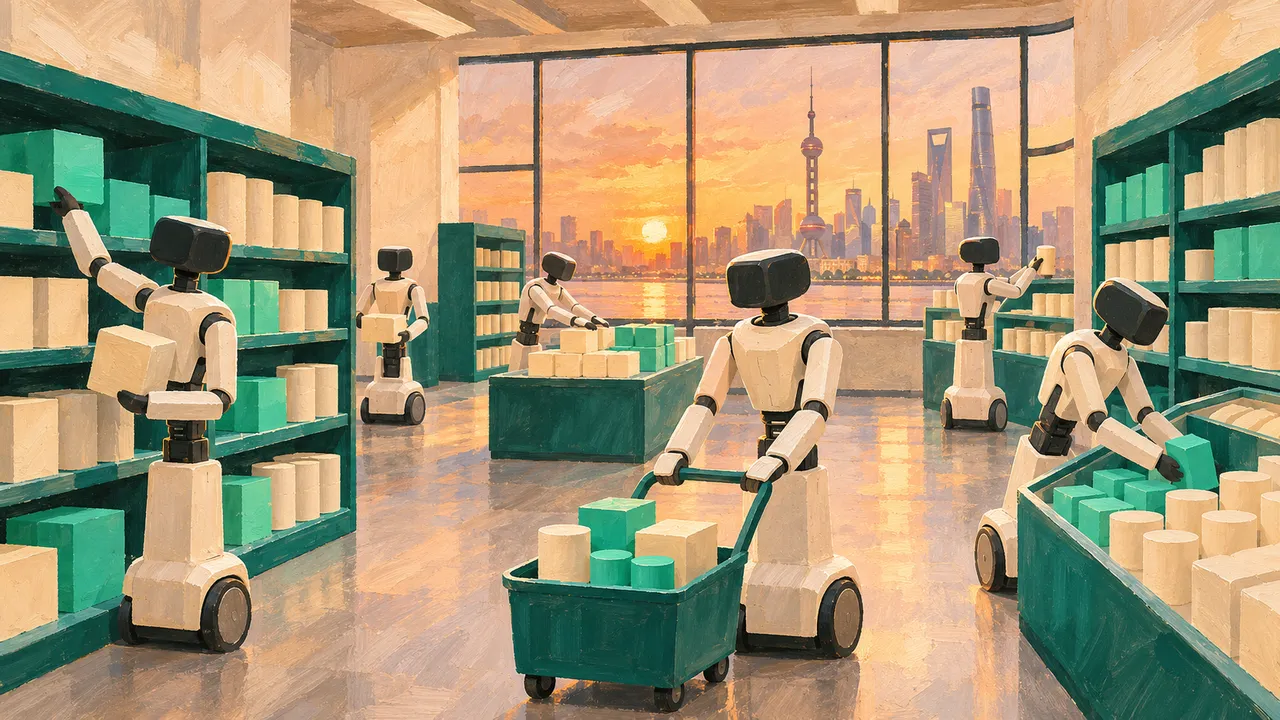
Six AGIBOT G2 robots took part. The G2 is a wheeled humanoid: a humanoid upper body on a wheeled base rather than legs. Wheels give up stair-climbing in exchange for stability and simple motion across flat indoor floors, which is the surface a shop offers.
The run took place in an operating convenience store in Shanghai's Xuhui District, from 10 a.m. on 2 November to 10 a.m. on 3 November 2026 — a full 24 hours, including the overnight stretch when staff are usually thinnest [1].
The six machines were not all doing the same job; they were assigned different roles [1]. Over the shift they performed 1,730 tasks between them, covering customer assistance, coffee preparation, shelf restocking and cleaning [1]. Spread evenly, that would be close to 290 tasks per robot across the day, though different roles make an even split unlikely.
Key details
The 24 hours were livestreamed, and more than two million viewers watched across online platforms [1]. A long livestream differs from an edited highlight reel: the audience sees the pauses and the failed attempts as well as the smooth passages.
Not every robot finished well. Four of the six passed the final performance assessment [1]. That figure is the most informative part of the result. Had all six passed, the run would have said little about where the limits of the system sit; four out of six places those limits inside the current setup, in some combination of roles and tasks.
Why it is worth recording
Three things can be separated. The first is duration: 24 hours of continuous operation in a live shop exercises battery management, handover between tasks, and recovery from the small interruptions that fill a real shift. The second is breadth: receiving customers, making coffee, restocking shelves and cleaning are four quite different kinds of work, with different tolerances for error — a spilled drink and a wrongly placed item are not the same kind of failure. The third is the pass mark: the trial was framed as an assessment that robots could fail, and two of them did.
The livestream matters for a similar reason. A trial that runs for a day and can be watched for a day is harder to curate than a two-minute clip, and a viewing figure above two million means the evidence was in front of a large audience rather than confined to the people who built the machines.
What the record leaves is a baseline that later work can be measured against: six wheeled humanoid robots, one working convenience store, 24 hours, 1,730 tasks, four passes. Whether the same setup reads as impressive or modest depends on what comes next; on its own terms it is a concrete, dated data point about what a wheeled humanoid could do in a retail store across a full day and night.
Sources
- 1
Cite this page: Six AGIBOT G2 robots run a 24-hour convenience store trial. TellWorld, https://www.tellworld.net/news/agibot-g2-store-trial-2026. Updated 2026-11-08