A machine built to a human plan
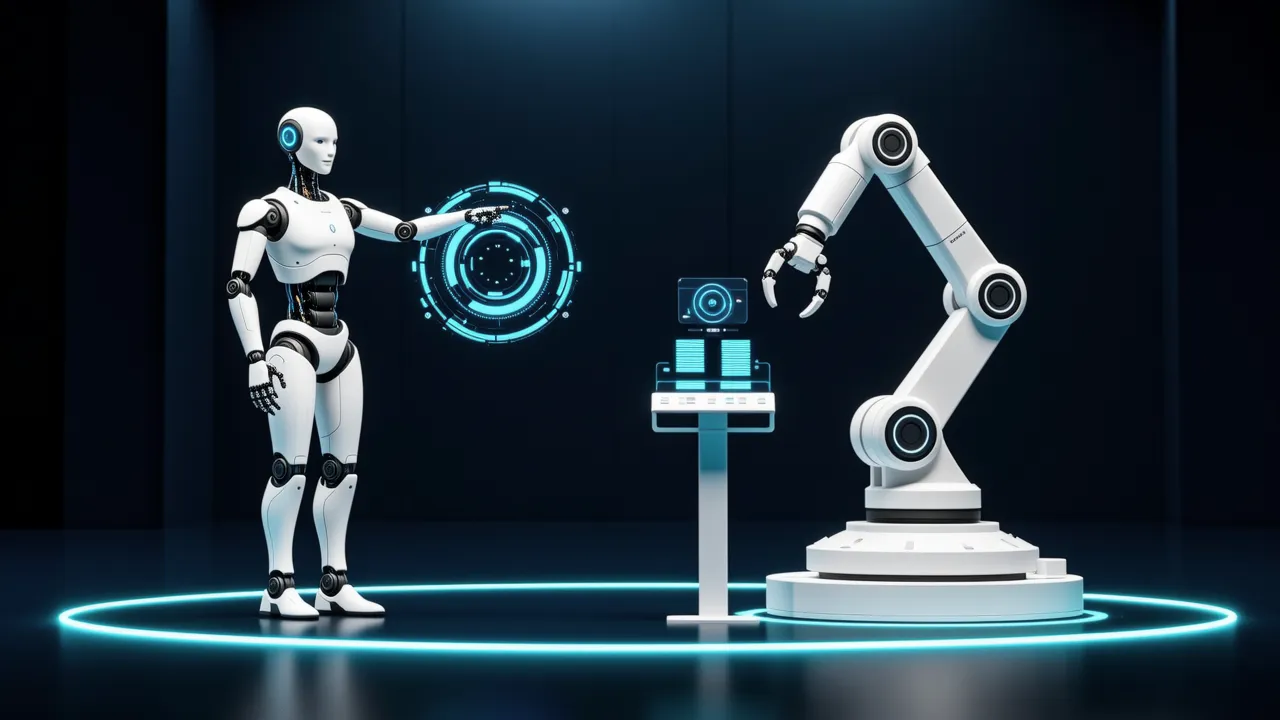
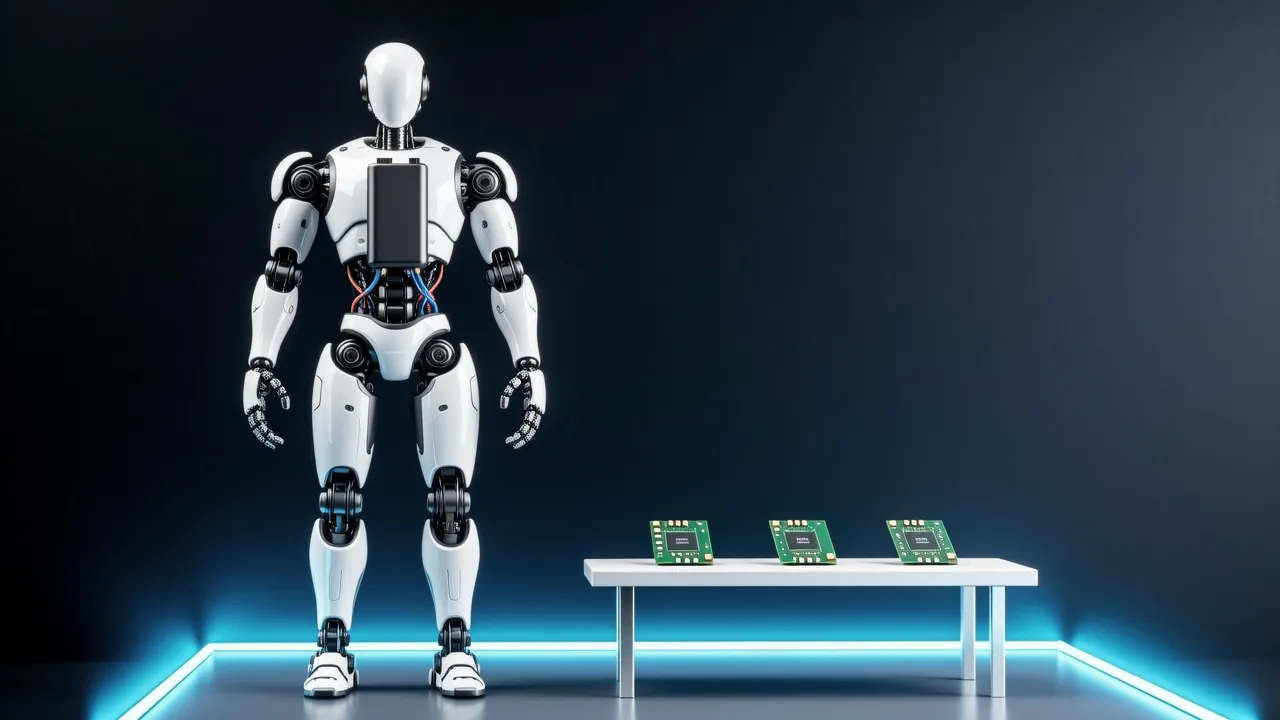
Humanoid robots follow a human body plan: a head carrying sensors, two arms ending in hands, two legs for walking, and a torso holding power and computing. The shape is not only a matter of appearance. Workbenches, staircases, door handles, hand tools and vehicle seats are all sized for people, so a machine that fits that environment does not require the workplace to be rebuilt around it. The engineering difficulty is that balance, manipulation and perception have to work together in real time. The Chinese ministry framed the field as a product category in waiting: the document described humanoid robots as potentially the next disruptive product after computers, smartphones and new energy vehicles[1].
The document
The Ministry of Industry and Information Technology issued the Guidance on Innovation and Development of Humanoid Robots on 20 October 2023, as document 工信部科〔2023〕193号[1][3]. It is a guidance document rather than a funding announcement: it sets out what the ministry wants the sector to look like and organises the work under headings. The ministry said the plan was arranged as a three-year plan with a five-year outlook[2], so the nearer targets and the longer-range ones sit in a single framework.
Targets for 2025 and 2027
For 2025 the guidance set four linked aims: establish an initial innovation system for humanoid robots; achieve breakthroughs in brain, cerebellum and limb technologies; reach international advanced levels in complete machines, with batch production; and cultivate 2-3 globally influential ecosystem companies together with 2-3 industrial clusters[1][2].
The three technical terms point at different problems. The "brain" is the part that perceives, decides and understands instructions; the "cerebellum" is motion control, keeping the machine upright and coordinating its joints; the limb work covers the actuators, joints and hands that actually move. "Complete machines" means whole robots rather than components, and an industrial cluster is a regional concentration of manufacturers and suppliers[1][2].
For 2027 the goal was significantly stronger innovation capability, a safe and reliable industrial chain and supply chain, and comprehensive strength reaching world advanced levels[1][2].
Five groups of tasks
The ministry set five groups of tasks: key technology breakthroughs, product cultivation, scenario expansion, ecosystem building and support capacity[2].
On products, the guidance called for building a general-purpose base platform for humanoid robots plus low-cost interactive, high-precision and high-reliability variants, with electric, hydraulic or hybrid actuation[1]. The base-platform idea is to settle one underlying robot design and then derive specialised versions from it; the three actuation options describe how joints are driven — by electric motors, by hydraulics, or by a combination — each trading off strength, speed, cost and controllability.
On scenarios, the tasks covered special-environment operations, 3C and automotive manufacturing, healthcare and housekeeping, agriculture and logistics[1]. 3C means computers, communications and consumer electronics, assembly work that is small and precise; the other areas cover work that is dangerous, repetitive or physically demanding.
Place in the record
The guidance matters less as a single announcement than as a statement of direction. It names the technical bottlenecks, the product shapes, the places where robots should first be used and the ecosystem that has to grow around them, and it puts dates on those ambitions[1][2]. Because it comes from the ministry responsible for industry, it also signals to firms and local authorities which parts of the field are treated as priorities.
Sources
- 1人形机器人创新发展指导意见工业和信息化部
- 2《人形机器人创新发展指导意见》解读工业和信息化部
- 3
Cite this page: China issues guidance on humanoid robot innovation. TellWorld, https://www.tellworld.net/news/miit-humanoid-guidance-2023. Updated 2026-11-08