Background
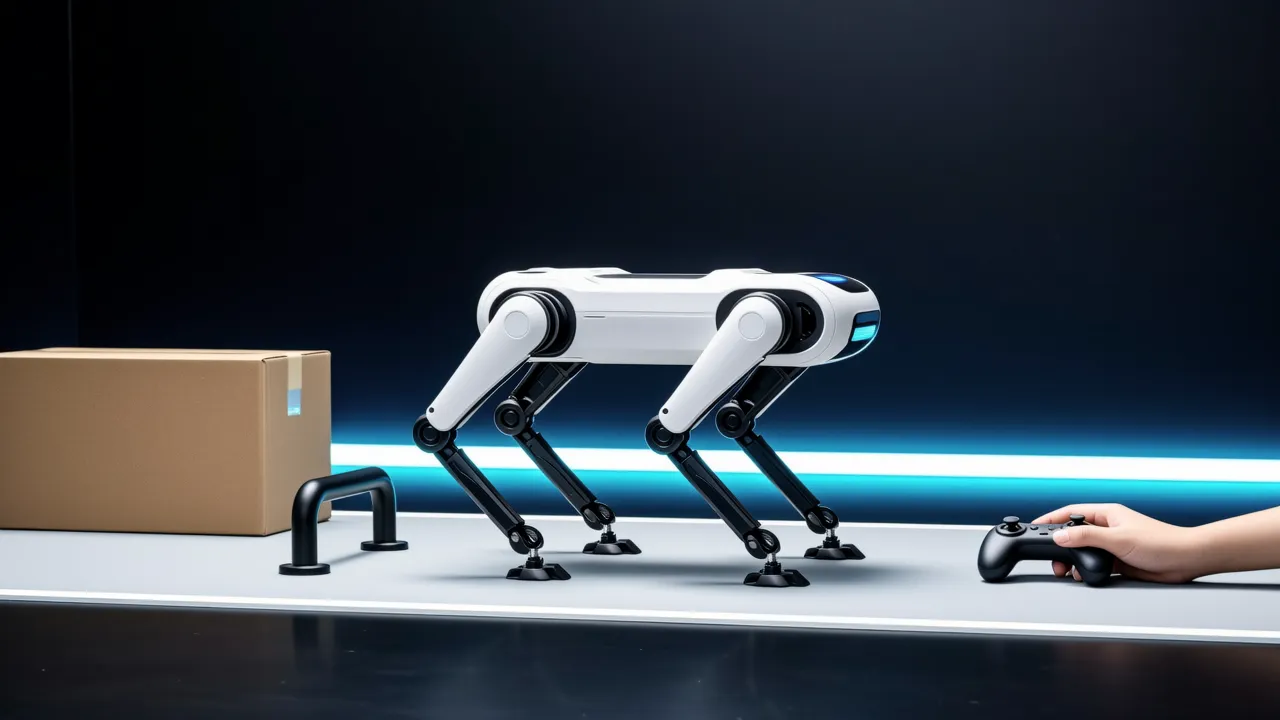
Unitree was founded in Hangzhou in August 2016 by Wang Xingxing, with registered capital of 100,000 yuan[1]. The company first became known for legged machines rather than humanoids: Laikago, released in 2017, was its first quadruped sold publicly[1], and it sold more than 30,000 quadruped robots in 2023-2025 combined[1]. It moved into humanoids with the H1, its first full-size general-purpose humanoid, released in August 2023; the G1 followed in May 2024 at a starting price of 99,000 yuan[1]. In 2025 the company shipped more than 5,500 humanoid robots, the most in the world, and reported revenue of 1.699 billion yuan with non-recurring net profit of 590 million yuan[2]. That combination — a hardware business with real unit sales, in a category that had mostly been demonstration videos — is what the listing was priced against.
The listing
Unitree listed on the Shanghai Stock Exchange's STAR Market on 19 August 2026 with an issue price of 150.80 yuan per share[1]. The issue price implied a post-issue market capitalisation of about 60.993 billion yuan[1].
The process was fast: 152 days passed from the IPO's acceptance on 20 March 2026 to the first trading day[1]. Pricing was high relative to the equipment sector — the issue price gave a price-to-earnings ratio of 219.23 times, against an industry average of 38 times for general equipment[1].
Retail demand was heavy. The offering drew about 9.78 million valid online subscriptions, and the online allotment rate was 0.01809759%, the lowest in the history of the STAR Market[2]. A very low allotment rate means each applicant received only a tiny share of what it asked for, a sign that far more money was chasing the shares than were on offer.
First day and first results
The stock opened at 1,100 yuan on its first trading day, 629.44% above the issue price, giving a market value of 444.9 billion yuan[3].
The company's first report after listing showed first-half 2026 revenue of 1.152 billion yuan, up 48.54%, and net profit attributable to shareholders of 274 million yuan, a turnaround from a loss of 32.02 million yuan a year earlier[3].
Why it matters
Three things make this listing a reference point. First, it puts a public price on a company whose main product category — general-purpose humanoid robots — has almost no settled market yet. The 2025 figures show real volume: more than 5,500 humanoid units shipped and revenue of 1.699 billion yuan[2]. The 219.23-times price-to-earnings ratio against an industry average of 38 times[1] shows how much of the valuation rests on expectations rather than on current earnings, and the first-half 2026 results give the first public data point against which those expectations can be checked[3].
Second, the low online allotment rate of 0.01809759%[2] and the 629.44% opening jump[3] show how much attention the sector attracts from individual investors — and how volatile the shares can be when sentiment shifts, since the same expectations that lifted the price can be repriced.
Third, the timetable matters for other hardware companies considering a listing. A 152-day run from acceptance to first trading day[1] is a benchmark for how quickly a Chinese robotics company with audited sales can reach public markets, and the resulting market capitalisation of 444.9 billion yuan[3] sets a comparison point for the private valuations of its competitors.
For readers following the field, the useful habit is to separate the two numbers that Unitree now reports: how many robots it ships, and what it earns on each. The first has grown quickly; the second is what the share price is ultimately a claim on.
Sources
- 1宇树今日登陆科创板 A股「人形机器人第一股」来了中共上海市委金融委员会办公室
- 2
- 3「90后」新首富:全世界都担心这件事中国新闻网
Cite this page: Unitree lists on the STAR Market. TellWorld, https://www.tellworld.net/news/unitree-listing-2026. Updated 2026-11-08