Background
A humanoid robot that can walk, get up from the ground and handle objects has usually come with a price to match. China Daily reported that many competing humanoid robots cost 150,000 to 200,000 yuan or more [3], a range that keeps most of them inside laboratories rather than in the hands of ordinary buyers.
What happened
On 13 May 2024, Hangzhou-based Unitree Robotics launched the G1 humanoid robot, with a starting price of 99,000 yuan — about $13,700 at the time [2]. That figure sits below the band China Daily reported for many competing humanoid robots [3], which made the price the most remarked-on part of the announcement.
What the machine is
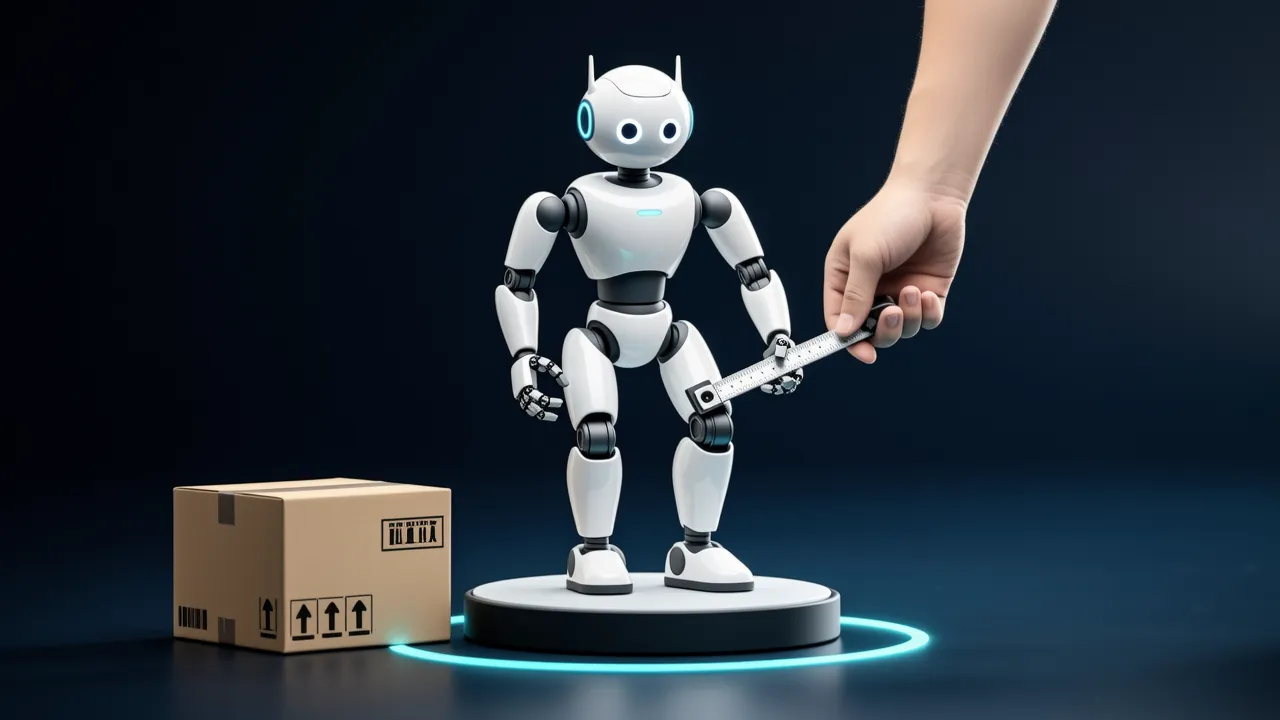
According to Unitree's product page, the G1 weighs about 35 kg including the battery. Standing, it measures 1320 x 450 x 200 mm; folded, it measures 690 x 450 x 300 mm [1]. Xinhua Finance reported that the robot is about 127 cm tall, weighs about 35 kg and moves at 2 m/s [4].
The standard G1 has 23 degrees of freedom. Degrees of freedom are the independently driven joints a robot can move; the more of them, the more separately a machine can position its arms, legs and torso. The G1 EDU version is configurable between 23 and 43 degrees of freedom and can be fitted with an optional Dex3-1 three-fingered dexterous hand [1], so buyers can trade capability against cost.
Hardware listed on the product page includes a depth camera together with 3D LiDAR, a four-microphone array and an 8-core CPU [1]. A depth camera and LiDAR both measure distance to surrounding objects, which is what a walking machine needs in order to sense obstacles; the microphone array gives it a way to pick up sound. Power comes from a quick-release 9000 mAh battery that gives about two hours of operation [1]. The packaged weight, folded footprint and battery life together describe a machine built to be carried and set down by one person rather than a fixed laboratory installation.
Unitree said the joint servo motors, reducers and controllers are developed in-house [1]. Those are the parts that turn a command into a controlled movement at each joint, and buying them from outside suppliers is one of the main cost drivers in a humanoid robot. China Daily reported that development took about three months from project start to launch [3].
At the launch
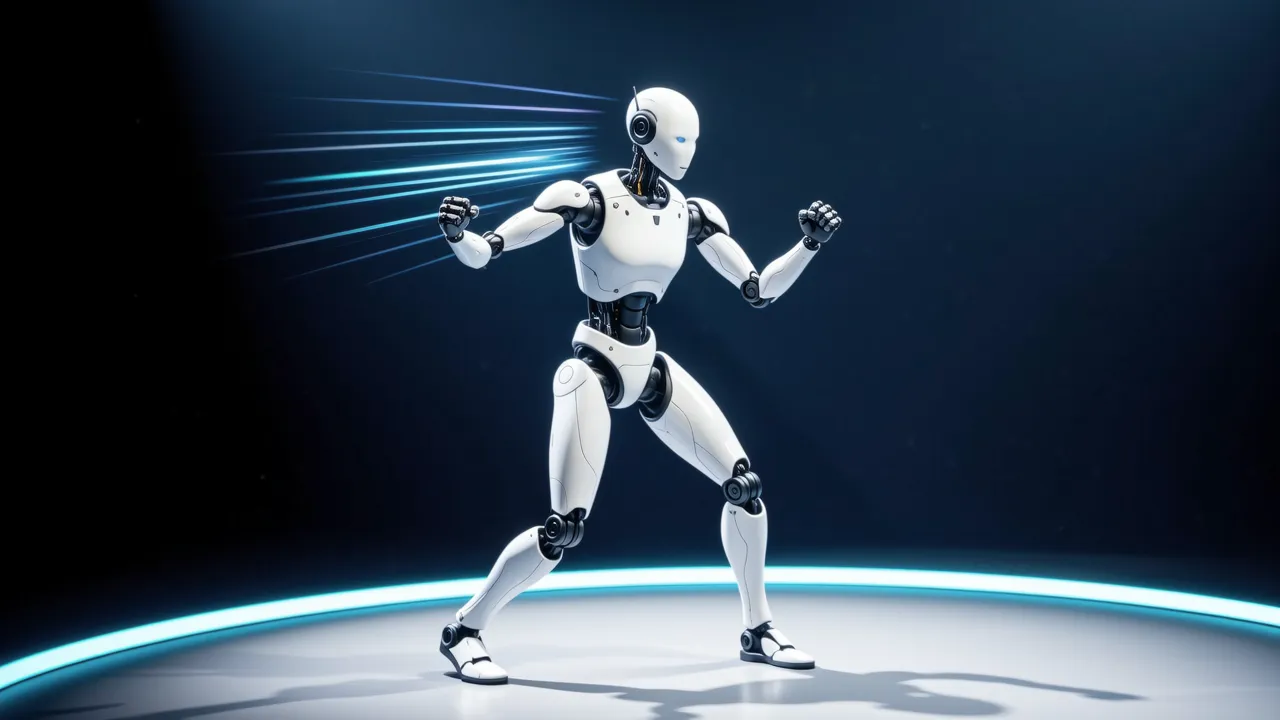
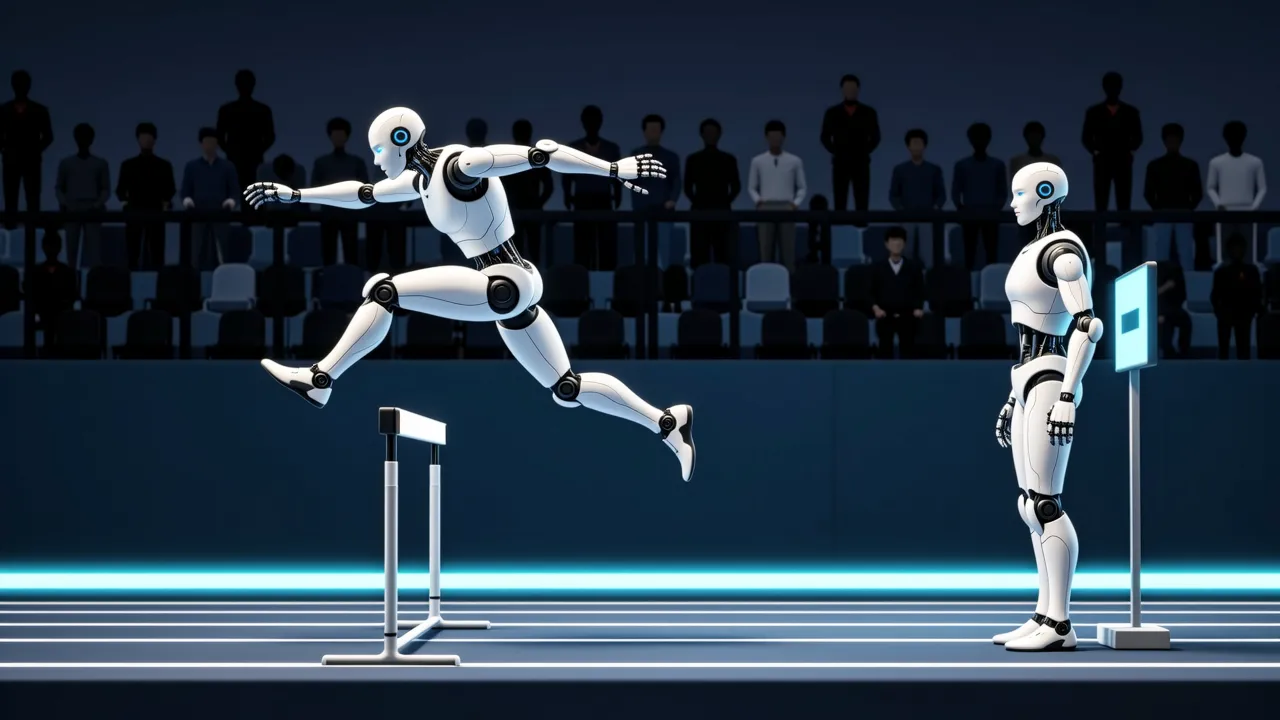
Launch coverage showed the robot performing a 180-degree body rotation, executing a kip-up when it was powered on and cracking walnuts with its bare hands [2]. A kip-up — pushing off the ground and coming back to standing — stresses the joints and the control software at the same time, because the machine has to generate a fast, coordinated burst of force and then catch itself. Xinhua Finance reported that the robot is driven by Unitree's UnifoLM robot model [4].
Why it matters
For a buyer, the significance of the G1 is arithmetic. A starting price of 99,000 yuan, against the 150,000 to 200,000 yuan or more that China Daily reported for many competing humanoid robots [2][3], changes who can afford to experiment with a walking, manipulating machine. The split between a 23-degree-of-freedom standard model and a configurable G1 EDU with an optional three-fingered hand [1] points at the same idea: a base platform that universities, labs and companies can buy into cheaply and then expand.
The gap is not only about the purchase price. In-house joint servo motors, reducers and controllers [1] and a development period China Daily reported as about three months [3] describe a company that treats the humanoid as a product to be manufactured and shipped, rather than a one-off research build. Whether that approach holds up in real use is a separate question, and the listed specifications — about two hours of operation on a 9000 mAh battery [1], a 2 m/s top speed [4] — set the limits that users will run into first.
Sources
- 1Unitree G1 Humanoid AgentUnitree Robotics
- 2Unitree G1 humanoid robot launchedeHangzhou (Hangzhou government portal)
- 3Tech giants embracing humanoid robotsChina Daily
- 4
Cite this page: Unitree introduces the G1 humanoid robot. TellWorld, https://www.tellworld.net/news/unitree-g1-2024. Updated 2026-11-08