Background
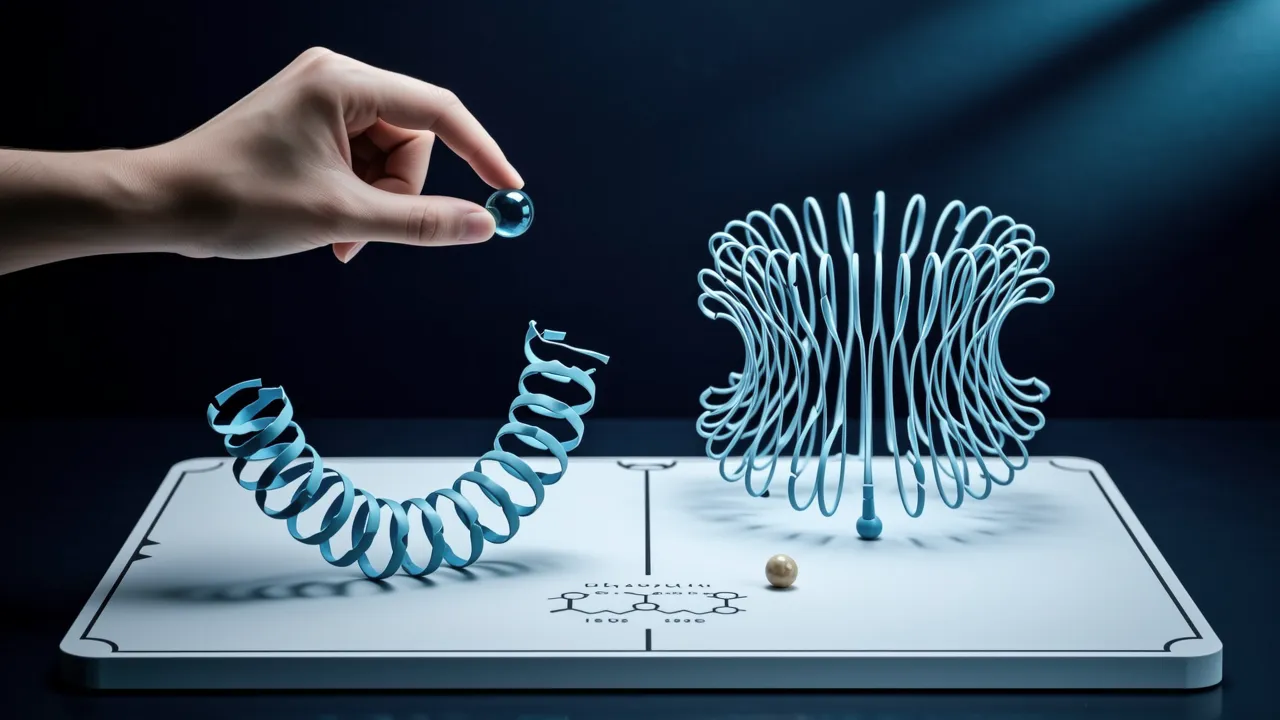
A protein's behaviour depends on its three-dimensional structure and on the other molecules it binds to. Determining those structures experimentally is slow and expensive, so predicting them from sequence and composition has long been a central goal of computational biology. Structure prediction became one of the most visible uses of machine learning in the natural sciences, and each new version of a prediction system is judged chiefly on how well it handles cases that earlier methods could not.
The announcement
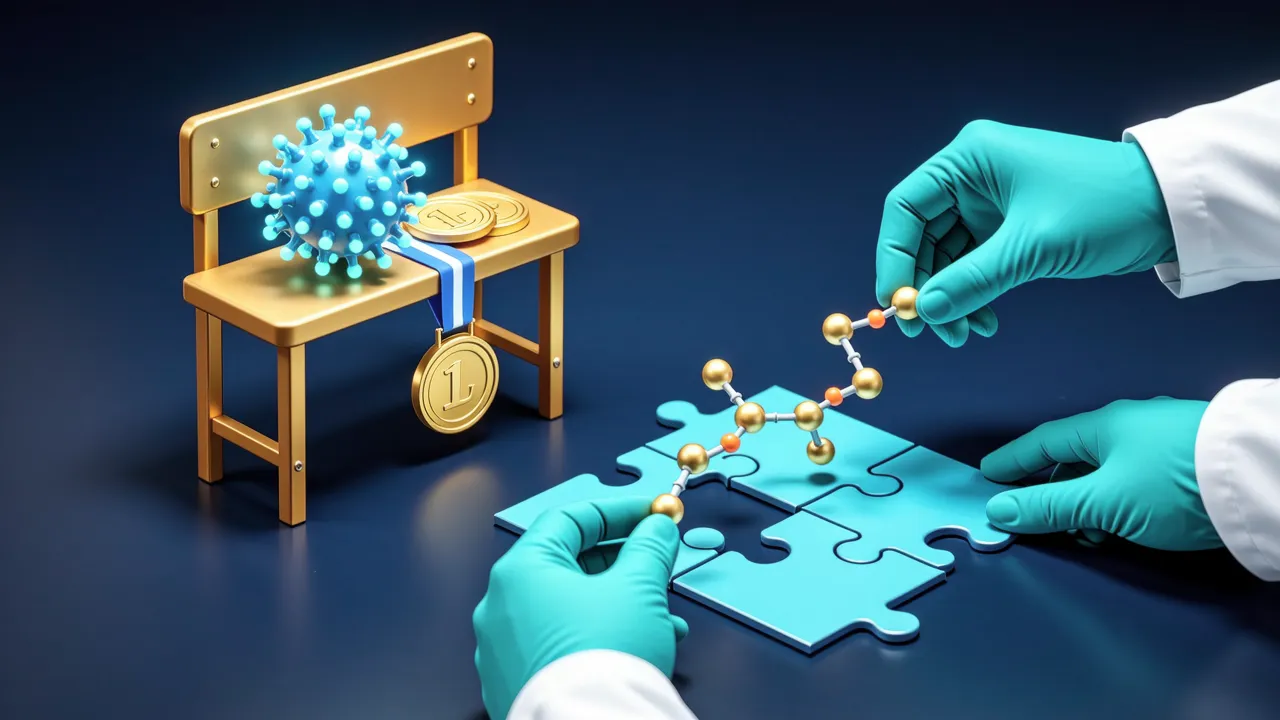
On 8 May 2024, Google DeepMind and Isomorphic Labs announced AlphaFold 3.[1] The announcement was published alongside a paper in Nature that introduced the system.[1] Earlier versions of AlphaFold were built around proteins; AlphaFold 3 predicts the structure and interactions of proteins, DNA, RNA, ligands and more.[1] A ligand here means a smaller molecule that binds to a larger one, the kind of pairing that sits at the centre of many questions about how cells work and how a candidate drug might attach to its target.
How it works
AlphaFold 3 uses a diffusion network that starts from a cloud of atoms and converges over many steps.[1] Rather than assembling a structure piece by piece, a diffusion model begins with a disordered arrangement and repeatedly refines it, each pass nudging the atoms toward a more plausible configuration. Running this over many steps lets the model settle on an arrangement that fits the input it was given. The same machinery has to handle several kinds of molecule at once, which is what allows the system to produce a joint picture of a complex rather than a separate shape for each part.
Results
Google reported at least a 50% improvement on protein interactions with other molecule types versus existing methods.[1] On the PoseBusters benchmark, AlphaFold 3 was reported 50% more accurate than the best traditional methods without structural input.[1] Google also said AlphaFold 3 was the first AI system to surpass physics-based tools for biomolecular structure prediction.[1] Physics-based tools compute structures from physical and chemical energy terms rather than learning patterns from data, and they had long been the standard against which prediction methods were measured.
Access
Alongside the announcement, a free AlphaFold Server let scientists run the model for non-commercial research.[1] Code and weights followed for non-commercial use, first in November 2024 on request and then publicly in February 2025.[2] The staged release meant that, for a period, the system could be used through a hosted service by researchers who did not have the model files themselves.
Why it matters
Much of what happens in a cell consists of molecules recognising and binding one another, so a system that models interactions as well as individual shapes can be pointed at a wider set of questions than one that only folds proteins. Moving from single chains to complexes of proteins, nucleic acids and small molecules changes what a structure prediction tool is for: not just the shape of one molecule, but the arrangement of a group of them together. The claim that an AI system had overtaken physics-based methods, made by the group that built it, marked a shift in how such tools are positioned relative to established computational approaches.[1] The public release of the code and weights in 2025 put the model itself in the hands of outside researchers for non-commercial work.[2]
Sources
- 1
- 2AlphaFoldWikipedia
Cite this page: Google DeepMind and Isomorphic Labs unveil AlphaFold 3. TellWorld, https://www.tellworld.net/news/alphafold3-2024. Updated 2026-11-08