What was announced
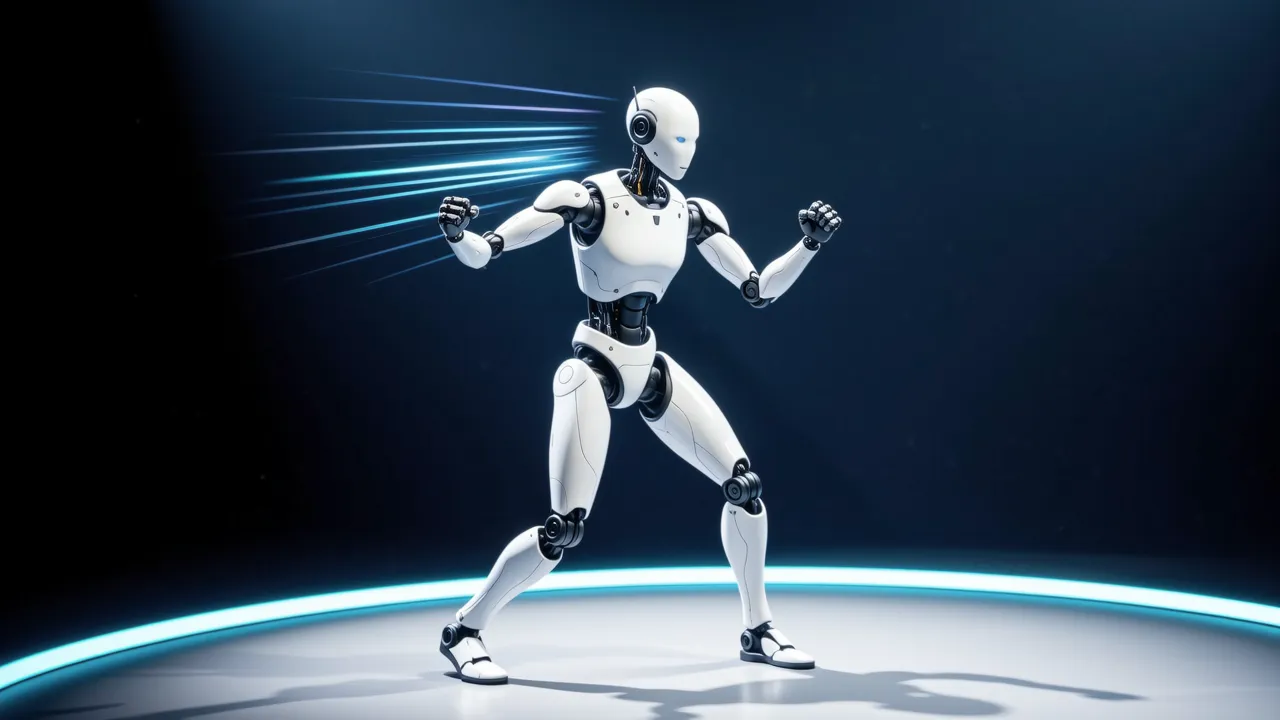
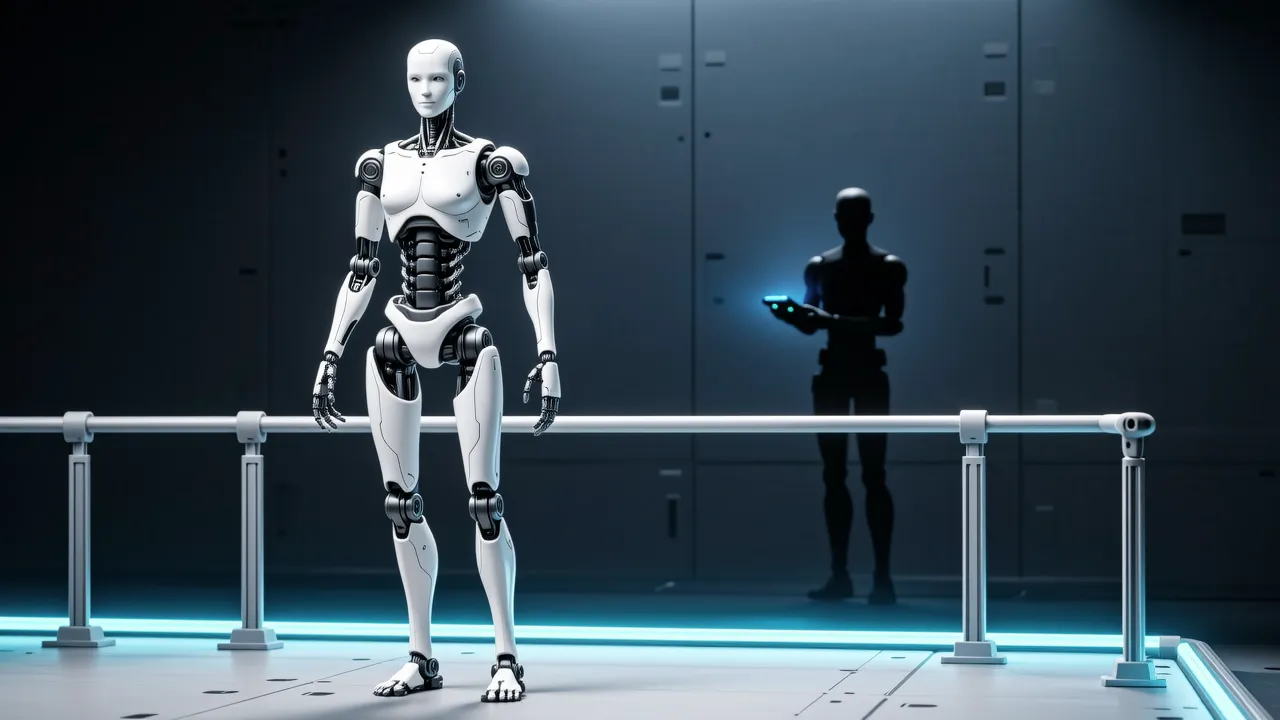
On 15 August 2023, the Chinese robotics company Unitree released the H1, its first general-purpose humanoid robot [1]. Unitree described the machine as China's first full-size general-purpose humanoid robot able to run [1].
A humanoid robot is a machine built around a human-like body plan: two legs for walking, two arms for handling objects, and a head-height sensor package. "Full-size" means it stands at roughly the height of a person, so that it can in principle work with doors, stairs, workbenches and tools that were designed for human bodies rather than being rebuilt around the robot. "General-purpose" signals that the machine is not dedicated to a single repetitive task but is meant as a platform for many kinds of work.
The specifications
The launch materials listed a height of about 180 cm and a weight of about 47 kg [2]. Unitree gave a moving speed of 3.3 m/s, with potential mobility above 5 m/s [2].
For the joints, the company presented a peak torque density of 189 N·m/kg and a maximum joint torque of 360 N·m [2]. Torque is the twisting force a joint can apply; torque density expresses how much of that force the machine gets per kilogram of actuator mass. A high value matters for a legged robot because the legs must both support the body's weight and produce fast, strong pushes to stay balanced, and every kilogram carried in the legs makes that job harder.
The H1 carries an 864 Wh quickly replaceable battery and uses a 3D LiDAR plus a depth camera for 360-degree sensing [2]. A battery that can be swapped quickly shortens the downtime between working sessions, and combining LiDAR with a depth camera gives the robot two complementary ways of perceiving the space around it — one measuring distance with laser pulses, the other capturing depth from images.
Why running was the headline
Walking robots keep their balance by continuously shifting their support and correcting small errors. Running adds a flight phase, in which no foot touches the ground, so the machine has to predict where it will land and absorb a larger impact when it does. Claiming a running capability is therefore a statement about the control software and the leg actuators working together at speed, not only about mechanical strength. The same properties — fast joints, light legs, a full-size body — are the ones that would matter if a humanoid were to move through ordinary human spaces rather than a laboratory.
Where it sits
The H1 marked Unitree's entry into full-size humanoid robots, extending the company from its earlier work into a human-shaped platform [1]. Because the launch combined a full-size body, running capability, a swappable battery and a 360-degree sensor suite in a single announced machine, it presented the humanoid not as a laboratory demonstration but as a hardware platform intended for general use [2].
Sources
- 1宇树机器狗宇树科技
- 2Universal humanoid robot H1Unitree Robotics
Cite this page: Unitree releases the H1 humanoid. TellWorld, https://www.tellworld.net/news/unitree-h1-2023. Updated 2026-11-08