Background
AgiBot's launch event was its first public product launch, and the Yuanzheng A1 was the product it chose to show [1][2]. The company introduced itself and its machine at the same time: there was no earlier public product line for the A1 to slot into.
What was announced
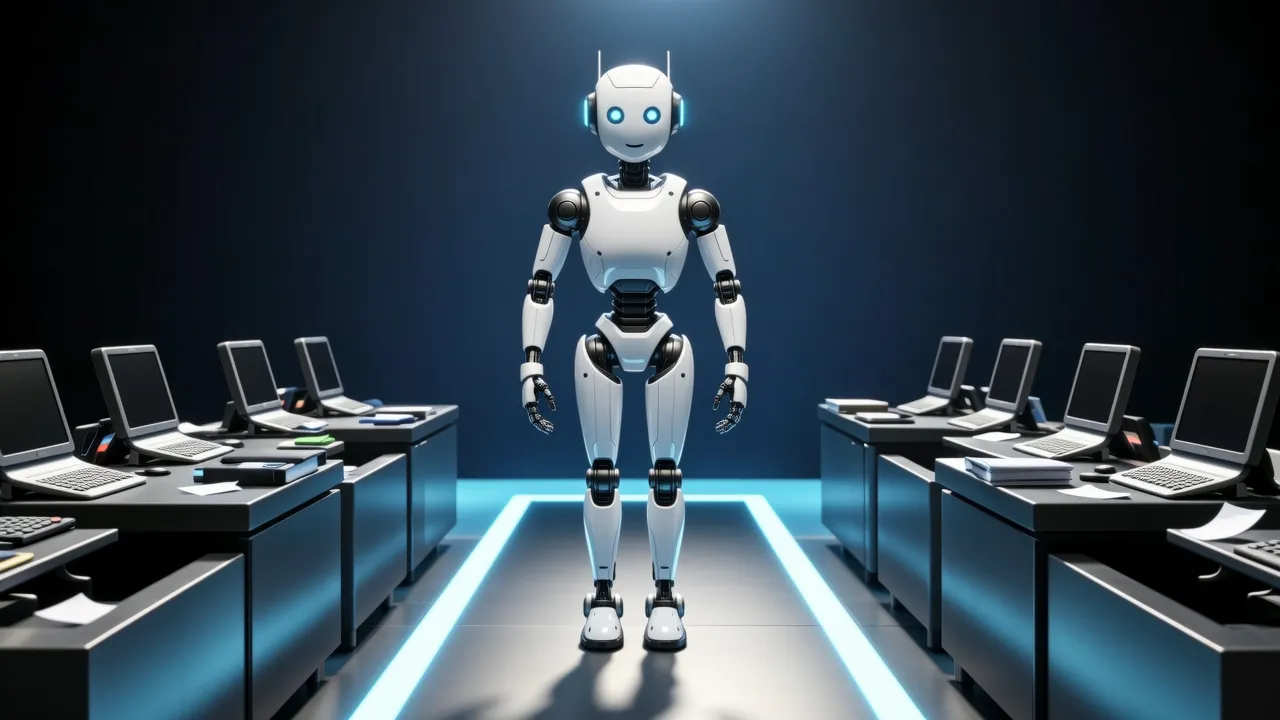
On 18 August 2023, AgiBot released the Yuanzheng A1 [1][2]. Peng Zhihui presented it as the company's first embodied-intelligence humanoid robot [2].
Embodied intelligence refers to AI that perceives and acts through a physical body instead of only handling text or images. A humanoid shape is one way to give a model a viewpoint in the world and hands to act with, so that what it learns can be turned into movement and manipulation rather than only words.
The numbers on the launch sheet
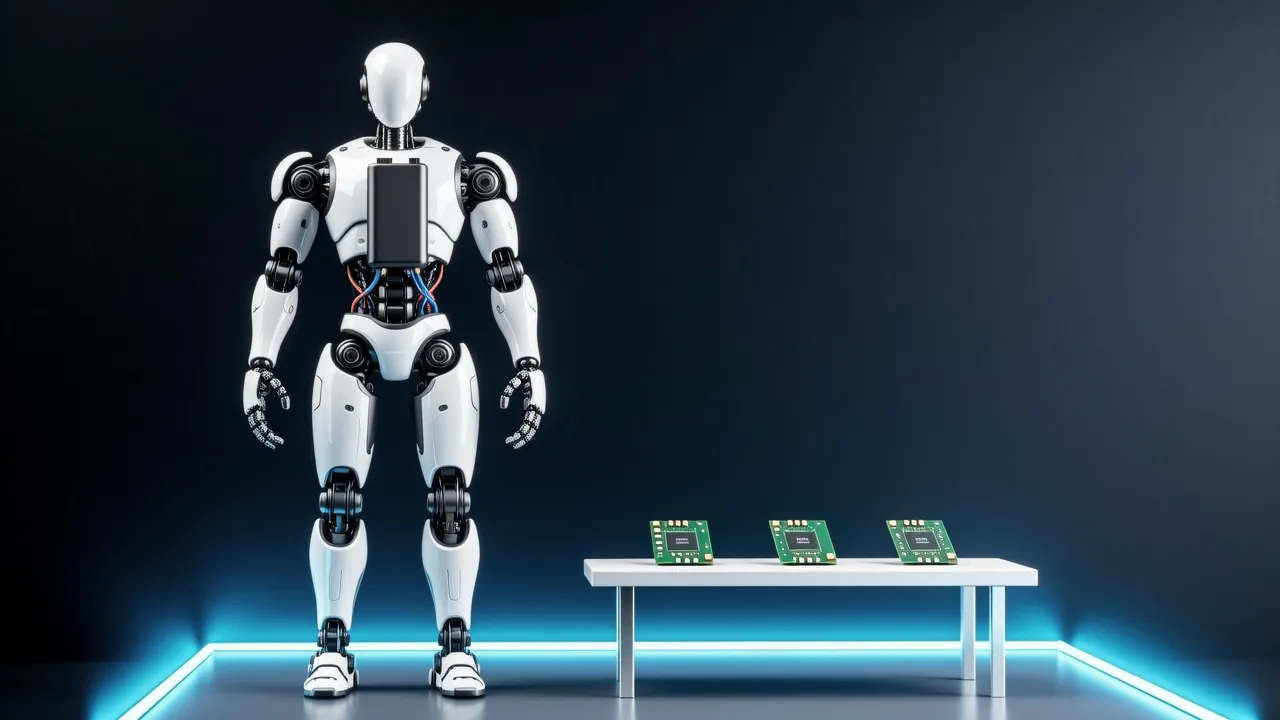
AgiBot published a set of specifications at the launch: the robot stands 175 cm tall and weighs 55 kg, walks at a top speed of 7 km/h, and has 49 degrees of freedom, an 80 kg machine load capacity and a 5 kg single-arm payload [1][2].
These figures describe different things. Degrees of freedom count the independent directions in which a robot's joints can move; 49 of them means a large number of possible postures, which matters for reaching, balancing and handling objects. Payload describes how much a single arm can hold while working, while machine load capacity describes the weight the machine as a whole is built to carry. Walking speed describes how fast it moves over ground. Height and weight are close to adult human proportions, which matters if a robot is expected to work in spaces and at benches built for people.
Plans for selling it
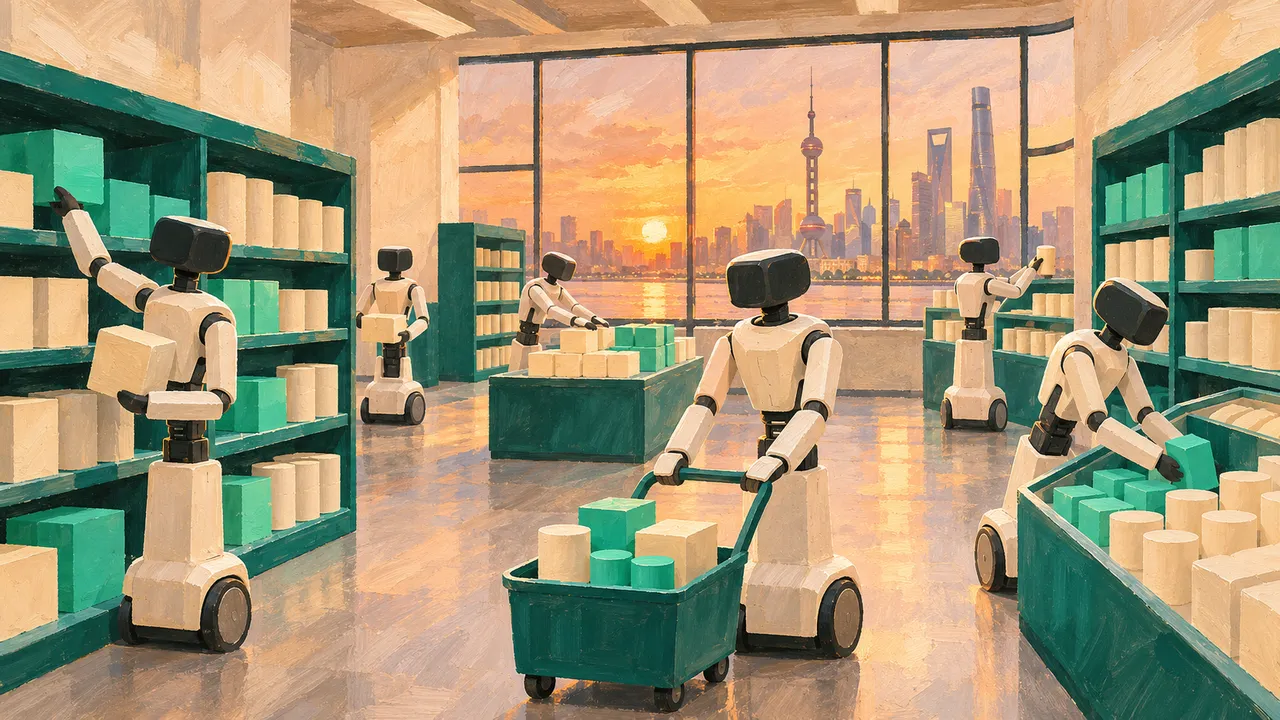
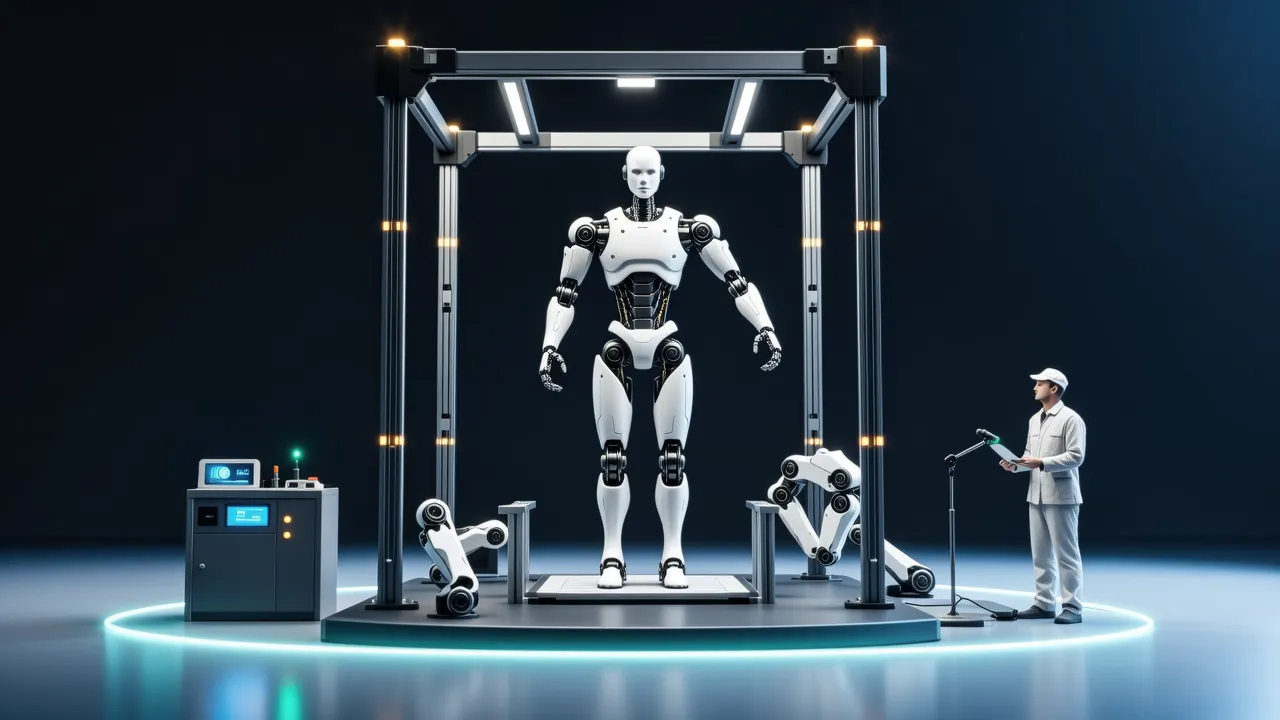
AgiBot said the robot could be commercialised as early as the following year [1]. The first market it named was manufacturing, including new-energy vehicle production and 3C production [1]. 3C is shorthand for computers, communications and consumer electronics — industries that assemble relatively small, precise products at high volume.
Those are settings where work is repetitive, tolerances are tight, and factories already invest heavily in automation. AgiBot also said it had already begun talks with leading manufacturers [1], although no named customer, order or delivery date was announced at the launch.
Why large models were part of the pitch
Peng Zhihui argued that large models change what a robot needs to be told. In his account, large models give robots prior knowledge and common-sense reasoning, so users no longer need to define every object for them [1].
That is a claim about programming effort. Traditionally, a robot asked to pick something up has to be told what that object looks like, where it is and how to grasp it, and each new object means new definitions. If a model arrives with general knowledge about how objects and rooms usually work, a person can state a task in ordinary terms and let the robot interpret it. Whether a machine of this size and speed can do that reliably in a working factory is a separate question that the launch specifications do not answer.
What the launch put on record
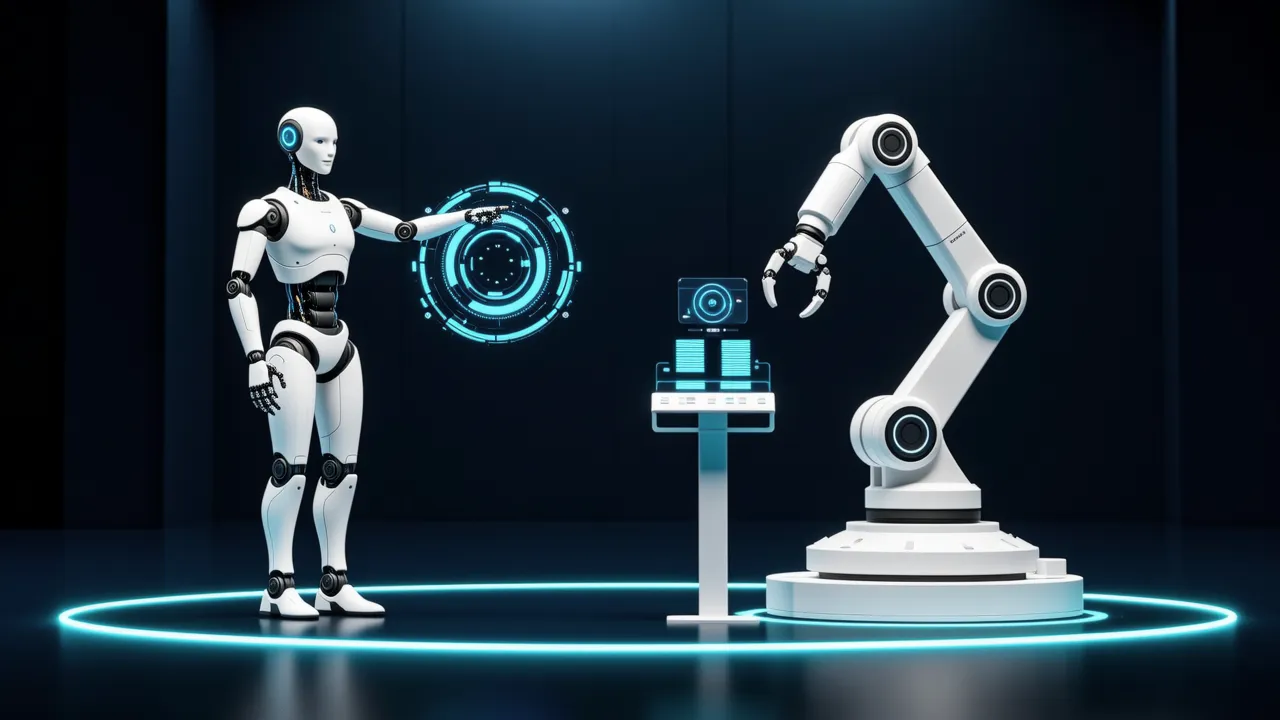
The Yuanzheng A1 launch combined three things in one announcement: a humanoid form with published specifications, an explicit link to large models as the source of the robot's general knowledge, and a named first market with a stated commercial timeline [1][2]. That combination is what the event is remembered for — the machine was presented not as a demonstration of walking and balance alone, but as a general-purpose body for AI, aimed at factory work first.
Sources
- 1
- 2
Cite this page: AgiBot unveils the Yuanzheng A1. TellWorld, https://www.tellworld.net/news/agibot-a1-2023. Updated 2026-11-08