Background
Autopilot did not arrive in one step. In October of the previous year, Tesla had begun equipping the Model S with the hardware needed for what the company called the incremental introduction of self-driving technology[1]. The pattern was to fit the sensors first and add capability afterwards, rather than shipping a finished system all at once.
What happened
The announcement itself was a Tesla blog post titled "Your Autopilot has arrived", dated 14 October 2015[2]. Alongside it came Version 7.0 of the car's software, which enabled the Autopilot features on cars that already had the hardware installed[1]. Three driving functions were named: steering within a lane, changing lanes with a tap of the turn signal, and traffic-aware cruise control[1].
In plain terms, the car could hold its own position in a lane and adjust speed to the traffic ahead, and the driver could ask it to move over by indicating. These are driver-assistance functions: they act on steering, acceleration and braking, but they are switched on and supervised by a person.
The hardware underneath
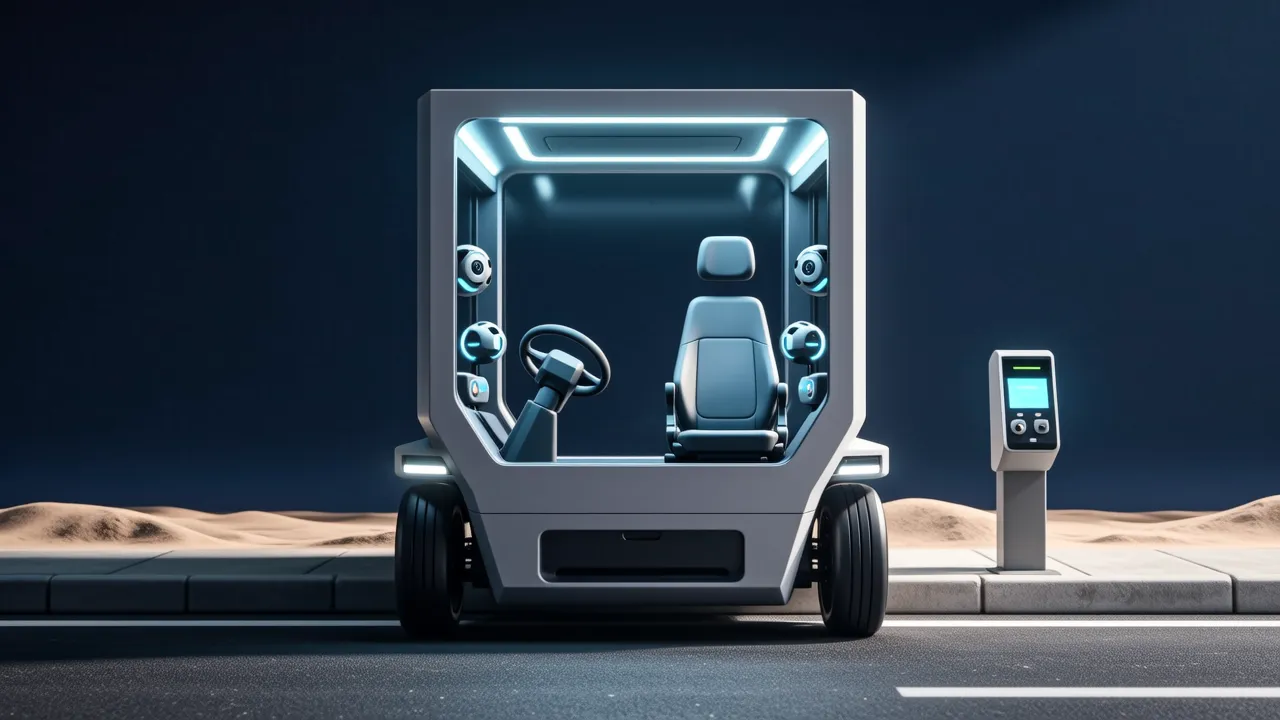
The sensor set Tesla described was made up of a forward radar, a forward-looking camera, 12 long-range ultrasonic sensors, and a high-precision digitally controlled electric assist braking system[1]. The ultrasonics sense 16 feet around the car in every direction, covering the near field around the body, while radar and camera look further ahead. The braking system matters as much as the sensors: because it is electrically assisted and digitally controlled, software can act on what the car perceives, slowing it without the driver's foot on the pedal.
What Tesla said the system could do
Tesla described Autopilot as the only fully integrated autopilot system combining four feedback modules: camera, radar, ultrasonics and GPS[1]. The four are different kinds of information about the same surroundings — what is visible, what reflects radio waves, what is close by, and where the car is — and fusing them is what lets a single system cover highway following as well as low-speed manoeuvring.
Parking was part of the pitch as well. Tesla said the system would scan for a parking space and parallel park on command[1], a task that relies on the short-range ultrasonic coverage at the sides and corners of the car.
Who is driving
The framing of responsibility was explicit. Tesla said the driver remained responsible for and ultimately in control of the car, and compared Autopilot to the systems pilots use in clear conditions[1]. The comparison is doing real work: an aircraft autopilot holds a heading or an altitude and reduces workload, but the crew stays accountable for the flight. Applied to a car, it means the software handles part of the driving task in favourable conditions while the person behind the wheel keeps watching the road.
How the car would change afterwards
Tesla also said that future capabilities would be delivered through over-the-air software updates[1]. This is the other half of the sensor-first strategy: once the hardware is in the fleet, new behaviour can be added to cars already on the road without a service visit, and the same hardware can be made to do more over time.
Why it matters
The announcement is a compact example of how a modern driver-assistance system is assembled and sold. A camera, a radar, short-range ultrasonics and a satellite-positioning receiver are combined into one control layer; longitudinal control (speed) and lateral control (steering) both move under software; and the whole thing reaches customers as a software release rather than as a new model of car.
It also marks out the boundary that later discussions of automated driving kept returning to. Autopilot as enabled here is assistance — a set of functions that a responsible human supervises — and Tesla said so plainly in the same post that announced the features[1]. Keeping that distinction clear is what makes it possible to talk about what such a system does without confusing it with a car that drives itself.
Sources
- 1
- 2
Cite this page: Tesla enables Autopilot with Version 7.0. TellWorld, https://www.tellworld.net/news/tesla-autopilot-2015. Updated 2026-11-08