In 1969 MIT Press published "Perceptrons: An Introduction to Computational Geometry" by Marvin Minsky and Seymour Papert. The book is a mathematical analysis of what perceptrons can and cannot compute.[1]
Background
The book is dedicated to Frank Rosenblatt, the inventor of the perceptron.[2] According to the publisher, it appeared ten years after the discovery of the perceptron.[1]
The book's form matters. It is written as mathematics, with proofs that identify exactly what a restricted machine cannot do. A proof of this kind is narrow in scope, which makes its boundaries precise and checkable.
What the book showed
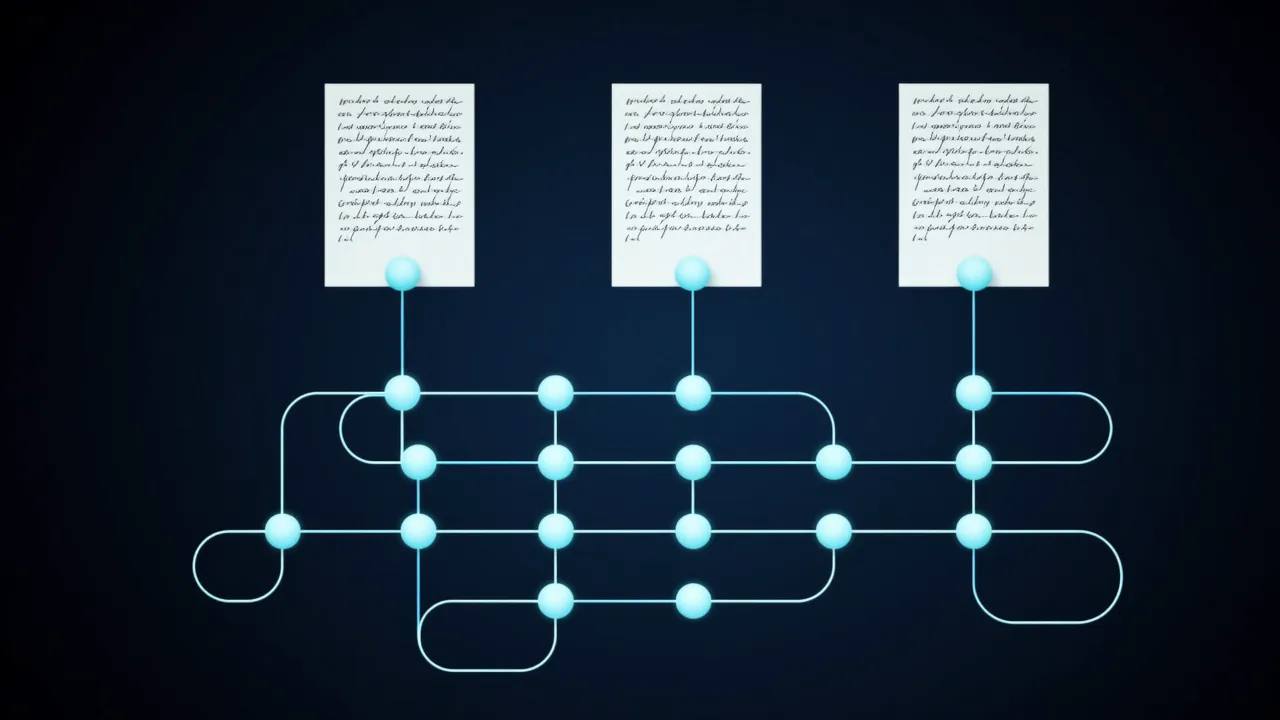
The book's main tools are mathematical proofs about restricted perceptrons, in which connections are only "local." It shows that perceptrons of this kind cannot compute parity, and that the order needed to recognise whether a figure is connected grows with the size of the input.[2] Here "order" means how many inputs a single unit must look at, which is a measure of how large the device has to be.
Put simply, a local perceptron looks at only a small region of the input at a time, so it cannot take in a whole figure at once. The book's results show what such limited viewing cannot accomplish, and the open question is how far those results reach beyond the restricted case.
Key details
A single artificial neuron cannot compute the XOR (exclusive-or) function, which outputs true only when exactly one of its two inputs is true. The reason is that a single-layer unit separates its inputs with one straight line, and the XOR cases cannot be separated that way.[2]
Critics later argued that the book's limits on restricted perceptrons were widely misread as applying to multilayer networks as well.[2]
The distinction between restricted and general perceptrons is easy to lose in a summary. A reader who sees only the headline, that a perceptron cannot compute XOR, may take the book as a verdict on all neural networks, and that is the reading the critics objected to.
Influence
The book is often credited with contributing to a decline in neural-network research in the 1970s and early 1980s, while symbolic approaches to AI grew. The publisher's description says it may have helped turn research away from the perceptron.[1]
The Cornell Chronicle reports that its criticism essentially sealed the fate of Rosenblatt's work.[3]
The book also had a long afterlife. A second printing in 1972 included handwritten alterations by the authors. A 1988 expanded edition added a prologue and epilogue responding to the 1980s revival of neural networks, including a chapter dated 1987 on parallel computers.[2] MIT Press reissued the 1988 expanded edition on 22 September 2017, with a new foreword by Léon Bottou.[1]
Sources
- 1Perceptrons: Reissue of the 1988 Expanded Edition with a new foreword by Léon Bottou (publisher description)MIT Press (via Penguin Books Australia)
- 2Perceptrons (book)Wikipedia
- 3Professor's perceptron paved the way for AI – 60 years too soonCornell Chronicle
Cite this page: Minsky and Papert publish "Perceptrons". TellWorld, https://www.tellworld.net/news/perceptrons-book-1969. Updated 2026-11-07