Background
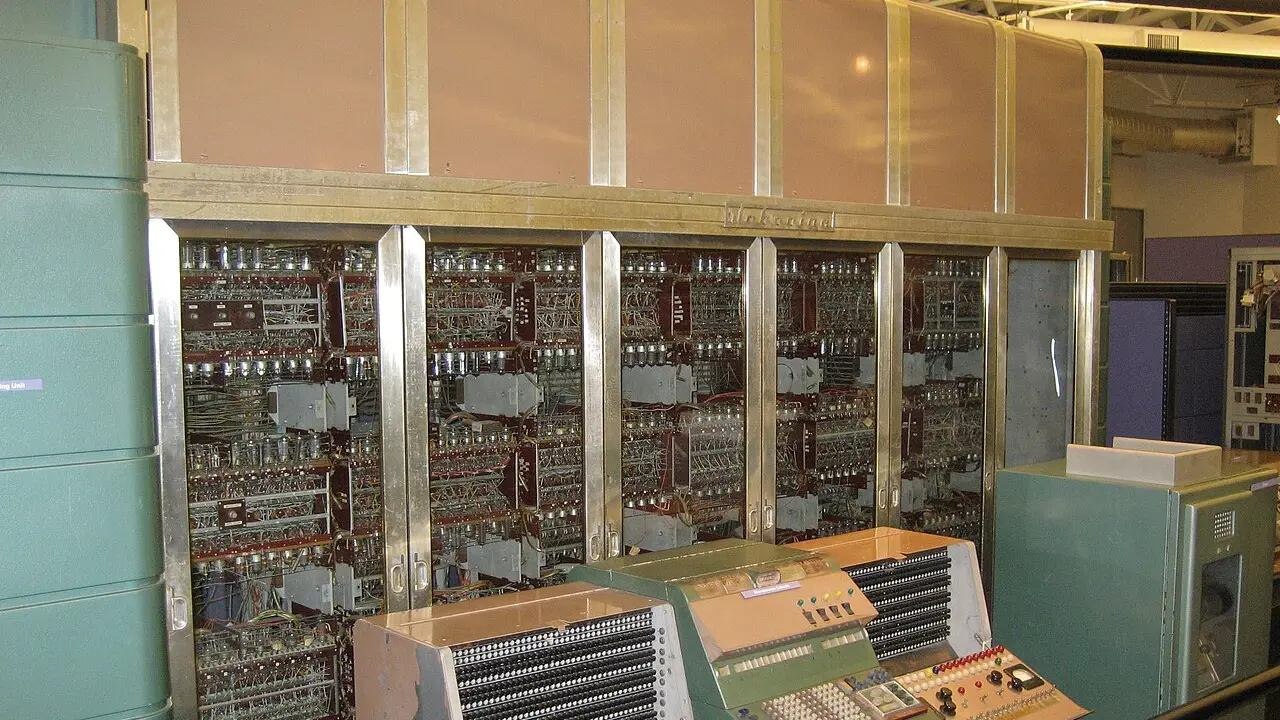
ALPAC — the Automatic Language Processing Advisory Committee — was a committee of seven scientists led by John R. Pierce.[1] A letter from Pierce dated August 20, 1965 records that the committee was formed in April 1964 at the request of the Director of the National Science Foundation.[3] Its brief was to advise the Department of Defense, the Central Intelligence Agency and the National Science Foundation on research and development in the general field of mechanical translation of foreign languages.[3] More broadly, it had been set up to evaluate progress in computational linguistics in general and machine translation in particular.[1] Machine translation means getting a computer to produce a translation from one language into another without a human translator writing it out by hand — a hard problem, because meaning depends on context that the program has to be given somehow.
The report
The report itself, *Language and Machines — Computers in Translation and Linguistics*, was issued in 1966.[1] Its title page identifies it as a report by the Automatic Language Processing Advisory Committee of the Division of Behavioral Sciences, National Academy of Sciences, National Research Council, Publication 1416, 1966.[3] The same page records three printings: a first in November 1966, a second in February 1967 and a third in December 1967.[3]
What it said
The report was very skeptical of the machine translation research done so far, and it emphasised the need for basic research in computational linguistics.[1] The conclusion that is usually quoted is that machine translation was more expensive, less accurate and slower than human translation.[2]
The recommendations, on page 34, are more moderate than that diagnosis. They supported practical methods for evaluation of translations, means of speeding up the human translation process, and production of adequate reference works for translators.[1] Nothing there promises a machine that replaces the translator; what is proposed is measurement, tooling and reference books — the infrastructure of translation treated as a craft.
A concern inside the committee
The report was not intended to end support for the wider field, and there is a paper trail for that. A letter dated July 27, 1966 records that Pierce was asked to prepare a brief statement of the support needs for computational linguistics, prompted by a fear that the committee report, read in isolation, might result in termination of research support for computational linguistics as well.[3]
Impact
According to Wikipedia's account, the report eventually caused the US government to reduce its funding of the topic dramatically, and this marked the beginning of the first AI winter.[1] An AI winter, in the usual sense of the term, is a stretch of time in which money and interest in an area of artificial intelligence fall sharply. The same account says that after spending some 20 million dollars, the National Research Council ended all support.[2]
For readers today the report works as a case study in how a research field gets judged. Its questions were not about whether an approach was elegant, but about whether it was cheaper, faster and more accurate than the human alternative; and its answer was measured against the human baseline rather than against earlier machines.
Sources
- 1ALPACWikipedia
- 2AI winterWikipedia
- 3Language and Machines: Computers in Translation and Linguistics (Publication 1416)National Academy of Sciences / National Research Council
Cite this page: The ALPAC report on machine translation. TellWorld, https://www.tellworld.net/news/alpac-report-1966. Updated 2026-11-07