Background
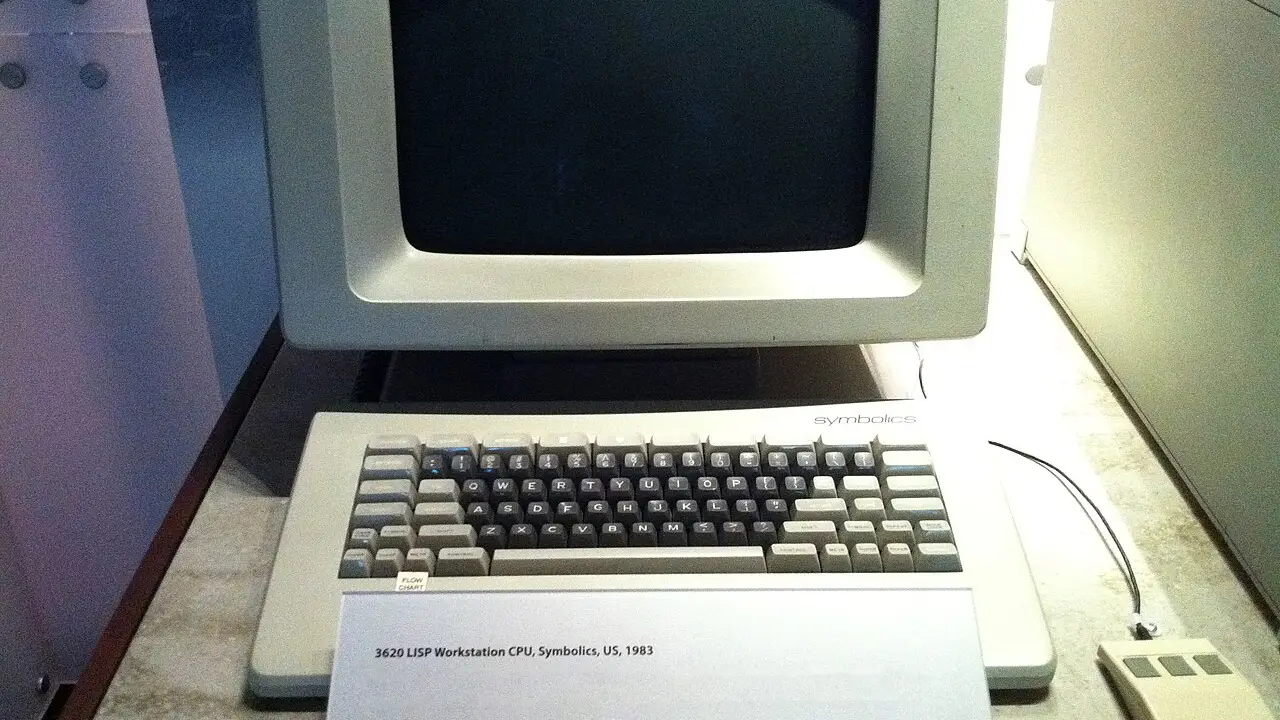
A Lisp machine was a specialized, expensive workstation built to run AI code and Lisp programs on special-purpose hardware. In the 1980s several firms built and sold them, including Symbolics, Lisp Machines Incorporated, Texas Instruments and Xerox.[1] Symbolics began operating around 1979–1981 and sold the CADR as the LM-2, producing about 100 units at $70,000 each.[1] Lisp Machines Incorporated sold about 200 LMI-CADR machines and released the LMI-LAMBDA in 1983.[1] By about 1988 perhaps 7,000 Lisp machine units had been sold in total, a small base for an industry built on high-margin hardware.[1] The machines were premium systems, so the business depended on customers paying much more than they would for a general computer.
The squeeze
The AI industry boomed from a few million dollars in 1980 to billions of dollars in 1988, shortly before the period called the AI Winter.[2] The second major AI winter is dated to approximately 1987–2000.[2] As that winter began and the early microcomputer revolution advanced, cheaper desktop PCs could soon run Lisp programs even faster than Lisp machines without special-purpose hardware.[1] By 1987 general-purpose computers from manufacturers such as Sun Microsystems could perform the same tasks for 10 percent of the cost.[3] Sun SPARC and Apollo workstations could run Common LISP compilers that performed comparably to specialized LISP hardware at a fraction of the cost.[4] A history of Lisp describes the 1987 AI winter as destroying the customer base for Lisp Machines precisely as general-purpose workstations were improving rapidly enough to close the performance gap.[4] The economics were straightforward: a dedicated machine had to justify its price through performance that a general-purpose computer could not match. Once workstations and PCs ran Lisp compilers well enough, the premium disappeared. The same improvement in general-purpose hardware that helped AI software also undermined the case for dedicated Lisp hardware.
The date
One account dates the collapse of the specialized LISP machine market to October 1, 1987 and says it signaled the onset of AI Winter 2.[3] The Lisp machine article's reference to 1987, however, points to Ivory processor machines and a Xerox RISC Lisp machine plan, not explicitly to a market collapse date.[1] The evidence therefore supports 1987 as a turning point in the business and in the broader AI winter chronology, not as a single uniformly recorded failure date.[1][3]
Aftermath
With their high-margin hardware business eliminated, most Lisp machine makers had gone out of business by the early 90s.[1] Symbolics filed for bankruptcy protection in 1993.[4] The specialized Lisp machine market had been displaced by general-purpose workstations that could run Lisp and other AI code at lower cost.[3][4] For the companies involved, the collapse ended the model of selling dedicated, high-priced AI workstations. It also shows how quickly a product category built on specialized hardware can lose its commercial base when general-purpose platforms catch up.
Sources
- 1Lisp machineWikipedia
- 2AI winterWikipedia
- 3AI Winter 2Museum of AI
- 4John McCarthy and LISPGeschichte der Informatik
Cite this page: The Lisp machine market collapses. TellWorld, https://www.tellworld.net/news/lisp-machine-collapse-1987. Updated 2026-11-07