Background
Watson is IBM's question-answering computer system, designed to take a question written in ordinary language and produce an answer rather than a list of links. It became widely known through a televised *Jeopardy!* contest in February 2011, which it won [3]. That contest came before the commercial deals described here [3]. IBM had also set up a strategic business unit dedicated to commercialising Watson [2].
The partnership
On September 12, IBM named WellPoint as its partner in creating the first commercial applications of Watson, with those applications expected by early 2012 [2]. The two companies announced a plan to jointly build Watson-based applications for WellPoint's teams of physicians and other medical personnel [1].
What the applications were meant to do
The stated aim was to improve patient care through evidence-based medicine [1]. Evidence-based medicine is the practice of choosing treatments by looking at what has been shown to work — usually in published studies and systematic reviews — rather than relying only on habit, training or individual judgement; the reports describe it as standardising treatment by identifying proven best practices [1]. Sam Nussbaum, WellPoint's chief medical officer, described using Watson to take prior cases, current clinical literature and clinical best practices into account [1].
The appeal of a question-answering system in this setting is a matter of scale. A clinician cannot read every relevant paper or recall every similar case, and the body of medical literature keeps growing. A system that could search such material and return a short answer grounded in sources would, in principle, put more of that evidence in front of a doctor at the moment of a decision. The reports framed Watson's role in those terms: as a way to bring prior cases, literature and best practices together for the physicians using it [1].
The machine and the pilot
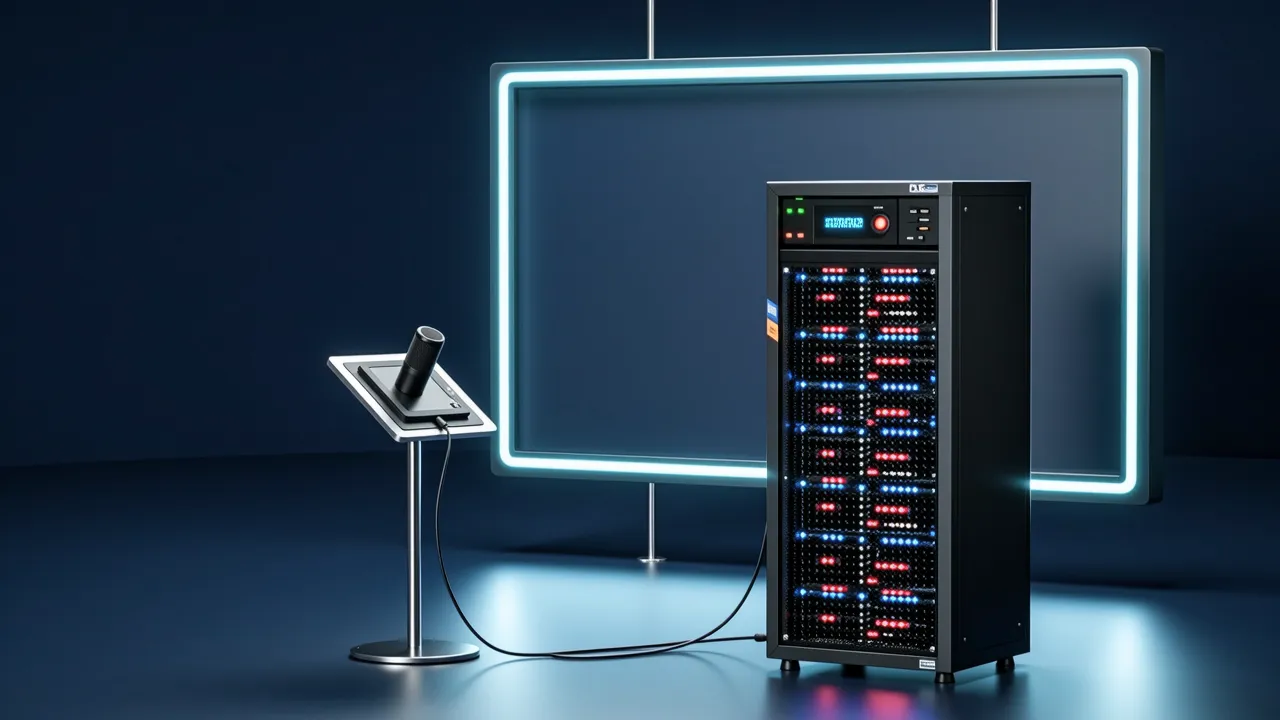
The Watson that played *Jeopardy!* ran on 10 racks of IBM POWER7 servers, with 15 terabytes of RAM, 2,880 processor cores and 80 teraflops of computing power [2]. Teraflops measure floating-point operations per second, so 80 teraflops describes raw arithmetic throughput rather than medical knowledge. Manoj Saxena, Global Solutions Leader for IBM Global Business Services, said the computer used in the pilot would be smaller than the *Jeopardy!* model [1]. WellPoint expected to begin employing the technology in early 2012, in clinical pilots with selected physician groups [1].
What it signalled
The announcement attached a named partner and a timetable to IBM's commercialisation effort: WellPoint was to be the first customer building commercial applications on Watson, and the target was early 2012 [2]. The commercialisation had an organisational base as well, in the strategic business unit IBM had set up for it [2]. The first use was deliberately narrow — pilots with selected physician groups rather than a broad rollout [1]. In the sequence of Watson's public history, the deal sits between the televised contest of February 2011 and the commercial applications that were being planned, marking the point at which the machine moved from a demonstration toward applications built with a partner organisation [3].
Sources
- 1IBM's Watson supercomputer to diagnose patientsComputerworld
- 2Watson - IBM's new supercomputer can interpret patient's symptoms in an instantThe Hindu BusinessLine
- 3
Cite this page: IBM names WellPoint as the first commercial Watson healthcare partner. TellWorld, https://www.tellworld.net/news/ibm-wellpoint-watson-2011. Updated 2026-11-07