Origins
Deep Blue started as an academic project. In 1985 Feng-hsiung Hsu, then a graduate student at Carnegie Mellon, helped develop ChipTest, a chess machine that won the 1987 North American Computer Chess Championship. With Murray Campbell and others, Hsu then built Deep Thought, the first program to defeat a grandmaster. In 1989 Hsu and Campbell joined IBM Research, where the project was renamed Deep Blue, a nod to IBM's nickname "Big Blue".[1]
The first match
The two sides had met before. In February 1996, in Philadelphia, Deep Blue won game 1 — the first computer win over a reigning world champion under regular time controls — but Kasparov went on to win that match 4–2.[3]
The 1997 rematch
The rematch ran from 3 to 11 May 1997 at the Equitable Center in New York, over six games. Deep Blue beat the reigning world champion Garry Kasparov 3.5–2.5. It was the first time a computer defeated a reigning world champion in a match under standard tournament time controls.[2][3]
The result was close and uneven rather than one-sided. Kasparov won game 1; Deep Blue won game 2; games 3 to 5 were drawn; and Deep Blue won the final game 6 on 11 May.[3]
Standard tournament time controls give each side a fixed budget of thinking time, which matters for a machine whose strength comes from how many positions it can examine before the clock runs down. The match was therefore a test not only of chess knowledge but of hardware.
The machine and the team
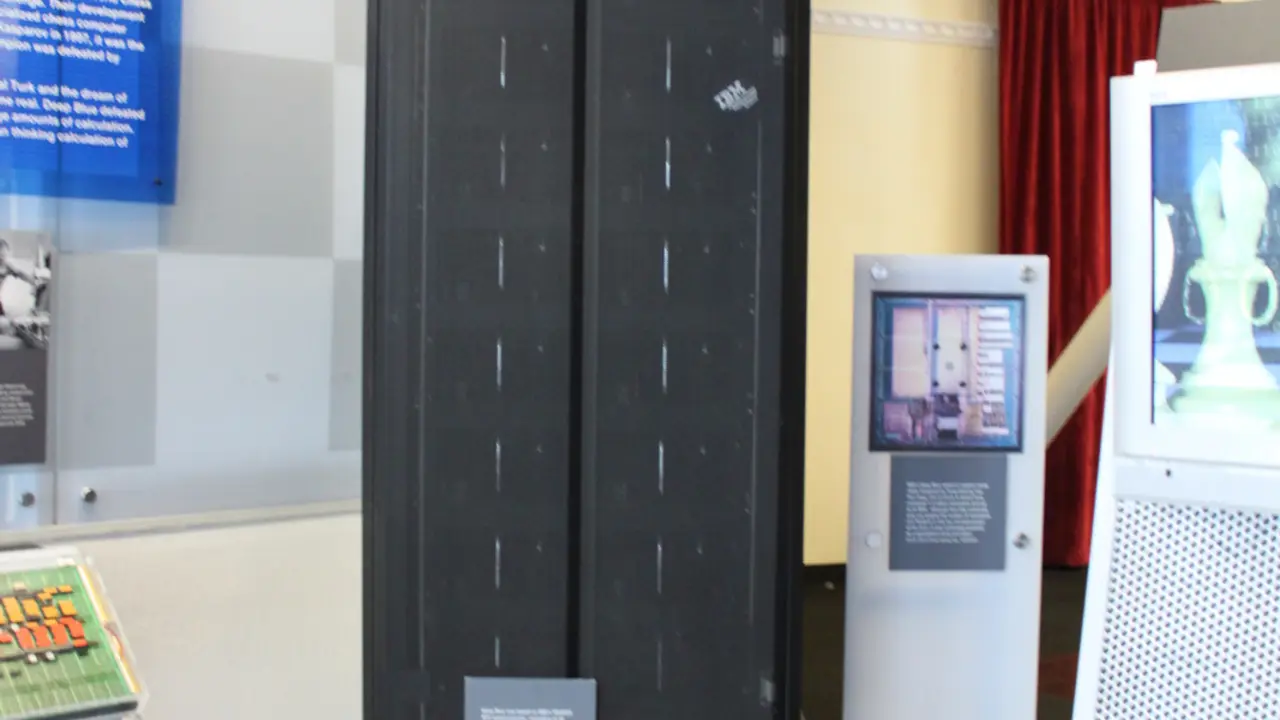
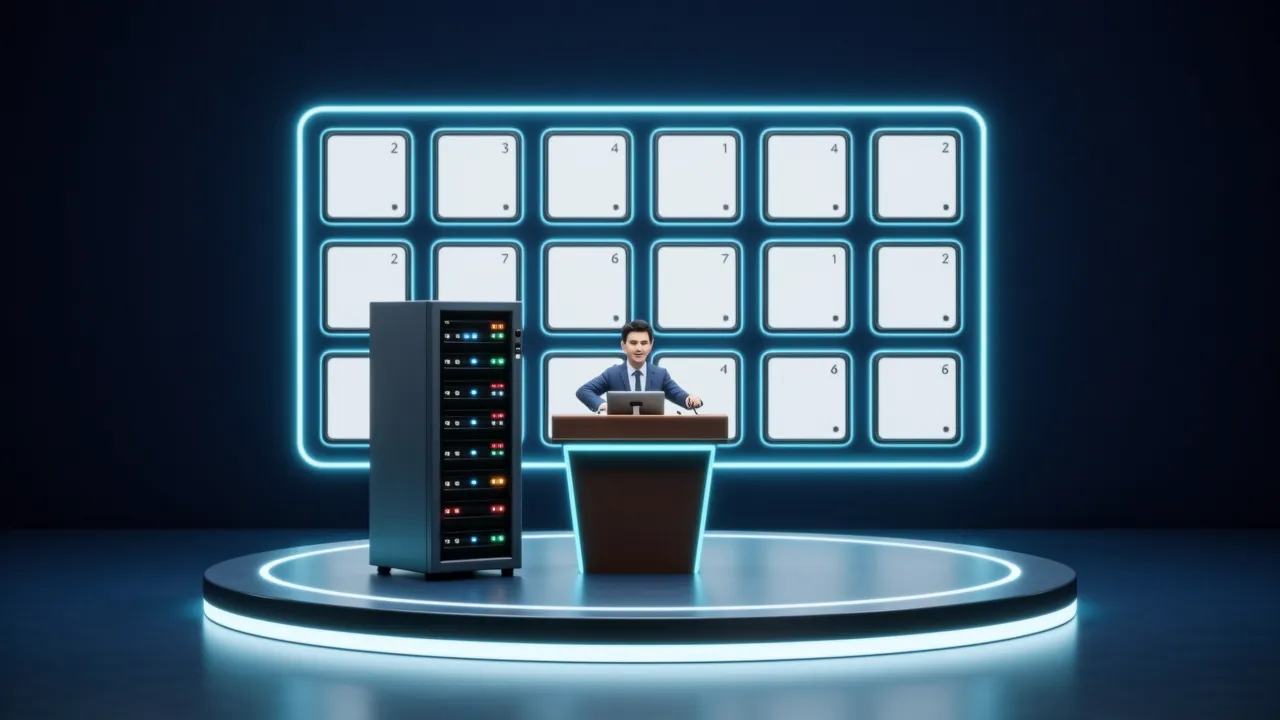
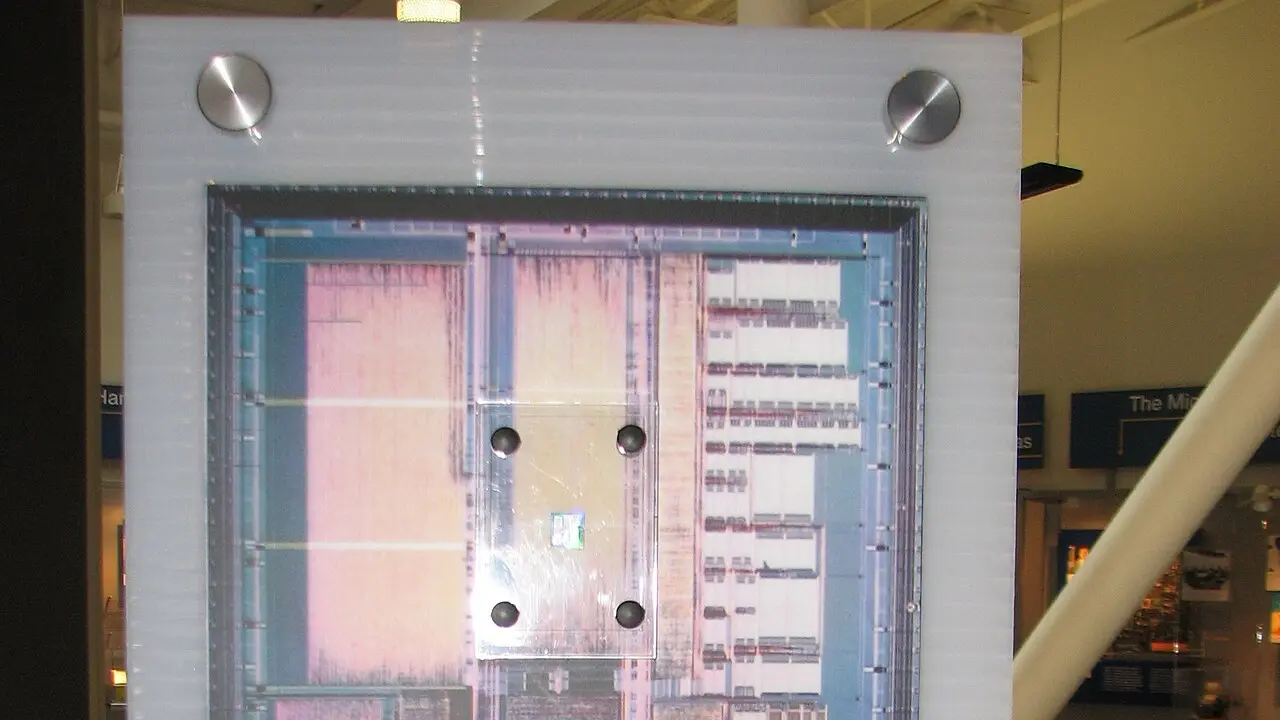
Deep Blue evaluated 200 million chess positions per second, using 32 processors working in parallel, and reached 11.38 billion floating-point operations per second.[1]
Programs of this kind play by search: they run ahead through possible moves, score the resulting positions with an evaluation function, and choose the line that scores best. Faster hardware means more positions examined within the same thinking time, and so a deeper and wider search. Deep Blue's evaluation was written by hand rather than learned from games, a difference the authors of the AlphaGo paper later singled out.[4]
Between the two matches the team, including Joe Hoane, Jerry Brody and C. J. Tan, improved the endgame databases, built a stronger evaluation function and hired more grandmasters as advisers.[1]
The 1997 prize fund was $700,000 for the winner and $400,000 for the loser. After game 2, Kasparov accused IBM of cheating, suggesting human intervention in some of Deep Blue's moves.[3] C. J. Tan's summary of the contest: "Garry prepared to play against a computer. But we programmed it to play like a grandmaster."[1]
Aftermath
IBM says the 1997 rematch was widely seen as a symbolic test of whether supercomputers were catching up to human intelligence.[1] Kasparov said afterwards: "I have to pay tribute. The computer is far stronger than anybody expected."[1] He later said: "For the first time in the history of mankind, I saw something similar to an artificial intellect."[1]
Deep Blue was retired to the Smithsonian in Washington, D.C. IBM went on to build Blue Gene and Watson.[1]
The 2016 AlphaGo paper put the two eras side by side: it contrasted Deep Blue's handcrafted evaluation function with AlphaGo's neural networks trained from gameplay, and noted that AlphaGo evaluated thousands of times fewer positions than Deep Blue had against Kasparov.[4]
Sources
- 1Deep Blueibm.com
- 2Deep Blue team after 1997 Deep Blue vs. Kasparov re-match in New York City, New YorkComputer History Museum
- 3Deep Blue versus Garry KasparovWikipedia
- 4Mastering the game of Go with deep neural networks and tree search (paper PDF)Google DeepMind / Nature
Cite this page: IBM Deep Blue defeats Kasparov in a match. TellWorld, https://www.tellworld.net/news/deep-blue-1997. Updated 2026-11-07