Background
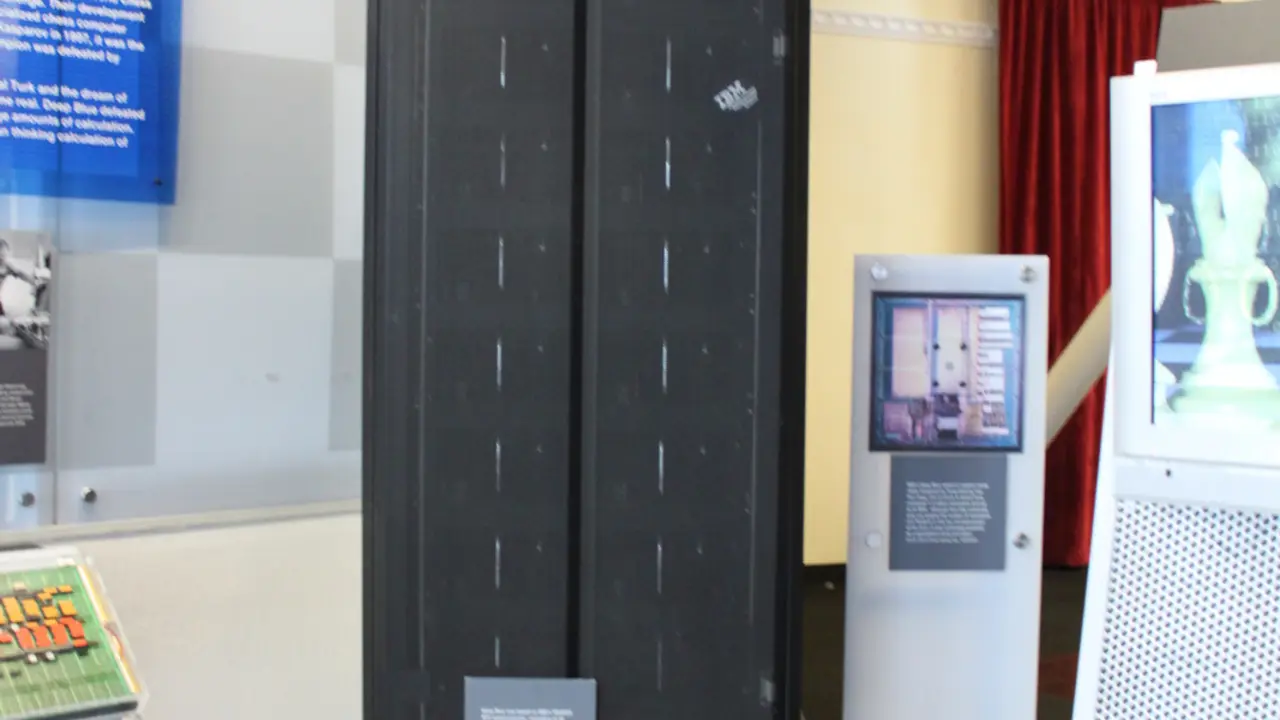
Deep Blue was IBM's chess-playing computer. Its first major test came in February 1996, when it faced the reigning world champion, Garry Kasparov, in a six-game match in Philadelphia [1]. A match of that length tests consistency as much as strength: the same two players meet repeatedly, and a surprise in one game can be answered in the next.
The first game
Deep Blue won the opening game of the match. IBM describes that result as the first victory by a computer against a reigning world champion under regular time controls [1]. The qualifier matters: regular time controls are the clock rules used in serious tournament play, where each side gets a fixed amount of time for its moves. Winning a single game under those conditions is a different claim from winning a match.
Kasparov's recovery
Kasparov recovered and won the match 4–2 [1][2]. Wikipedia records the same sequence: the match took place in Philadelphia in February 1996, Deep Blue took game one, and Kasparov came back to win 4–2 [2]. The first meeting therefore ended with the human champion ahead, but only after the machine had taken a game from him.
The team behind the machine
IBM publishes a photograph captioned as showing ten members of the Deep Blue team at the 1996 match in Philadelphia [1]. The caption is a reminder that the machine was a group project: hardware, software, and the people who tuned both.
After the match
After the defeat the IBM team set to work improving Deep Blue for a rematch [1]. IBM says the upgrades included better endgame databases, a more powerful evaluation function, additional grandmaster advisers and methods to disguise the computer's strategy [1].
Each item targets a different weakness. An endgame database stores positions from the final phase of a game together with the correct play, so the machine does not have to work them out by search. The evaluation function is the part of the program that scores a position, that is, how much better one side is doing, so a more powerful one means judging positions more accurately. Grandmaster advisers supply human expertise about which plans tend to work in practice. Disguising the strategy is about the opponent as much as about the chess: if a program always steers into the same kinds of positions, a strong opponent can prepare for them.
IBM says those upgrades also led to better computerised training tools for chess players in later years [1].
Why it matters
The 1996 match produced a clear, checkable first: a computer beating a reigning world champion in a single game under regular time controls [1]. It also left the story unfinished, since the IBM team went back to work on the machine for a rematch [1]. And the work did not stay inside the match: according to IBM, the same improvements fed into training tools for chess players in later years [1].
Sources
- 1Deep Blueibm.com
- 2Deep Blue versus Garry KasparovWikipedia
Cite this page: Deep Blue plays Garry Kasparov in Philadelphia. TellWorld, https://www.tellworld.net/news/deep-blue-1996. Updated 2026-11-07