Background
Pre-RoboCup-96 did not start as a tournament but as a trial. The decision to organize it was made in August 1995 at IJCAI-95 in Montreal, more than a year before the event itself took place [1]. The people behind the plan wanted to use soccer games as a vehicle for promoting research and education, and they wanted to find out in practice what could go wrong before attempting anything larger [1]. In that sense the event was designed as a stress test: a small, controlled experiment whose job was to surface the practical problems that would come with organizing RoboCup on a large scale [1].
The setting chosen for the experiment was IROS-96, a robotics conference held in Osaka. Running the competition inside an existing conference gave the organizers an audience of researchers and a ready-made occasion to show the idea to the community [1].
What happened
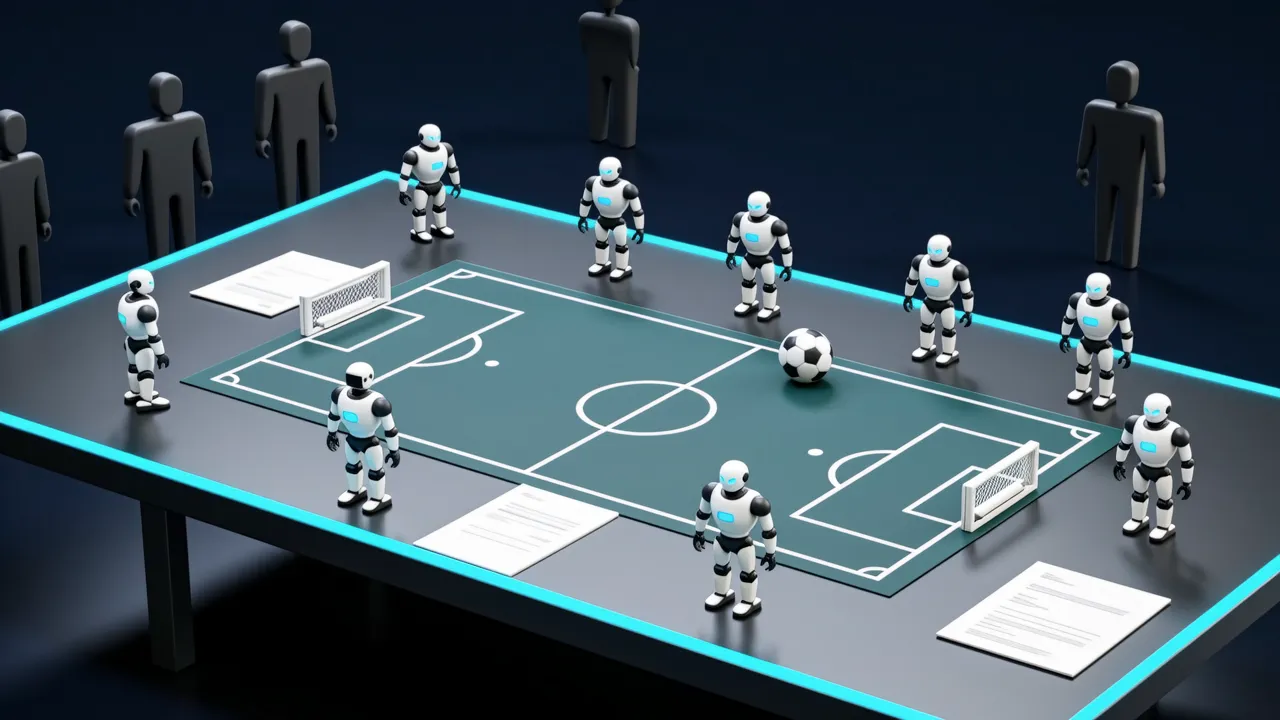
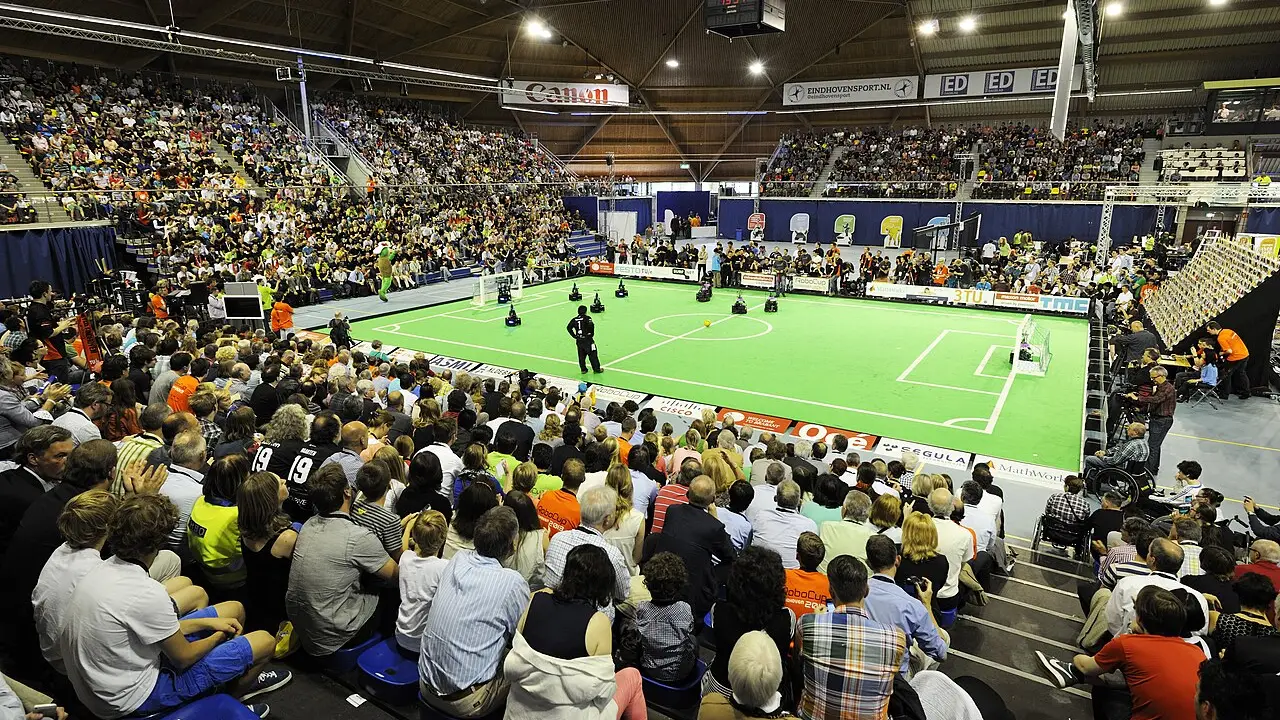
Pre-RoboCup-96 ran during IROS-96 in Osaka from November 4 to 8, 1996 [1]. Two things happened side by side. In the simulation league, eight teams competed against each other [1]. A simulation league in robot soccer means the teams are programs rather than machines: each side is software that perceives a simulated field and decides where to move and when to kick, so the contest tests control and decision-making without the cost and wear of physical hardware. Alongside the simulated matches, there was a demonstration of a real robot for the middle size league [1]. That demonstration showed the other half of the project — actual machines on a physical field — even though it was not yet a full competition.
Key details
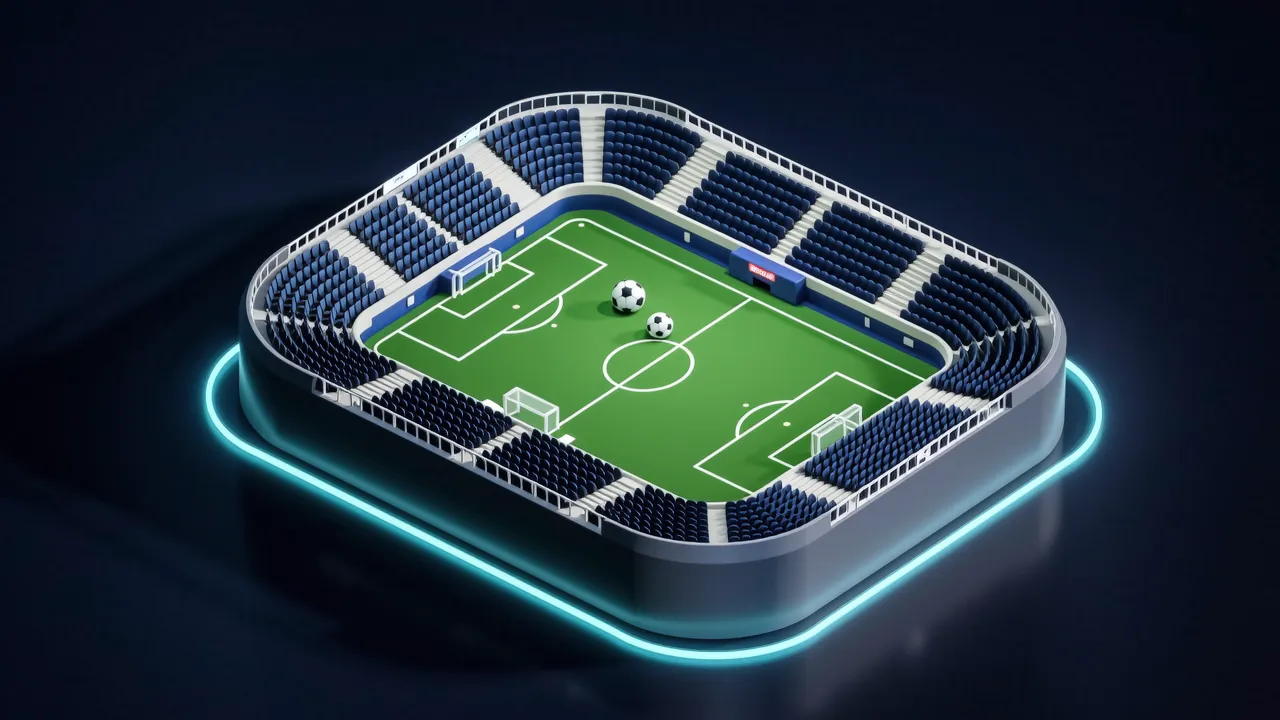
The scale was small. The official history of the RoboCup Federation describes the event as limited in scale, and the eight simulation teams and single demonstration are consistent with that description [1]. But the same history records what made it new: it was the first competition that used soccer games for the promotion of research and education [1]. The point was not the trophy. A shared game gives laboratories scattered across countries a common task with clear rules and a scoreboard, so that methods can be compared rather than merely described. Making that idea concrete required an actual event with actual participants, and Pre-RoboCup-96 was that event.
The gathering was also meant to be instructive about organization. Because the aim was to identify potential problems associated with running RoboCup on a large scale, the small event functioned as a rehearsal: who registers, how matches are scheduled, how teams are run, what breaks when many people and robots are in one place [1].
Aftermath
The rehearsal was followed quickly by the real thing. The first official RoboCup games and conference came in 1997, the year after the Osaka event [1]. Pre-RoboCup-96 therefore sits at the start of the sequence: a decision taken at an AI conference in 1995, a small trial with eight simulation teams and one robot demonstration in 1996, and an annual official competition from 1997 onward [1]. Its importance lies less in what was won in Osaka than in the fact that it happened at all — it turned the proposal of robot soccer as a research benchmark into something teams could enter, and it gave the organizers the list of problems they needed before scaling up.
Sources
- 1A Brief History of RoboCupRoboCup Federation
Cite this page: Pre-RoboCup-96, the first robot soccer competition. TellWorld, https://www.tellworld.net/news/pre-robocup-96. Updated 2026-11-08