Why the rovers had to drive themselves
A signal takes time to travel between Earth and Mars, and an answer takes just as long to come back: for this mission the round-trip communication latency was 20 minutes or more[2]. A rover that stopped and waited for instructions after every few metres would spend most of its day waiting. The mission team therefore gave the rovers some of the driving decisions themselves.
The original goal was modest. The mission was designed for the rovers to traverse about one kilometre in the course of a 90-day primary mission, operating about four hours a day[2].
Two landings in January 2004
In January 2004 the Mars Exploration Rover (MER) mission landed two rovers, Spirit and Opportunity, on the surface of Mars[1]. Several autonomous navigation capabilities were employed in space for the first time in this mission[1]. They appeared at two stages: entry, descent and landing, and surface driving.
Landing: DIMES
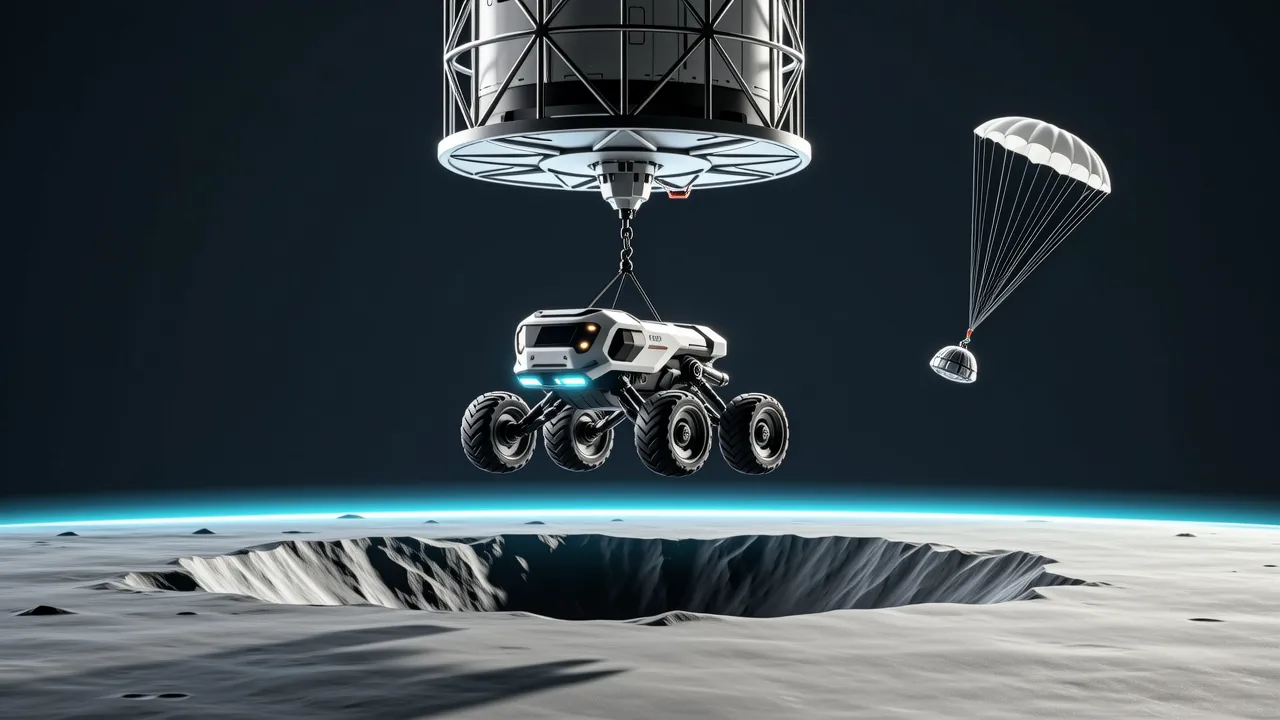
During entry, descent and landing both landers used the Descent Image Motion Estimation System (DIMES) to estimate horizontal velocity during the last 2000 meters of descent[1]. The system works from pictures taken on the way down: by comparing successive images of the ground it estimates how fast the spacecraft is moving sideways. That sideways motion has to be measured and corrected within the few minutes of descent, a window far too short for a question to be sent to Earth and answered.
Driving: stereo vision and GESTALT
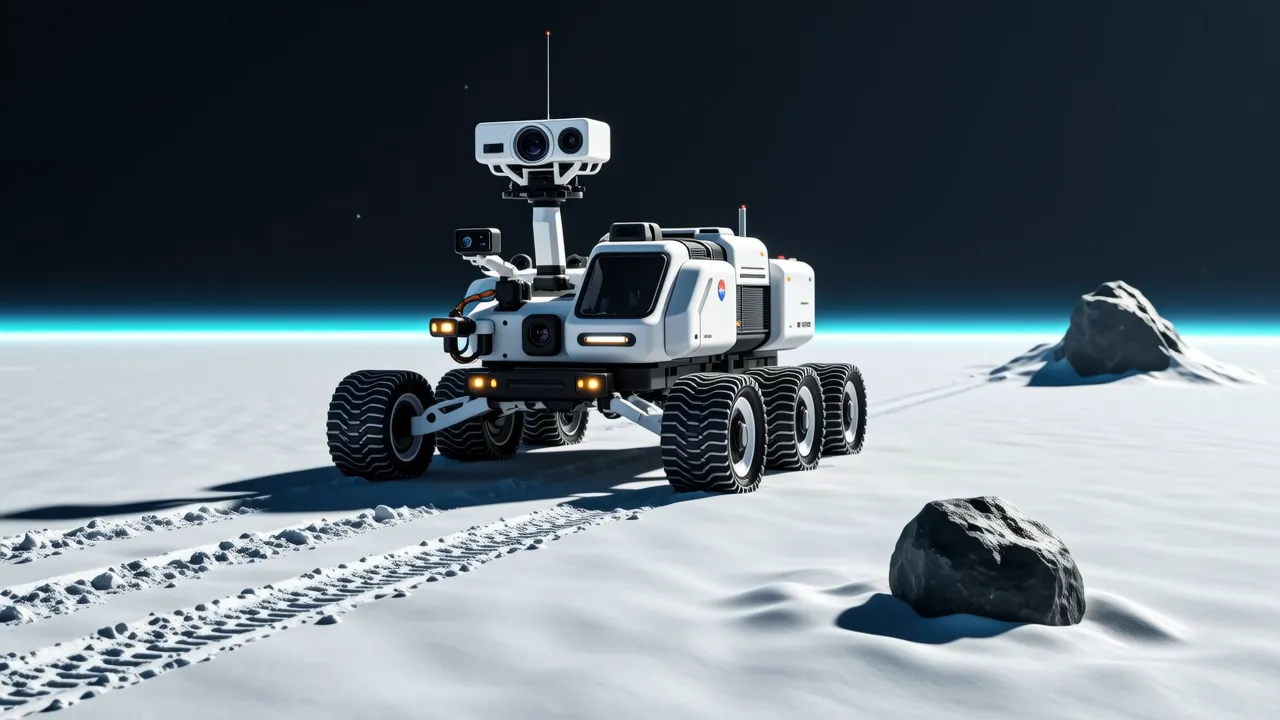
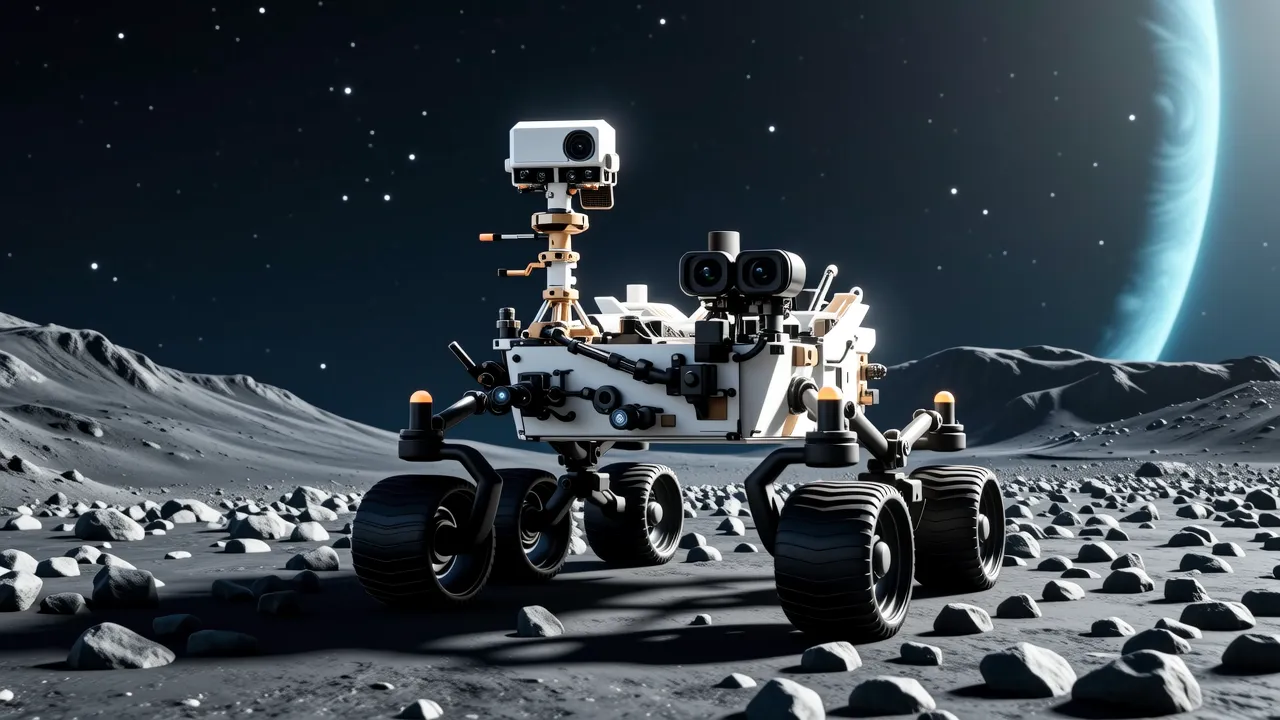
During surface operations the rovers navigated autonomously using stereo vision for local terrain mapping and a reactive planning algorithm called GESTALT for obstacle avoidance[1]. Stereo vision uses two cameras placed a short distance apart: each sees the same scene from a slightly different angle, and the difference between the two images gives the distance to objects in it. A reactive planner picks the next move from what the sensors read at that moment, rather than committing in advance to a long route.
How far they had got by mid-June
By mid-June Spirit had traversed 3405 meters, of which 1253 meters were done autonomously, while Opportunity had traversed 1264 meters, of which 224 meters were autonomous[1]. Over a longer stretch, roughly 30 percent of the distance driven by the MER vehicles in their first 18 months was accomplished using autonomous robotics technologies[3].
What the two rovers ended up covering
Spirit traversed 7.7 kilometres over 6 years inside Gusev Crater and Opportunity 45.2 kilometres over 14 years around Meridiani Planum[3]. Both totals are far larger than the one kilometre the mission was designed for[2][3]. The autonomous capabilities that first flew here were not a demonstration bolted onto the side of the mission: they were part of how the rovers got from one place to the next, section by section, while the team on Earth waited out the delay between one command and the next.
Sources
- 1Autonomous Navigation Results from the Mars Exploration Rover (MER) MissionNASA Technical Reports Server
- 2
- 3MER Surface NavigationNASA/JPL Robotics
Cite this page: Spirit and Opportunity land on Mars with autonomous navigation. TellWorld, https://www.tellworld.net/news/spirit-opportunity-2004. Updated 2026-11-07