Background
The initiative began as a robot competition. The first name chosen, Robot J-League, referred to the J-League, the newly established Japanese professional soccer league. [1] The choice connected a technical contest with a familiar spectator sport, but the plan was not limited to a single country for long.
A national name, an international response
In June 1993, a group of researchers including Minoru Asada, Yasuo Kuniyoshi and Hiroaki Kitano decided to launch a robot competition tentatively named the Robot J-League. [1] Within a month, the researchers received strong reactions from outside Japan. Those reactions asked that the initiative become an international joint project. [1] The project was therefore renamed the Robot World Cup Initiative, with RoboCup as its short name. [1] This change made the international scope explicit in the title: not a Japanese league, but a world cup.
Announcement and preparation
In September 1993, the first public announcement of the initiative was made, and specific regulations were drafted. [1] Work continued through conferences and workshops, where discussions covered both organizations and technical issues; AAAI-94 was one of these venues. [1] The early phase thus combined a public call with rule-making and debate about how contests and research would be organized.
First official games
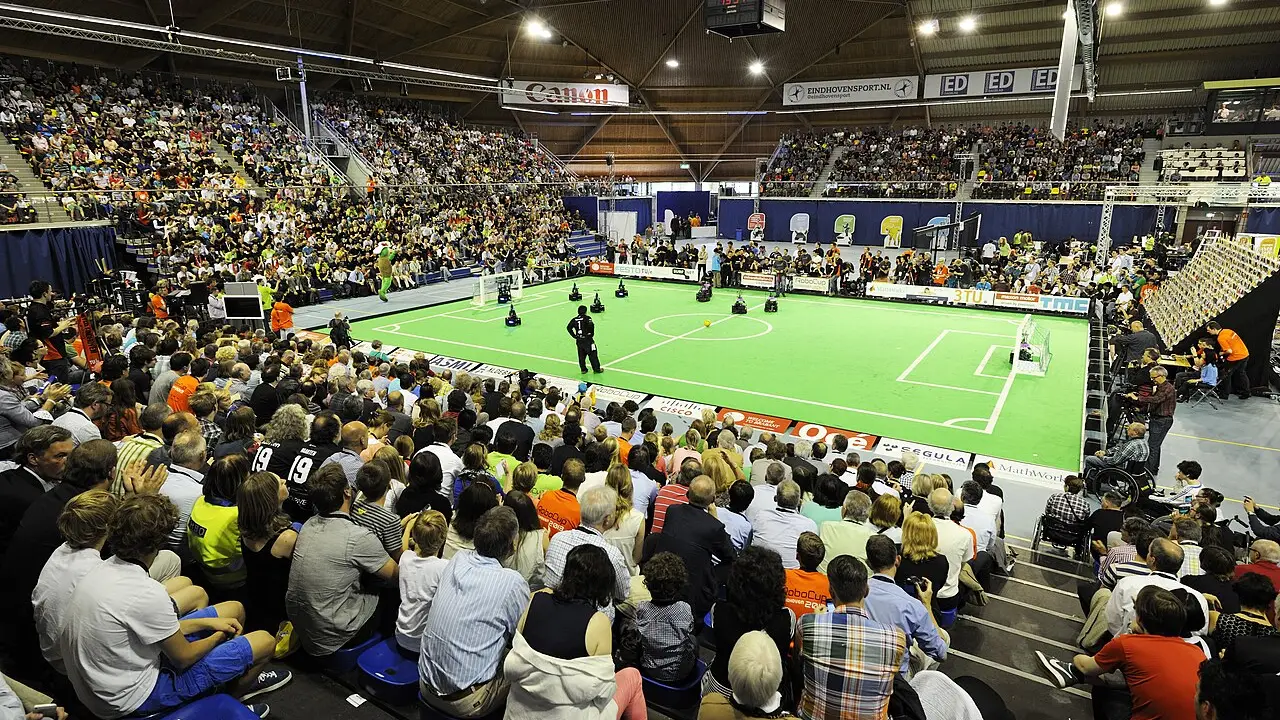
The first official RoboCup games and conference were held in 1997. More than 40 teams took part, and more than 5,000 spectators attended. [1] These numbers marked the transition from proposal to an event with teams, rules and an audience.
Why it mattered
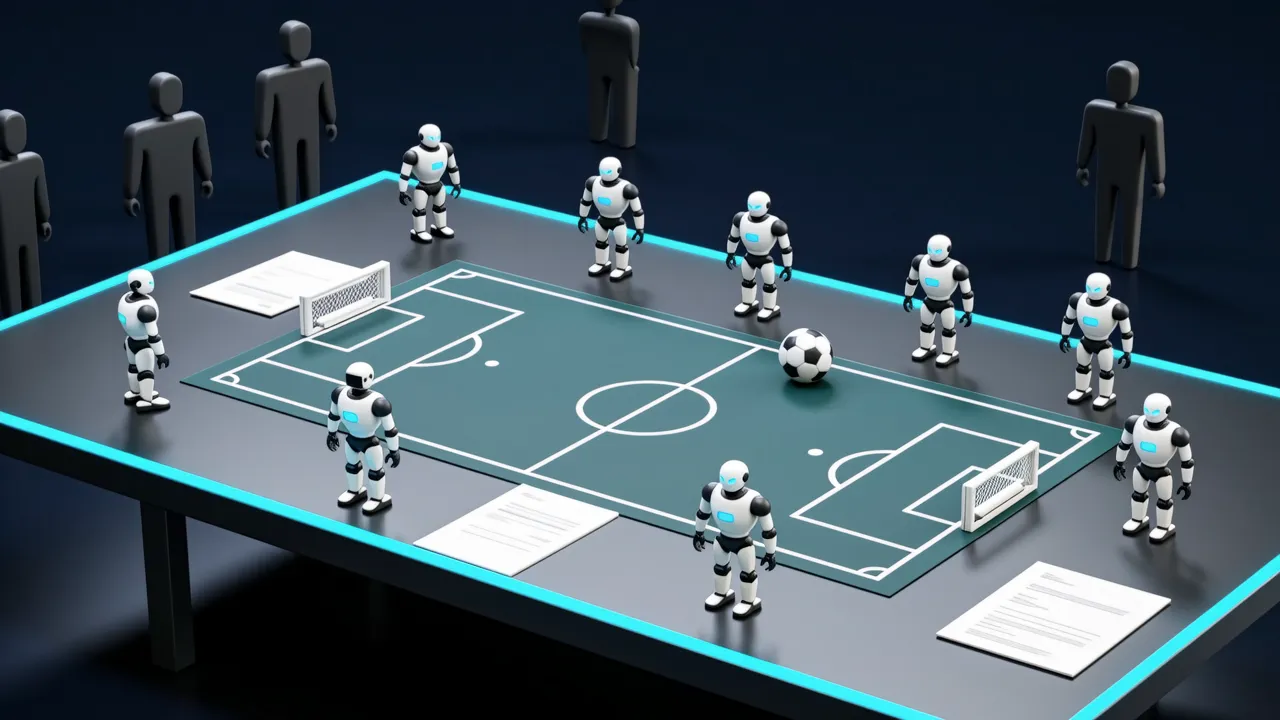
Robot soccer is a compact test of several problems in AI and robotics: a robot must perceive a changing field, decide what to do, control its body, and act alongside others. A shared competition gives research groups a common task and a way to compare results. RoboCup's early history shows how quickly the idea moved from a tentative name to an international project: a proposal in June 1993, a public announcement in September 1993, and official games in 1997. [1] The first event's scale—over 40 teams and over 5,000 spectators—showed that the initiative had attracted participants and public attention. [1] For a field that often relies on isolated demonstrations, a tournament and conference create a place where methods can be tested under the same conditions and discussed in public.
Sources
- 1A Brief History of RoboCupRoboCup Federation
Cite this page: The Robot World Cup Initiative is launched. TellWorld, https://www.tellworld.net/news/robocup-initiative-1993. Updated 2026-11-07