A shared task for a broad field
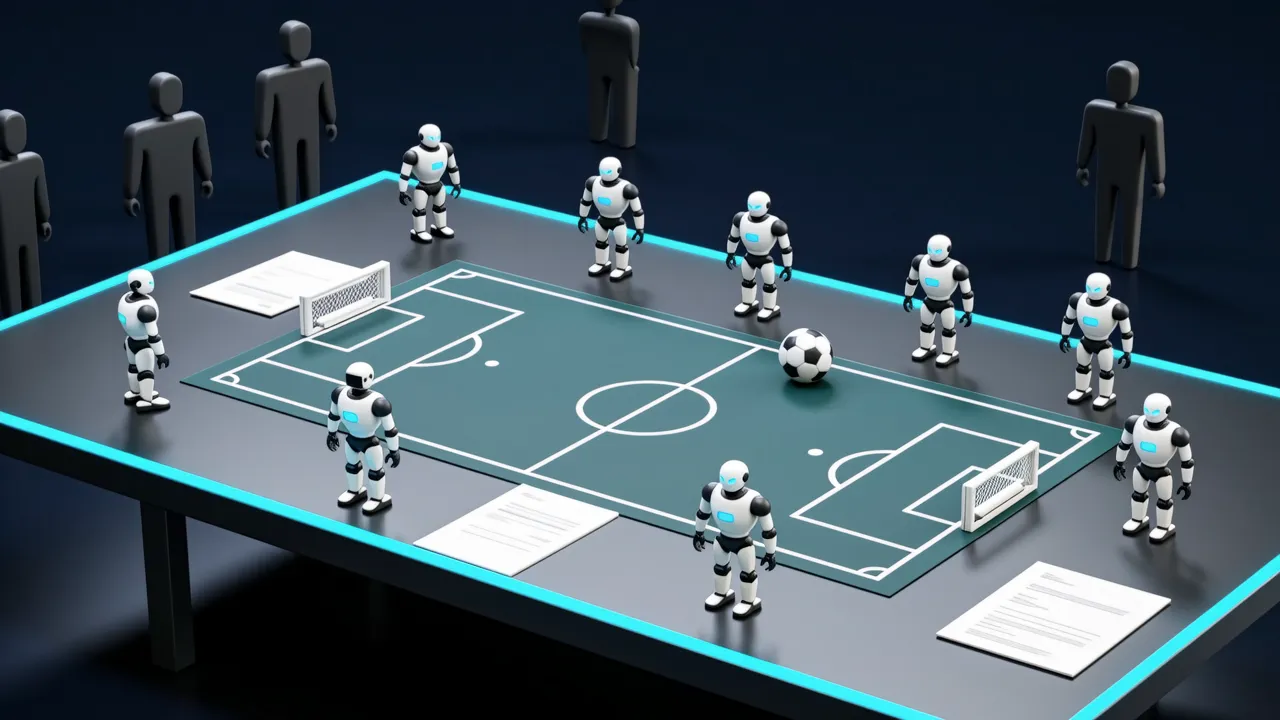
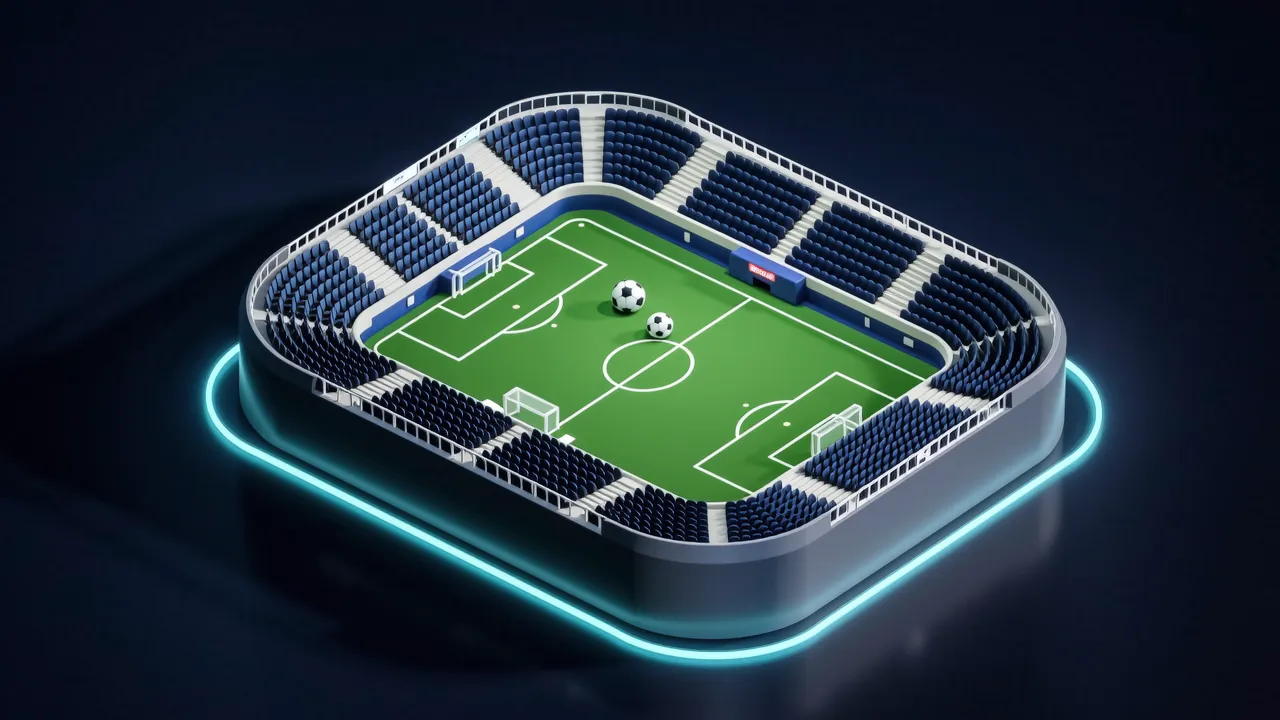
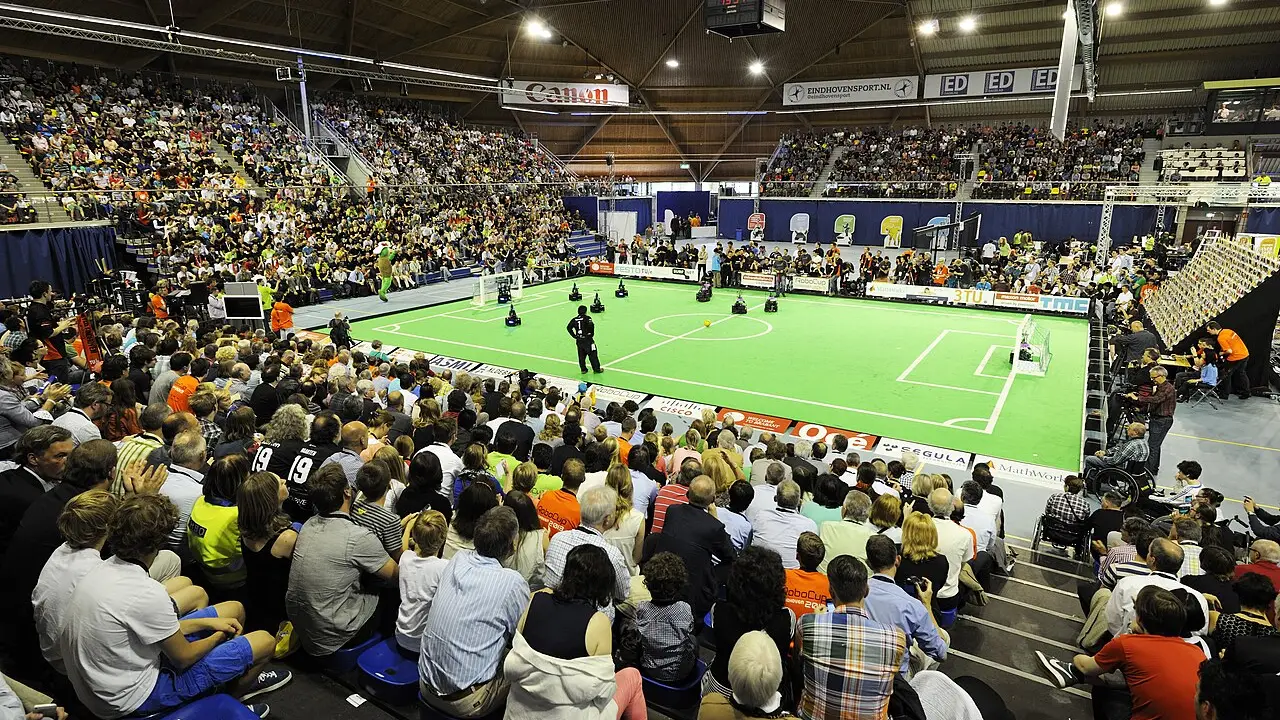
Artificial intelligence and robotics are wide fields, and progress inside them is hard to compare. One common way around this is to choose a single, concrete task that many groups can attempt, so that results can be compared directly and the remaining gaps become visible. Robot soccer was proposed as exactly this kind of task: a game whose rules are simple and universally understood, but which requires a machine to perceive a changing scene, decide quickly, and act alongside teammates and against opponents. The RoboCup Federation's own history traces the origin of that idea to two independent efforts in 1992 [1].
A proposal from Vancouver
The federation's history records that the idea of robots playing soccer was first mentioned by Professor Alan Mackworth of the University of British Columbia, in a paper entitled On Seeing Robots presented at VI-92 in 1992 [1]. The paper was later published in the book Computer Vision: System, Theory, and Applications, pages 1 to 13, by World Scientific Press in 1993 [1]. Mackworth's group also published a series of papers on the Dynamo robot soccer project, turning the proposal into a line of experimental work [1].
A parallel discussion in Tokyo
Independently of that work, a group of Japanese researchers organized a Workshop on Grand Challenges in Artificial Intelligence in October 1992 in Tokyo [1]. According to the same history, that workshop led to serious discussion of using soccer for promoting science and technology [1]. The framing was deliberate: a game is easy to explain to people outside the field, which makes it useful both as a research target and as a way of drawing public attention to what machines can and cannot yet do.
From idea to a plan
Discussion alone would not have settled whether such a project could actually be carried out. The researchers went further and carried out a technology feasibility study, a social impact assessment and a financial feasibility study, and drafted rules and prototype soccer robots and simulator systems [1]. The studies concluded that the project was feasible and desirable [1]. This is the point at which robot soccer stopped being a remark in a paper and became a proposal with rules, hardware, software and an argument for why it should exist.
Why it mattered
A grand challenge works only if it is hard enough to be interesting and concrete enough to be judged. Robot soccer has both properties. A match produces an unambiguous result, so teams can be ranked and methods compared, while the underlying problems — sensing under uncertainty, real-time control, planning with limited information, and coordination among several agents — are the same problems that recur across robotics and AI.
The federation's history thus records 1992 as the year the idea appeared twice, in two places, in two different forms: a research paper on machine vision and a workshop agenda on ambitious goals for artificial intelligence [1]. The feasibility work that followed turned those two strands into a project with rules, prototypes and simulators, which is what later efforts could build on [1].
Sources
- 1A Brief History of RoboCupRoboCup Federation
Cite this page: Robot soccer is proposed as an AI grand challenge. TellWorld, https://www.tellworld.net/news/robocup-idea-1992. Updated 2026-11-07