Background
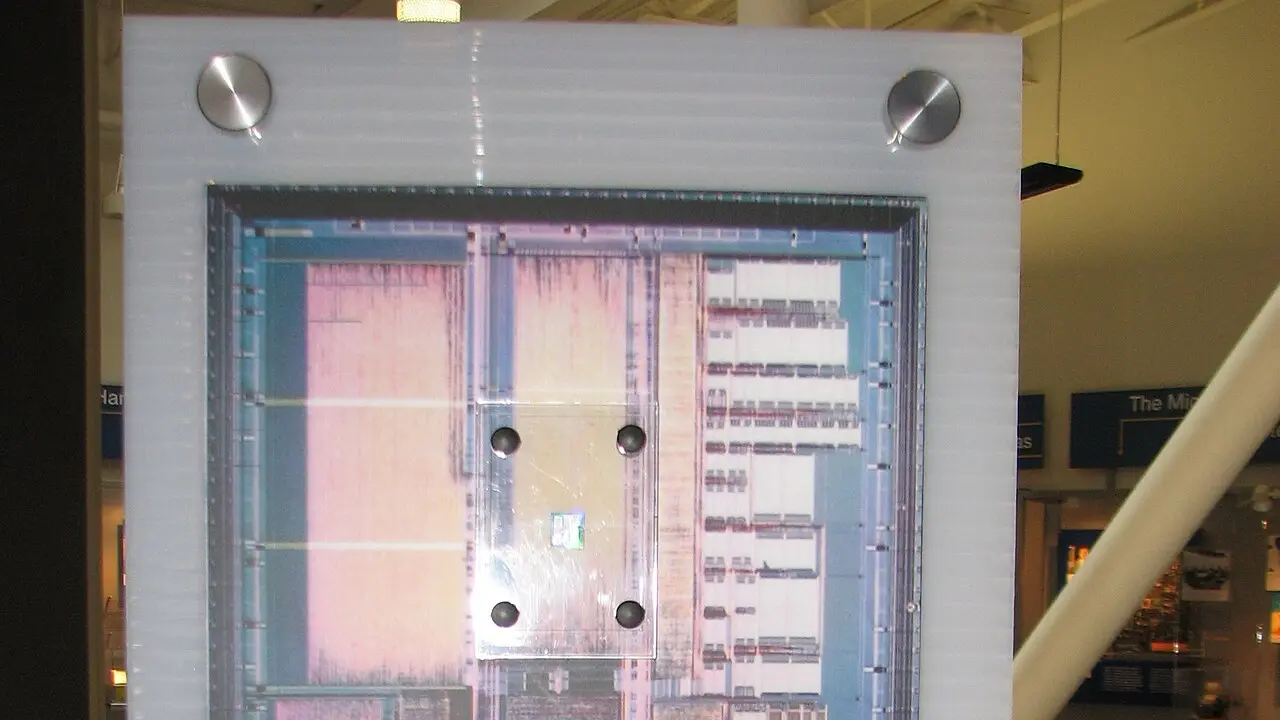
In May 1997, Deep Blue became the first computer system to defeat a reigning world chess champion in a match under standard tournament controls.[1] Standard tournament controls mean that the games followed formal time limits and match rules rather than an informal exhibition. The match was the public face of a larger engineering effort. For the 1997 rematch, the Deep Blue team improved endgame databases, built a more powerful evaluation function, and hired additional chess grandmasters.[1] Those changes were part of preparing the system for complete games under formal conditions. After the victory, IBM retired Deep Blue to the Smithsonian Museum in Washington, D.C.[1]
The institute
In 1999, IBM built on its experience with Deep Blue and launched the Deep Computing Institute.[1] IBM described the institute's goal as harnessing advanced computing to solve complex technological and business problems.[1] The institute therefore represented a step beyond chess: its stated purpose was to apply advanced computing to problems in technology and business, not to prepare a chess machine for another match. The name placed it in the area of deep computing, a term generally used for the use of large-scale computing resources to address complex problems.
From chess to deep computing
IBM's history connects Deep Blue's underlying technology to the capacity of supercomputers. According to IBM, that technology advanced the ability of supercomputers to tackle calculations needed for pharmaceuticals, financial risk, patterns in massive databases, and human genes.[1] These examples point to problems that involve large amounts of calculation and data. Deep computing, in this setting, can be understood as the use of powerful computing resources to address problems that are too complex or too data-heavy for ordinary systems.
The Deep Computing Institute was given a broad problem-solving mission: harness advanced computing for complex technological and business problems.[1] That mission was broader than chess and covered both technological and business problems. It also connected a completed demonstration to an ongoing institutional effort. Deep Blue had shown that specialized computing could defeat a reigning world champion in a rule-bound match; the institute's stated aim was to direct advanced computing at technological and business problems.[1]
Impact
In IBM's account, Deep Blue has two kinds of significance. The first is the match result: the system became the first computer to defeat a reigning world chess champion in a match under standard tournament controls.[1] The second is technical: its underlying technology advanced supercomputers' ability to tackle calculations for pharmaceuticals, financial risk, database patterns, and human genes.[1] The Deep Computing Institute, launched in 1999, was IBM's effort to build on the experience of that project and to pursue complex technological and business problems with advanced computing.[1] Deep Blue itself had already been retired to the Smithsonian Museum in Washington, D.C., after the 1997 victory.[1] For IBM, the sequence runs from a chess match to a museum piece to an institute with a broader mission. The institute's purpose was not to preserve Deep Blue as a chess player but to carry forward the experience of building and using advanced computing systems.
Sources
- 1Deep Blueibm.com
Cite this page: IBM launches the Deep Computing Institute. TellWorld, https://www.tellworld.net/news/ibm-deep-computing-institute-1999. Updated 2026-11-08