A robot in a category that did not exist yet
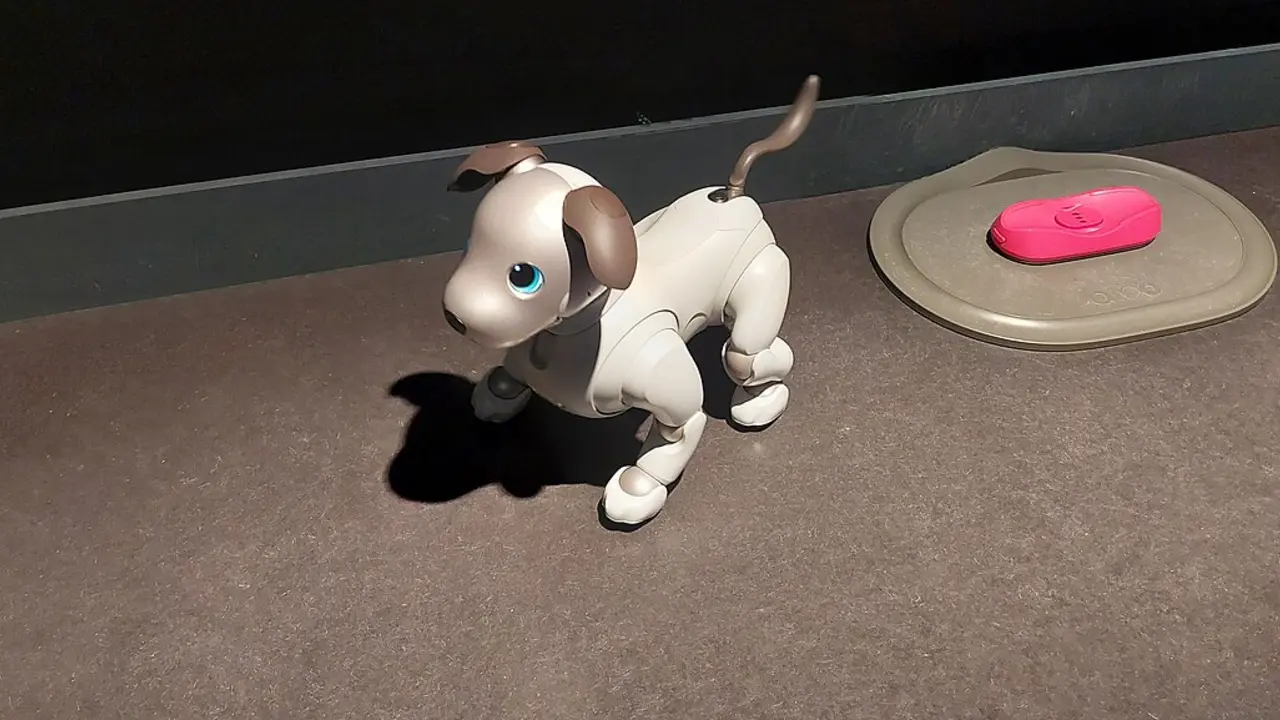
Sony's own history of AIBO describes the ERS-110 as having created a category that did not previously exist: the entertainment robot[1]. The idea behind the machine was an autonomous robot that acts on instinct, expresses emotion and communicates with humans[1]. That description is not a slogan attached to a single product. Sony's history page says the same concept has stayed consistent through the later AIBO generations[1].
Twenty minutes
When reservations for the ERS-110 opened, the machine sold out within 20 minutes[1]. Reservation is the stage before a product goes on general sale, when a maker collects orders and sets aside units for the people who ask first; selling out at that stage means the units offered were claimed before most interested people had a chance to act. This is the most concrete number in Sony's account of the launch, and the point at which the story of the ERS-111 begins.
The people who were left out
The sell-out did not end with the customers who got a machine. Sony's history page records that many people then asked for an AIBO of their own[1]. Sony's answer came quickly: it hurriedly released the ERS-111 half a year later[1].
The key detail is how the two machines relate. The history page lists the ERS-110 and the ERS-111 together under the 1999 model year[1], treating them as members of the same cohort rather than as two separate generations. The ERS-111 therefore reads as an emergency addition to a line already on the market, not as a planned successor.
The generational break came later
The real change of generation arrived afterwards. Sony's history page dates the ERS-210 to an announcement on October 12, 2000, describing it as the second generation and noting that it added speech recognition[1]. Speech recognition means the machine can take spoken words as input rather than relying only on touch or on commands pressed into a controller, which changes how a person and a robot exchange information. Compared with that step, the position of the ERS-111 becomes clear: same year, same concept, a hurried second pass at the same idea[1].
Why the episode is remembered
Two things stand out. The first is the claim about the category itself: Sony presents the ERS-110 as having opened a market segment that did not exist before it[1]. If that is the frame, a 20-minute sell-out is not simply a good day for one product; it is evidence about whether a new kind of product has an audience at all.
The second is the mechanism of the response. The follow-up model existed because customers asked for it, and it arrived within half a year[1]. That interval is short, and it says something about how fast the company moved once demand was visible.
The concept behind both machines — instinct-driven behaviour, emotional expression, communication with people — outlived the 1999 models and carried into the generations that followed[1].
Sources
- 1
Cite this page: Sony rushes out the ERS-111 after AIBO sells out. TellWorld, https://www.tellworld.net/news/aibo-ers-111-1999. Updated 2026-11-08