A dividing line at Mars
NASA treats the landing of Mars Pathfinder and its Sojourner rover on July 4, 1997 as the start of an uninterrupted period in which at least one spacecraft has been operating in Mars orbit or on the planet's surface[1]. The word that matters is "uninterrupted": spacecraft had reached Mars before, but from this landing onward, by NASA's account, the planet was never again left without a working mission above it or on it[1]. The mission itself was short — the final data transmission came on Sept. 27, 1997[2] — but the presence it began did not end with it.
Landing on air bags
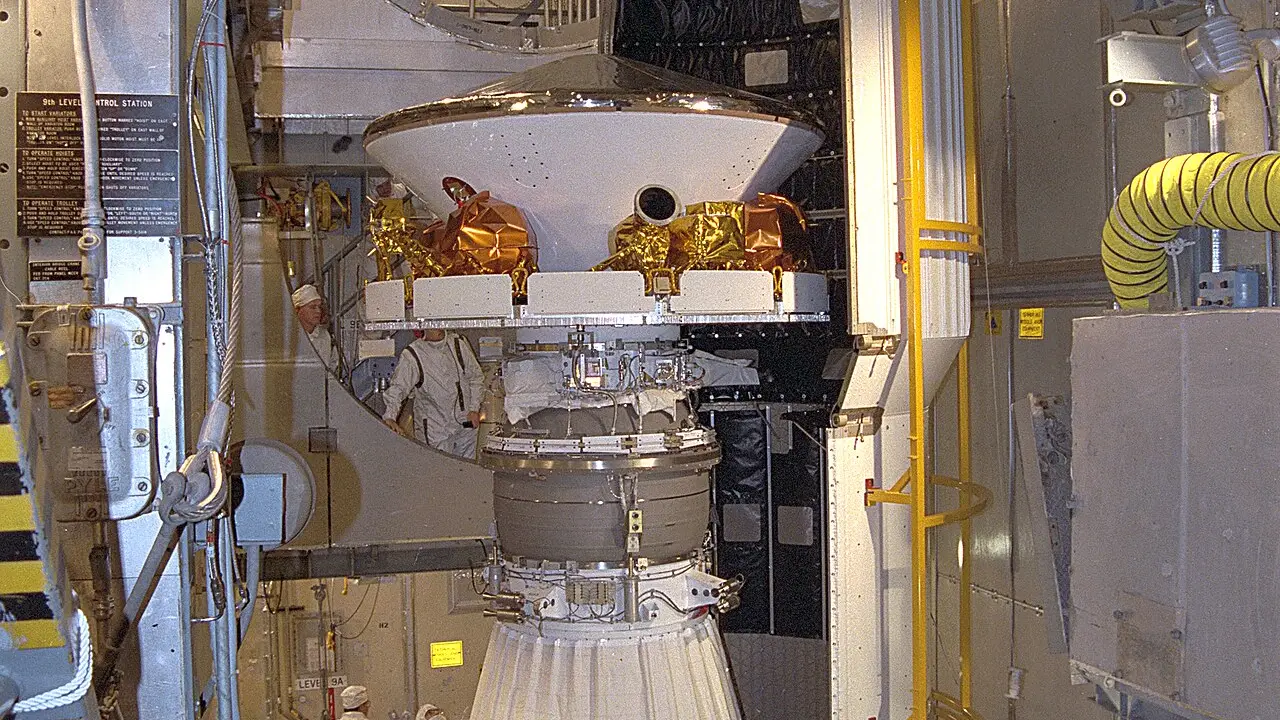
Pathfinder was the first US spacecraft to use landing air bags[1]. Air bags change the shape of a landing. A spacecraft can be wrapped in bags carried folded against its body, and when it reaches the ground the bags take the shock: the craft hits, bounces, rolls and comes to rest, instead of braking all the way down on retro-rockets for a soft, upright touchdown. The trade is precision for tolerance — the landing does not have to be perfect, because the bags absorb the error. Pathfinder came down in Ares Vallis on July 4, 1997 and delivered the first-ever robotic rover to the Martian surface[2].
A lander and a rover
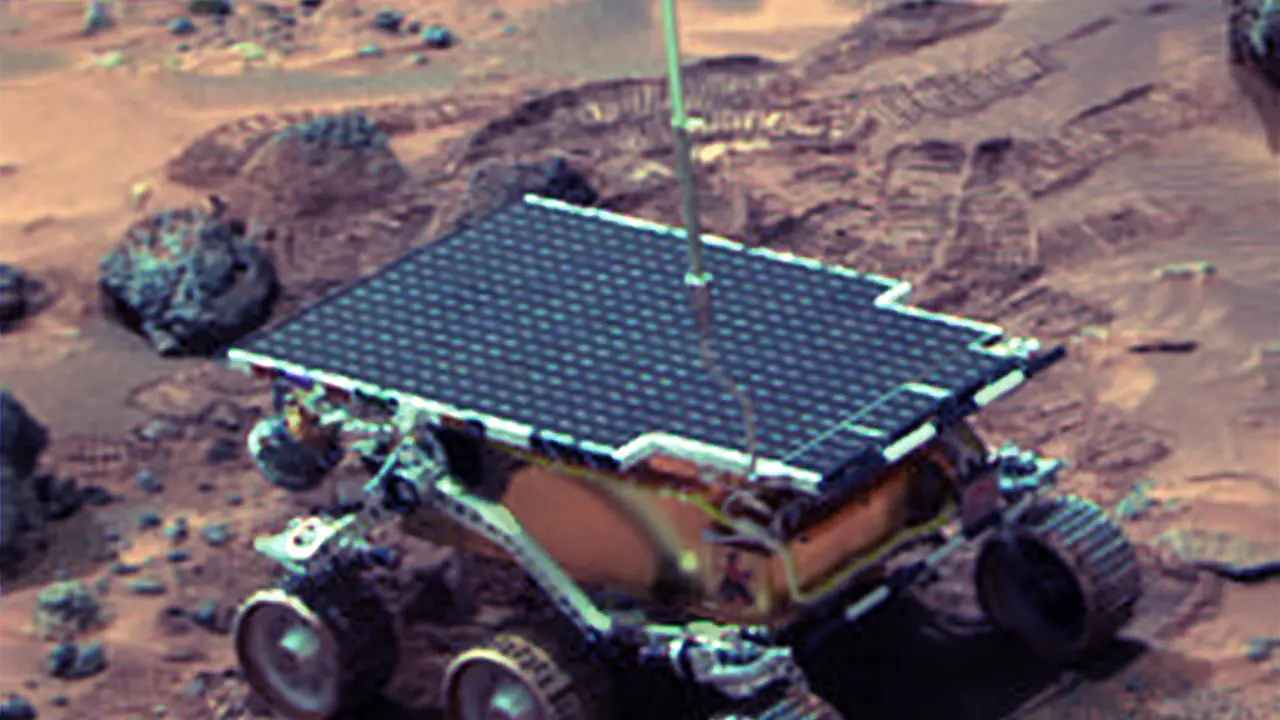
A lander stays where it lands; a rover does not, and that difference was the point of the mission. The lander weighed 793 pounds, and the rover it deployed, Sojourner, weighed 23 pounds[1]. Sojourner was the first wheeled vehicle operated on another planet in the solar system[1] — the first time a machine drove on a world other than Earth. Small as it was, it could go to a rock instead of waiting for a rock to come within reach of a fixed arm.
Its travels were modest by later standards, and are documented precisely. Sojourner traversed 100 metres clockwise around the lander, exploring about 200 square metres of the surface[3]. The clockwise detail carries information: the path was a loop that kept the lander — and the communications that went through it — at the centre, so the vehicle could work outward and still come back to where it started.
What came back
From the landing until the final data transmission on Sept. 27, 1997, the mission returned 2.3 billion bits of information, including more than 16,500 lander images and 550 rover images[2]. A bit is the smallest unit of digital information, so the figure measures volume: nearly three months of pictures, readings and engineering data sent across the solar system. The two image counts are lopsided — more than 16,500 from the lander against 550 from the rover. One machine sat still and looked; the other moved, and returned a smaller set of pictures from its travels.
An internet event
The mission also became a public event on a scale that was unusual at the time. NASA's technical report records about 566 million internet hits during the first month of the mission, with 47 million on July 8 alone, describing it as the largest internet event in history at the time[3]. A "hit" is a request made to a web server; it measures traffic rather than people, and these numbers describe a site being hit by visitors over and over in the weeks after the landing.
What it left behind
Later Mars missions are better known, but the beginning is written here on two counts. Pathfinder put the first wheeled vehicle on another planet in the solar system[1], and its landing is the point from which NASA counts an unbroken run of spacecraft at Mars[1]. Both claims are about a start rather than a peak: a small rover that drove a loop around its lander, and a stretch of presence that has not been broken since.
Sources
- 1
- 2Mars Pathfinder mission pageNASA / JPL
- 3The Mars Pathfinder Mission and Science ResultsNASA Technical Reports Server
Cite this page: Mars Pathfinder lands and deploys the first planetary rover. TellWorld, https://www.tellworld.net/news/mars-pathfinder-landing-1997. Updated 2026-11-08