A race inside a staged city
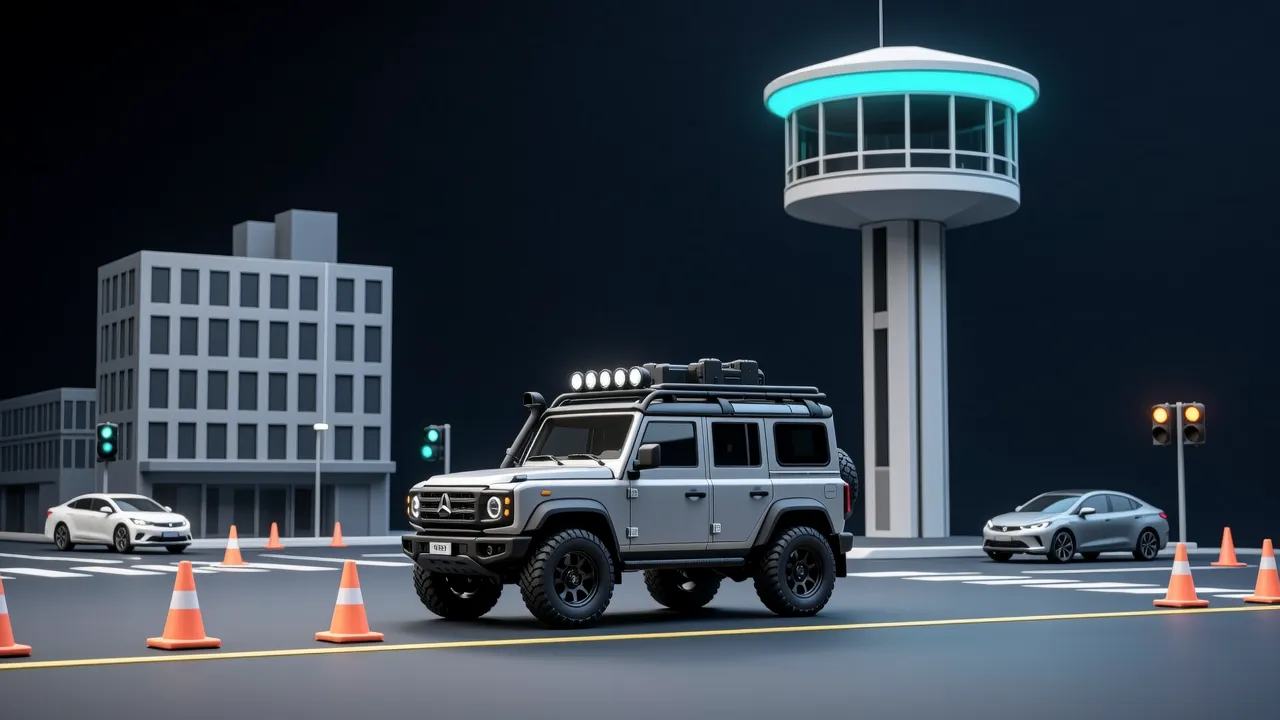
The DARPA Urban Challenge took place on 3 November 2007 at the former George Air Force Base in Victorville, California [2]. It was not a run down an empty track. DARPA built the event around a staged city environment, and said that this environment required vehicles to negotiate other moving traffic and obstacles [1]. A vehicle entered in the challenge therefore had to do more than follow a route through a course: it had to share the road, react to what other vehicles did, and get past obstructions without a human in the driver's seat.
The rules
The task was to complete a 96 km (60 mi) urban area course in less than 6 hours while obeying traffic regulations [1][2]. These three conditions together produced the difficulty. A vehicle that drove quickly but broke the rules had not done the job; a vehicle that stopped every time it was unsure would run out of time. For a self-driving system this means the whole chain has to work at once — sensing the surroundings, deciding what to do, and controlling the car — and it has to work continuously, because the clock does not stop. Six teams successfully finished the entire course [1][2]. Finishing at all was the dividing line between the teams that took part.
The winner
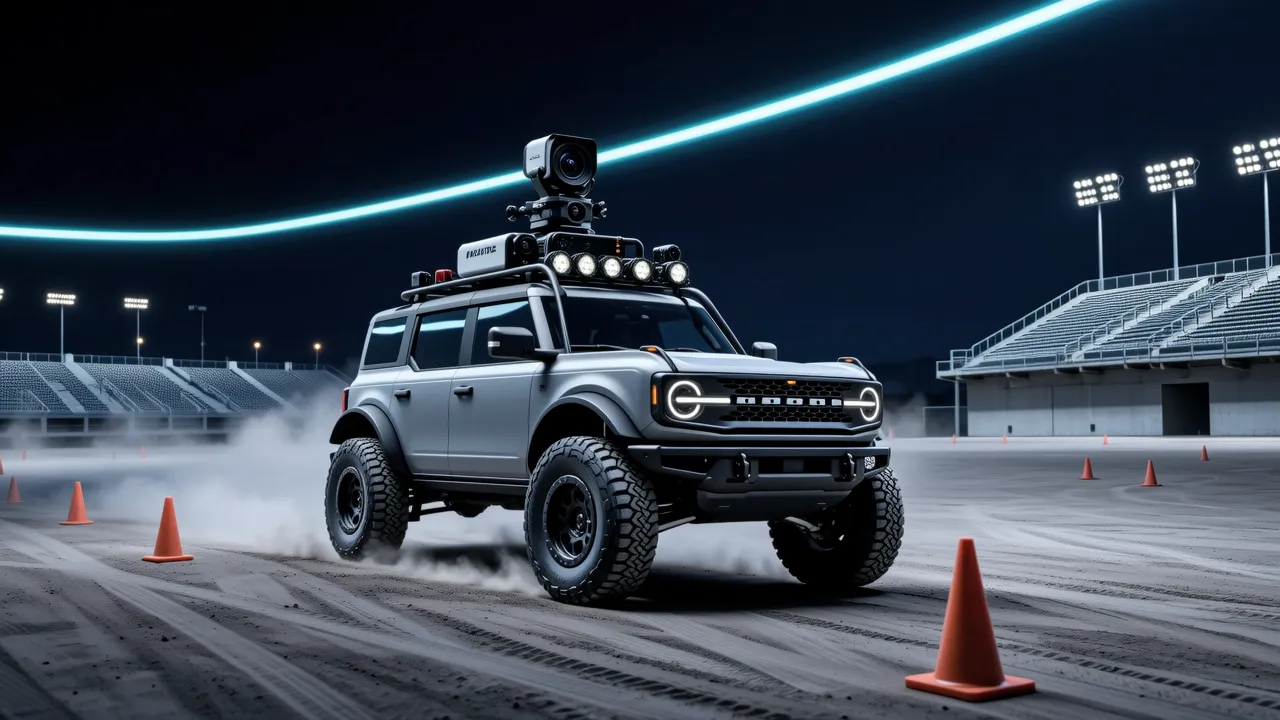
The Tartan Racing team, led by Carnegie Mellon University, placed first on points and won the USD 2 million prize [1]. Placement was decided on points rather than on who crossed the line first. Its vehicle was Boss, a 2007 Chevy Tahoe fielded by Tartan Racing [2]. Wikipedia lists Boss's time as 4:10:20 and an average speed of approximately 14 mph [2]. An average of about 14 mph is roughly the pace of ordinary town driving, which fits a course that mixed open stretches with intersections and other moving vehicles.
The technical leadership of the winning effort is recorded in an unexpected place: Google's official blog later said Chris Urmson was the technical team leader of the CMU team that won the 2007 Urban Challenge [3].
The prize money
First, second and third places received USD 2 million, USD 1 million and USD 500,000 respectively [2]. The spread of the prizes put the largest reward on being first overall rather than on merely finishing, which is why the scoring of the run mattered as much as the ability to complete it.
Why it mattered
The Urban Challenge asked a concrete question and answered it in public. Could a car drive itself through a city-like environment, among other traffic and obstacles, obey traffic regulations, and cover 96 km in under six hours? On 3 November 2007 the answer was yes — for the winner on points, and for six teams that reached the end of the course [1][2]. That a single vehicle managed it would have been notable; that several teams did so on the same day made it a statement about the state of the technology rather than about one laboratory.
The details that are remembered are the ordinary-sounding ones: a modified sport-utility vehicle called Boss, a finishing time of 4:10:20, an average of about 14 mph, and a team from Carnegie Mellon that took the largest prize [1][2]. Those facts are small in themselves, but they are what the event is cited for — a staged city, a deadline, and a car that drove itself through it.
Sources
- 1The DARPA Grand Challenge: Ten Years LaterDARPA / U.S. Department of Defense
- 2DARPA Grand ChallengeWikipedia
- 3What we're driving atOfficial Google Blog
Cite this page: Tartan Racing wins the DARPA Urban Challenge. TellWorld, https://www.tellworld.net/news/darpa-urban-challenge-2007. Updated 2026-11-07