Background
At the launch, Sony vice president Toshitada Doi framed the moment in decades: the last 10 years of the 20th century, he said, had been dominated by personal computers and the Internet, and robots with independent movement would be the big thing for the next 10 years [3]. That framing explains what Sony was trying to sell. The machine being announced was not a tool for a factory floor or a research lab but a product for the living room, judged by how it behaved rather than by what it produced.
The announcement
Sony's press release announced the launch of a four-legged entertainment robot called AIBO, model ERS-110, together with an AIBO Performer Kit, a motion editor for the robot [1]. Sony described AIBO as the first robot designed for home entertainment purposes [1]. The company said it aimed to build an entirely new market for robot entertainment, and that it would make AIBO available in limited quantities in Japan and the United States [1]. All sales, Sony said, would be handled exclusively over the Internet [1]. The company's news release archive dates the announcement to May 11, 1999 [2], and BBC News reported the same day that the robot had been unveiled in Tokyo [3].
What the machine was
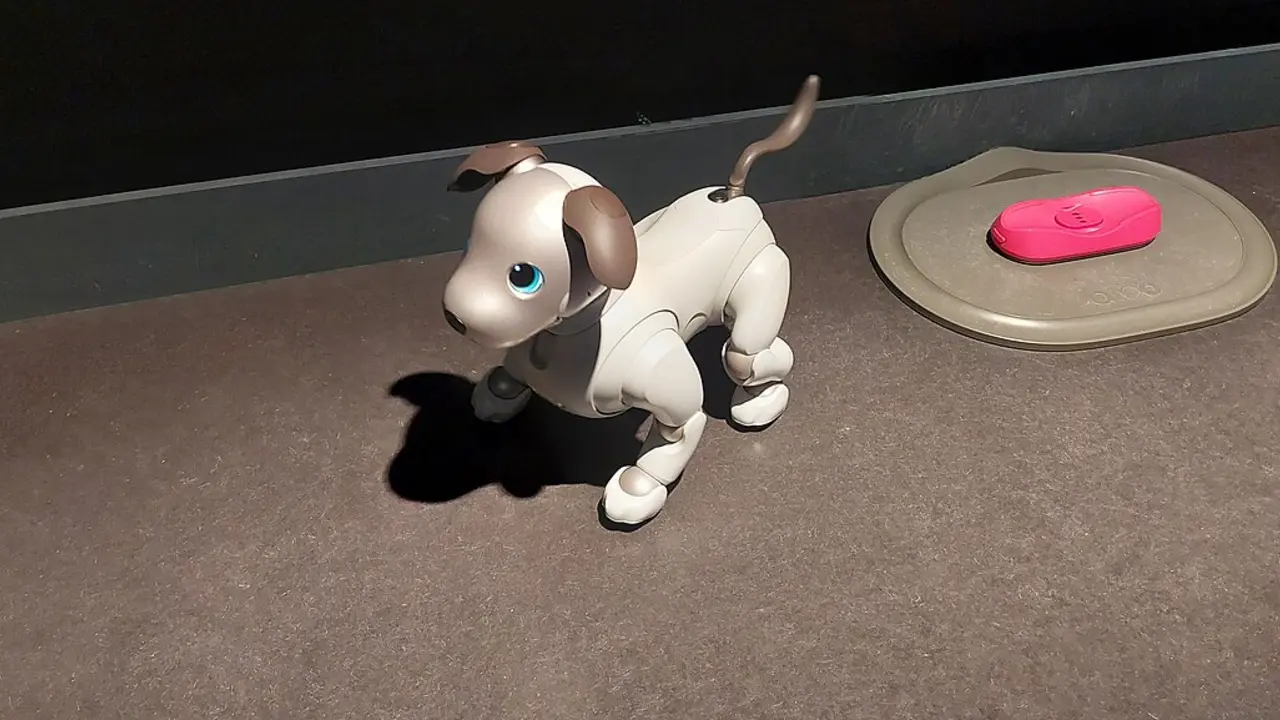
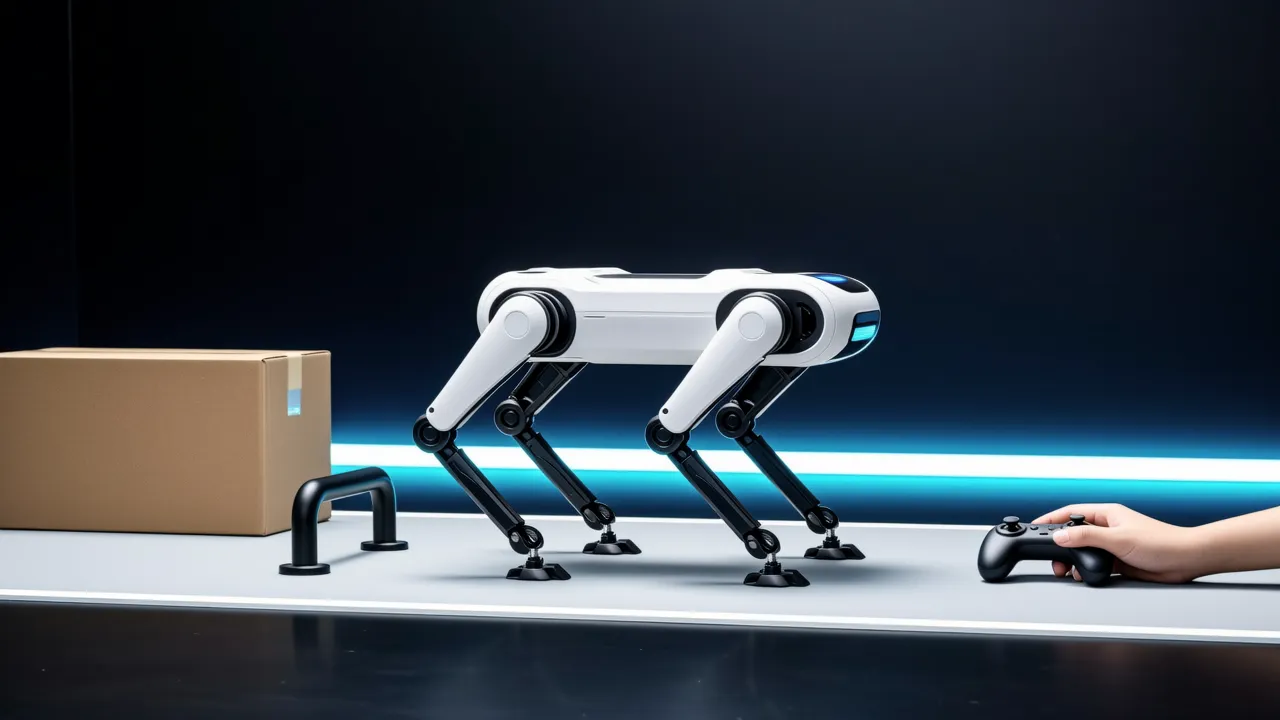
BBC's description was of a robot dog: it could bark, cock its leg and sulk, and it would never die until its batteries ran down [3]. Behind that behaviour sat 18 joints producing 250 types of movement, and a sensor suite that included a colour camera, heat sensors, an infra-red range finder, touch sensors and a stereo microphone [3].
Joints are the robot's moving pivots; each one adds a degree of freedom, and the useful behaviour comes from combining them, which is why 18 joints can support a catalogue of 250 named movements rather than 18. The sensors do a similar job on the input side: a colour camera picks up shapes and colours, heat sensors respond to warm bodies in front of the robot, an infra-red range finder gauges distance from reflected light, touch sensors register contact, and a stereo microphone gives a sense of which direction a sound came from. Together they let the robot react to the people and objects around it rather than simply run a fixed script.
Why it mattered
Two choices stand out. The first is the category: Sony called AIBO entertainment rather than utility, and said explicitly that it wanted to build an entirely new market instead of occupying an existing one [1]. The second is distribution: handling every sale exclusively over the Internet [1] meant that the point of contact with buyers was an order page rather than a shop shelf. Limiting the first offering to Japan and the United States [1] set the scope of that opening move.
The BBC line about a pet that never dies until the batteries run down captures the promise being made — behaviour that reads as companionship, not a task performed. Doi's two-decade framing placed the bet on machines that move about on their own [3].
Sources
- 1Sony Launches Four-Legged Entertainment RobotSony Corporation
- 2Sony News Release archive 1999Sony Corporation
- 3Robo-pup attacks toy marketBBC News
Cite this page: Sony announces AIBO, the first home entertainment robot. TellWorld, https://www.tellworld.net/news/aibo-launch-1999. Updated 2026-11-08