Background
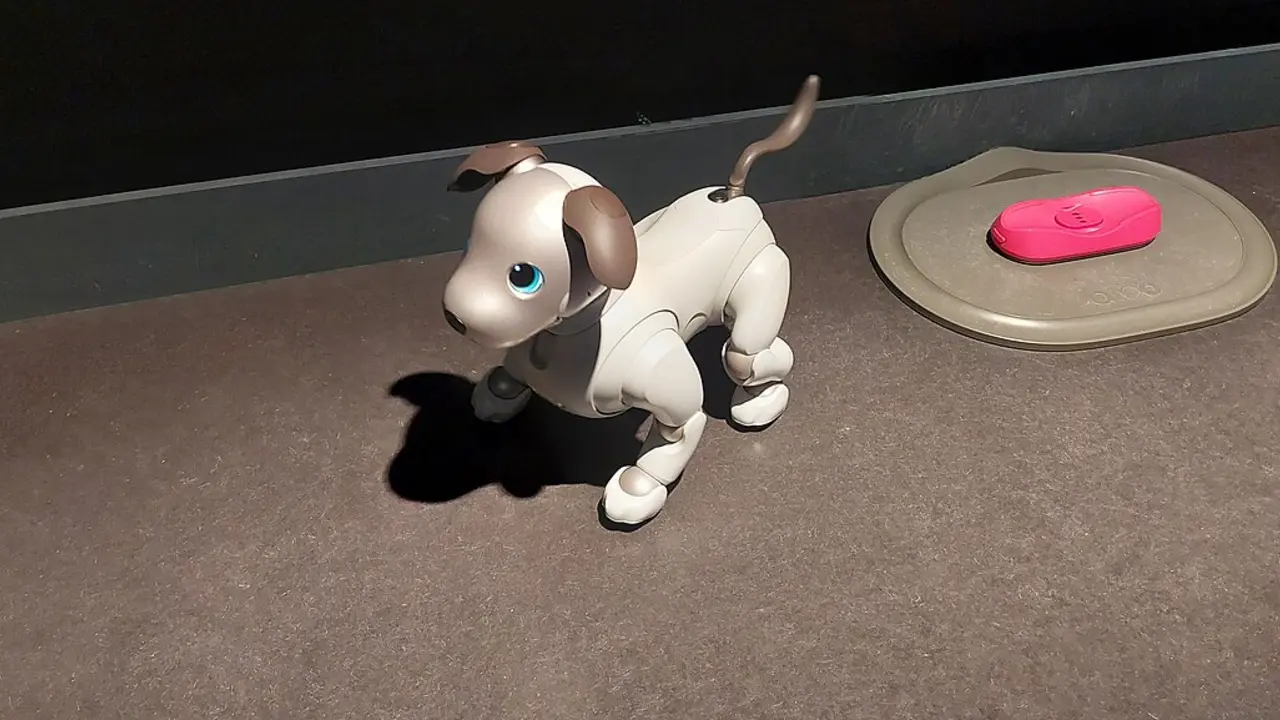
AIBO was a four-legged entertainment robot that Sony brought to market as a consumer product. For its first launch the company chose an unusual channel: the robot would not be sold through electronics shops at all. Sony's launch release stated that all sales would be handled exclusively over the Internet [1]. That arrangement kept the launch small and tightly controlled, and it turned the opening into a single, sharply defined moment — one order page, one starting time, a fixed number of units.
Orders open at a fixed hour
The release said orders for AIBO would be accepted from June 1, 1999, beginning at 09:00 Japan Standard Time in Japan and 09:00 Eastern Daylight Time in the United States, with products shipped in early July [1]. Because every sale went through the Internet [1], a buyer could not reserve a unit in a shop or look at one on a shelf first; the only way in was to place an order online once the window opened.
Price and production limits
The release listed a retail price of 250,000 yen in Japan and USD 2,500 in the United States, excluding tax [1]. Supply was capped from the start: a production limit of 3,000 units for Japan and 2,000 units for the USA [1]. BBC News also reported the 250,000 yen price and said Sony hoped to sell 3,000 units in Japan and 2,000 in the United States [3]. Taken together, the launch run came to 5,000 robots.
Sold out in 20 minutes
The distance between the planned run and actual demand turned out to be large. Sony's AIBO history page records that the ERS-110 — the model offered in this first round — sold out within 20 minutes of orders opening [2]. A product priced as a serious purchase rather than a cheap toy was gone in the time it takes to read a few web pages.
A second model, half a year later
Demand did not stop at the order page. According to the same history page, requests from people who also wanted an AIBO led Sony to release the ERS-111 in a hurry half a year later [2]. A launch designed as a limited edition of a few thousand units thus produced a successor within the following half year.
What the launch showed
The episode is a compact example of how a limited online release can work as a test of demand. Sony fixed the quantity, the price and the channel in advance — 3,000 units for Japan and 2,000 for the United States, 250,000 yen and USD 2,500, orders only over the Internet [1][3] — and the market answered in 20 minutes [2]. Selling a costly piece of hardware exclusively online was still an unusual arrangement, and it left the company with an unusually clean measurement: not a forecast of interest, but a count of orders placed before the stock ran out.
The sellout also shaped what came next. Instead of a single limited batch, the response pushed Sony to prepare another model quickly, and the people who had missed the first round became the audience for it [2]. For a robot meant to sit in a living room rather than a laboratory, that first morning of orders established both the price level and the fact that supply, not curiosity, would be the binding constraint.
Sources
- 1Sony Launches Four-Legged Entertainment RobotSony Corporation
- 2
- 3Robo-pup attacks toy marketBBC News
Cite this page: AIBO becomes an Internet-only limited-edition product. TellWorld, https://www.tellworld.net/news/aibo-online-sales-1999. Updated 2026-11-08