Background
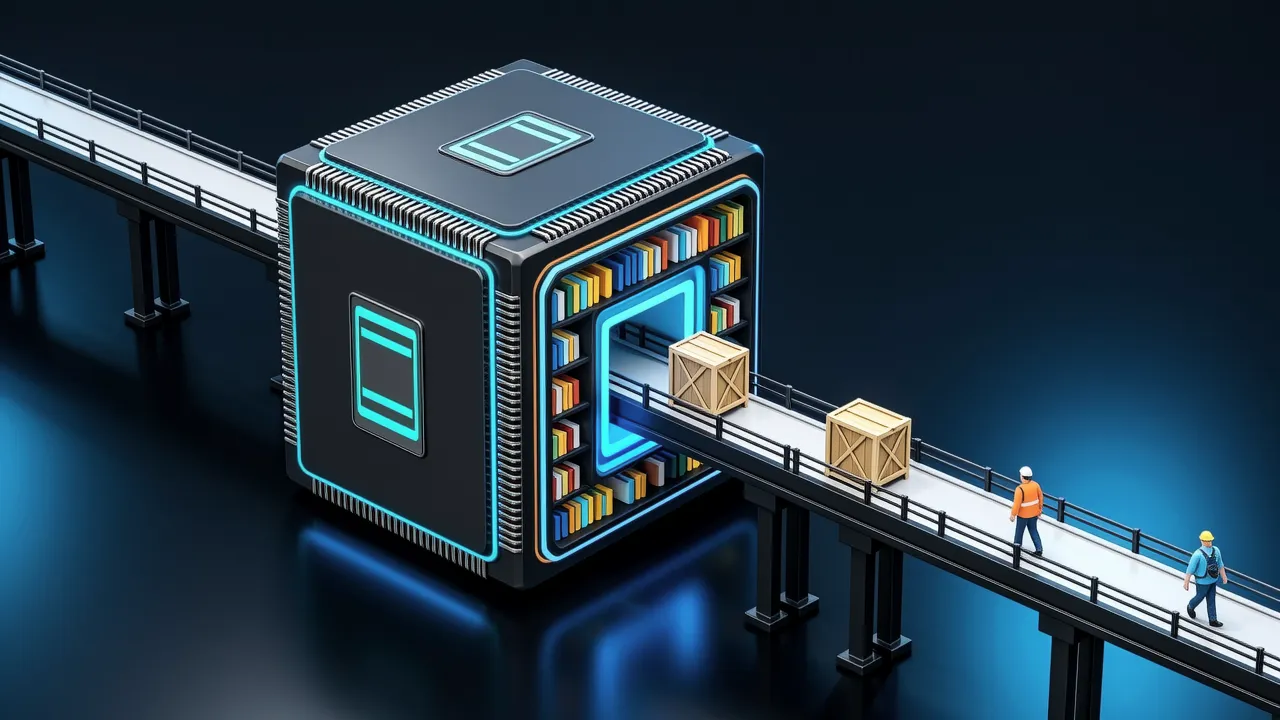
Transformers is an open-source Python library from Hugging Face that provides the code for many machine-learning models, especially language and vision models. Developers use it to load a model, run it, fine-tune it on their own data and deploy it. Because so many projects depend on the library, changes to it affect a large number of users.
A library's major version number signals that its interface may change in ways that need attention from users. A new major version is therefore an important event for anyone who builds on the code.
What happened
On 1 December 2025 Hugging Face released Transformers v5.0.0rc0, a release candidate for the new major version [1]. It was the first major version since v4, which had arrived in November 2020 [1]. A release candidate is a version published for testing before the final release.
The library had grown considerably since v4. At that time it covered about 40 architectures, the design patterns that define how a model is built. By the time of v5 it supported more than 400 [1]. The growth reflects how many model families the community had added over those years.
Key details
Use of the library grew at the same time. Daily pip installs rose from about 20,000 to over 3 million, and total installs passed 1.2 billion [1]. Pip is the standard tool that Python users run to install packages, so these numbers count how often the library was installed. More than 750,000 Hub checkpoints were compatible with the library [1]. A checkpoint is a saved set of model weights, so this figure counts models on the Hub that the library could load.
v5 is PyTorch-only, which means the library drops support for TensorFlow and Flax [1]. PyTorch is the deep-learning framework on which the library now concentrates. Users who depended on the other two frameworks would need to migrate their code or stay on an earlier version.
The release adds continuous batching and paged attention, two techniques for serving models efficiently when many requests arrive at once [1]. It also introduces "transformers serve", a server that is compatible with the OpenAI API, so programs written for that interface can talk to a model served from the library [1].
Impact
The change matters most for teams that run models in production. A pure PyTorch library simplifies the code base, while the new serving features make it easier to host models for many users. Teams that rely on TensorFlow or Flax, however, will need to plan a migration.
For the wider field, v5 is a sign of how far the library has grown from its origins. The jump from about 40 architectures to more than 400 shows that the library has become a common foundation for open model work. For a reader who wants to understand where the open model ecosystem stands, the release is a useful point of reference.
Sources
- 1Transformers v5Hugging Face
Cite this page: Hugging Face announces Transformers v5. TellWorld, https://www.tellworld.net/news/transformers-v5-2025. Updated 2026-11-08