Background
AI agents are programs that use a language model to plan and carry out multi-step work — reading files, calling tools, running code — instead of answering a single question and stopping. Building one means assembling several pieces: a way to give the agent abilities, a way for an application to talk to a model, a way to train and test the agent, and somewhere for its code to run. Before this announcement the Agentic AI Foundation already hosted six projects in this space: A2A, Agent Router, agentgateway, AGENTS.md, goose and MCP[1]. Those projects came from different contributors, and the foundation's role is to hold them under open, vendor-neutral governance rather than under the control of any single company[1].
What was announced
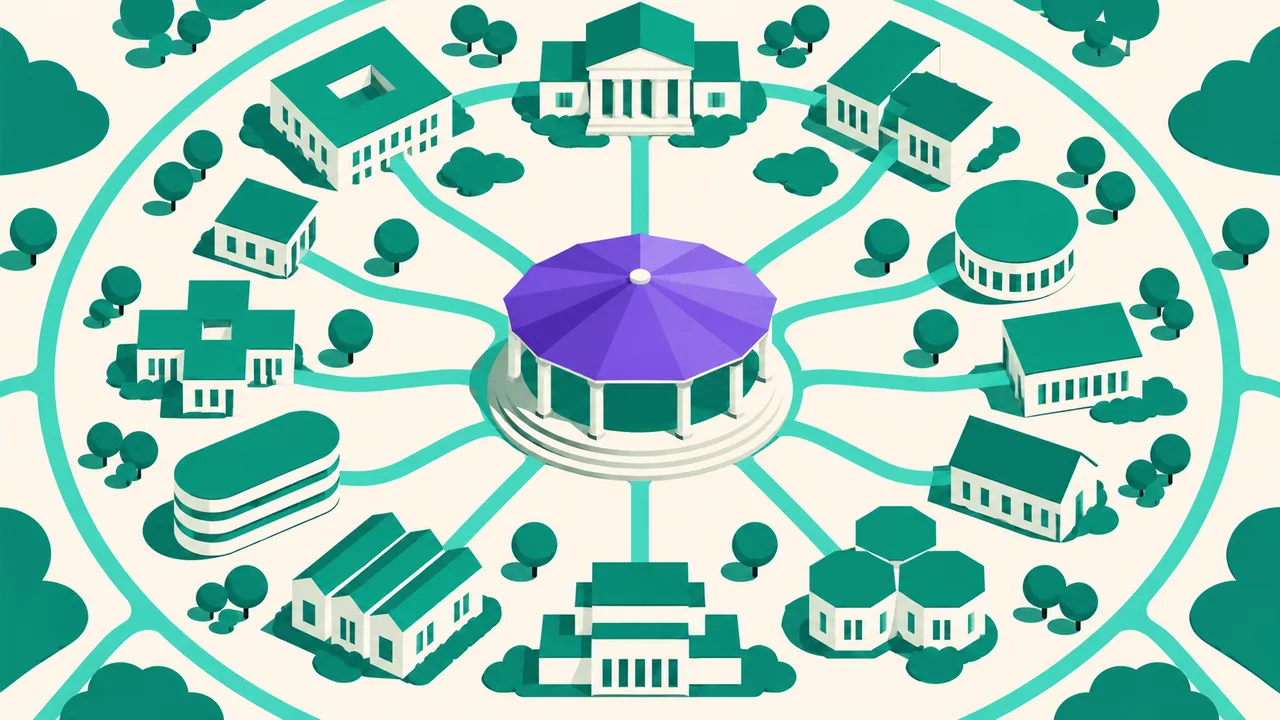
On 22 October 2026, at the AGNTCon + MCPCon North America conference, the foundation announced four more projects[1]. Agent Skills was contributed by Anthropic, Open Responses by OpenAI, OpenEnv by Hugging Face and OpenSandbox by Alibaba[1]. The additions took the foundation to 10 hosted projects in its first year[1].
Four layers of the stack
The foundation described the four as covering different layers of the agentic stack: how agents gain skills, how applications talk to models across providers, how agents are trained and evaluated, and where agents run safely[1].
The first layer is capability. An agent is only as useful as the abilities it can take on, and once agents are built by one team and extended by another, a portable way to package and hand over those abilities starts to matter. The second layer is the interface between applications and models. If every provider has its own request and response conventions, an application written around one model has to be rewritten around the next; the foundation points here to a shared way for applications to talk to models across providers[1]. The third layer is the loop that produces and checks agents themselves: training and evaluating them requires environments, tasks and repeatable measurements. The fourth is execution. Code that an agent writes has to run somewhere, and a sandbox is the boundary that keeps that execution apart from everything else.
The four projects arrive from different maintainers. Anthropic, OpenAI, Hugging Face and Alibaba each contributed one, which means the foundation's catalogue now draws on several of the organisations building agent tooling rather than on a single vendor. All of the hosted projects operate under the foundation's open, vendor-neutral governance[1].
Why it matters
Agent infrastructure has grown quickly and unevenly: similar problems — how to declare what an agent can do, how to call a model, how to test an agent, how to run its code — have been solved separately by different companies, and each solution carried the assumptions of whoever built it. Putting those pieces under one neutral roof is a way of making the boundaries between them visible and of giving the projects a common governance arrangement.
Naming the layers also gives users a map. Someone assembling an agent system can see which part of the stack a given project addresses, and can combine projects from different contributors without all of them belonging to the same vendor. For the foundation, the announcement is a marker of how broad the field has become in a short time: 10 hosted projects in its first year, spanning the distance from the abilities an agent loads to the sandbox its code runs in[1].
Sources
- 1Agentic AI Foundation Announces Four New ProjectsThe Linux Foundation
Cite this page: AAIF adds Agent Skills, Open Responses, OpenEnv and OpenSandbox. TellWorld, https://www.tellworld.net/news/aaif-four-new-projects-2026. Updated 2026-11-07