Background
CVPR, the IEEE Conference on Computer Vision and Pattern Recognition, is one of the main annual meetings in computer vision, and much of the year's work in the field is first presented there. The 2016 edition was the 29th in the series and ran in Las Vegas from June 26 to July 1, 2016 [1]. A conference of this size mixes technical sessions and poster presentations with a formal awards ceremony, at which a committee names the best paper among the strongest accepted submissions. The prize carries little material weight, but it is read as a statement about what the community regards as excellent work.
What happened
At CVPR 2016 the Best Paper award went to "Deep Residual Learning for Image Recognition", by Kaiming He, Xiangyu Zhang, Shaoqing Ren and Jian Sun [1]. The Best Paper honorable mention went to "Sublabel-Accurate Relaxation of Nonconvex Energies", by Thomas Moellenhoff, Emanuel Laude, Michael Moeller, Jan Lellmann and Daniel Cremers [1].
Key details
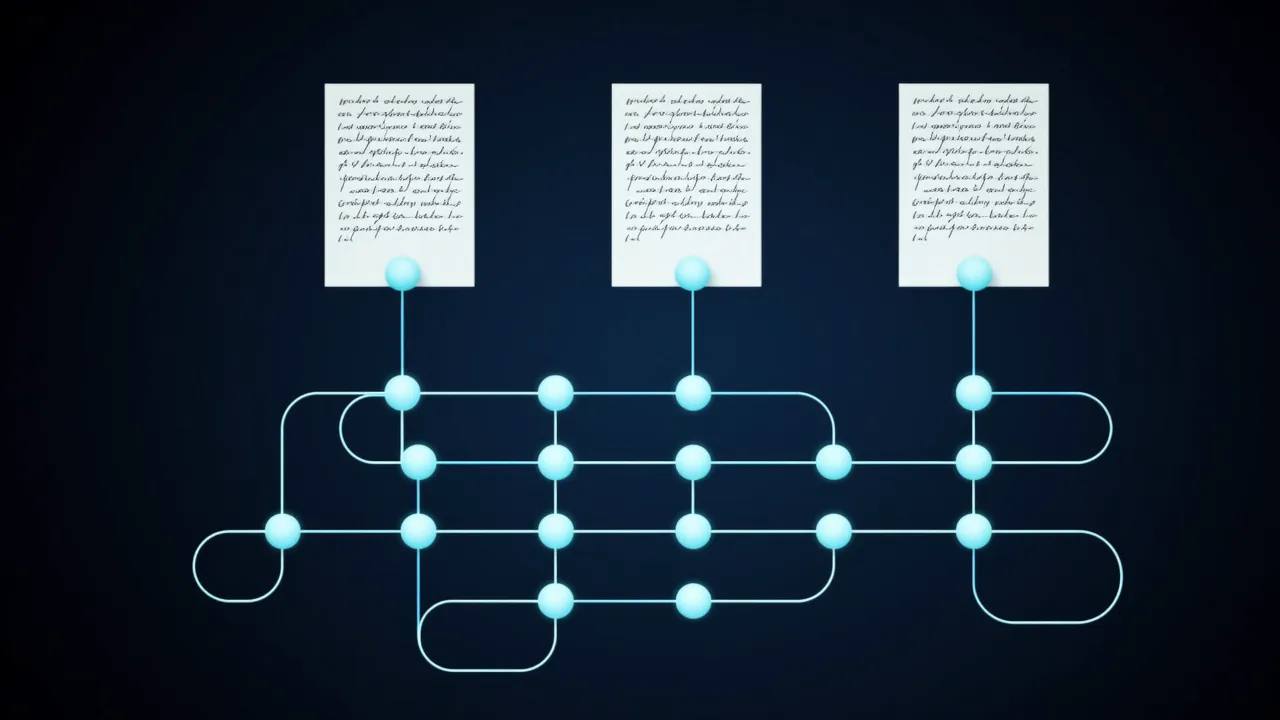
The winning title states its subject: residual learning applied to image recognition. The idea is to change what a group of layers is asked to compute. Instead of learning a target mapping directly, the layers learn the difference — the residual — between their input and the desired output, while shortcut connections pass the input forward. The network then only has to learn a correction on top of what it already represents, which makes very deep stacks easier to train. The experiments in the paper are about image recognition, the task of assigning labels to images.
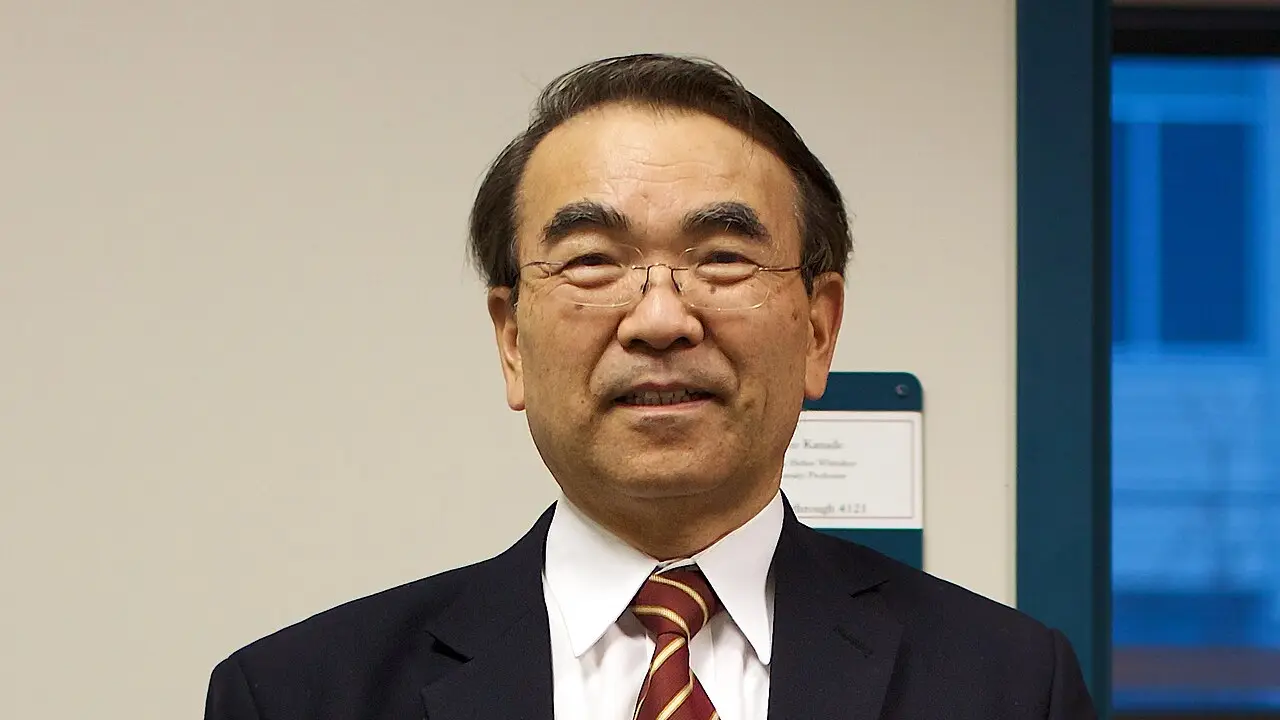
For the first author the award came at a particular point in a career. Kaiming He worked at Microsoft Research Asia from 2011 to 2016 [2], so the paper appeared at the end of that period. It was also his second CVPR best paper: he had won the same award in 2009 [2].
The honorable mention belongs to a different part of the field. Its subject is the relaxation of nonconvex energies — the numerical treatment of optimisation problems that are hard to solve in their original form and are usually replaced by a related problem that can be handled [1]. That is mathematics for vision rather than an architecture for vision, and its presence on the list says something about how broad the conference's notion of a strong paper is.
Impact
The paper's later record is unusual. According to Google Scholar's reports in 2020 and 2021, it was the most cited research paper of the previous five years [2]. In 2023 Kaiming He was awarded the Future Science Prize together with 3 collaborators, for a "fundamental contribution to artificial intelligence by introducing deep residual learning" [2].
An award marks a moment; citations accumulate over years. Placed side by side, the 2016 decision and the later counts describe how a single conference result became part of the common reference point for a whole line of work.
Sources
- 1CVPR 2016 (Award Info)Computer Vision Foundation
- 2Kaiming HeWikipedia
Cite this page: ResNet wins the CVPR 2016 Best Paper Award. TellWorld, https://www.tellworld.net/news/cvpr-2016-resnet-best-paper. Updated 2026-11-08