Background
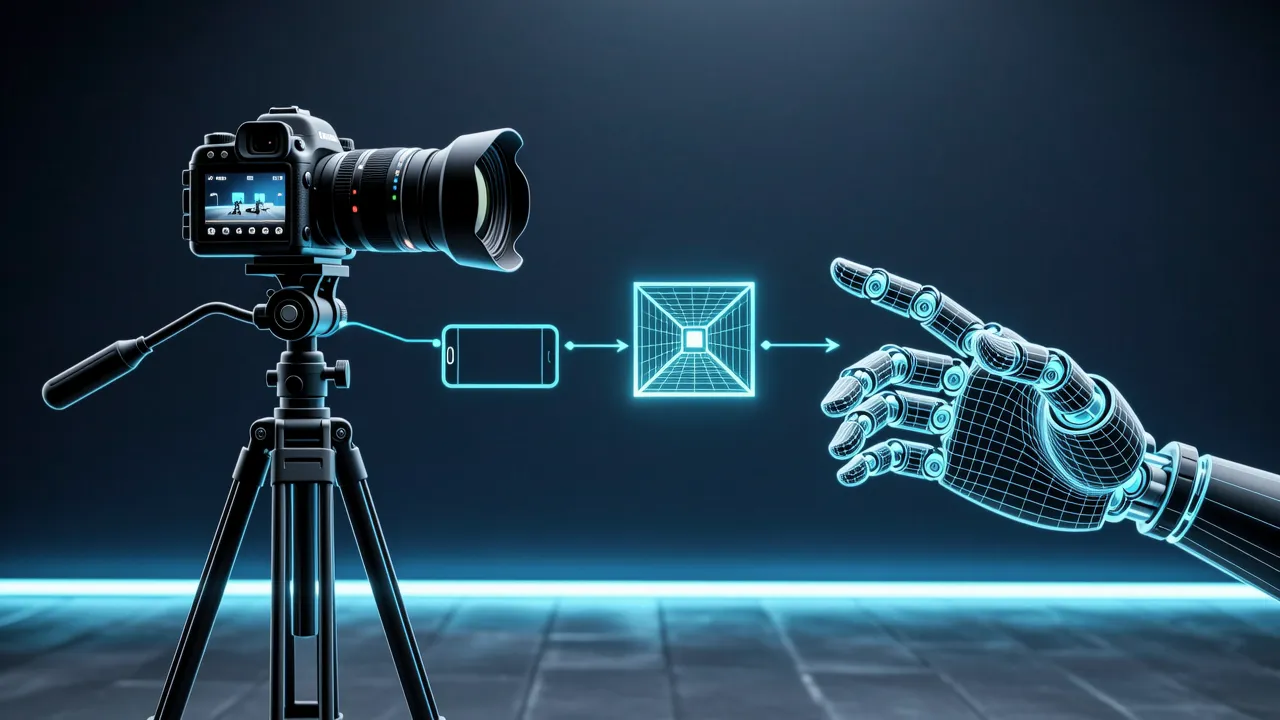
A vision-language model handles images and text in the same context: it can be shown a picture and asked about it in ordinary language, instead of only sorting the image into a fixed set of labels. Building one usually means pairing a vision encoder, which turns an image into a sequence of vectors, with a language model that reads those vectors much as it reads word tokens. Kimi-VL is Moonshot AI's open-source entry in this category, released in April 2025 [1].
What was released
Kimi-VL is a 16B-parameter mixture-of-experts model with 3B parameters active [1]. A mixture-of-experts model splits its feed-forward layers into many small “experts” and uses a router to send each token to only a few of them. The total parameter count therefore describes how much capacity the model holds, while the active count describes how much computation a single token costs. In Kimi-VL the ratio is roughly five to one: 16B stored, 3B used per token.
Release timeline
Moonshot posted two versions, Kimi-VL-A3B-Instruct and Kimi-VL-A3B-Thinking, to Hugging Face on 9 April 2025, and added the MoonViT-SO-400M vision encoder the following day, on 10 April [2]. The “A3B” in the names refers to the active parameter count. In this naming convention, an Instruct version is tuned to answer a request directly, while a Thinking version is tuned to work through a longer line of reasoning before giving its answer.
A refreshed Thinking model, Kimi-VL-A3B-Thinking-2506, followed in June 2025 [1][2], with the date suffix marking the newer checkpoint.
Reported results
The model card for the Instruct version lists 83.1 on MMBench-EN-v1.1 and 68.7 on MathVista [3]. MMBench is a multiple-choice benchmark for multimodal understanding in English; MathVista tests mathematical reasoning when the problem arrives with a figure or diagram rather than as text alone. These are the developers' own reported figures for one checkpoint, not an independent comparison against other models.
Other open releases around it
Kimi-VL was not an isolated release. Moonshot's open publications in the same stretch included Moonlight-16B-A3B in February 2025, Kimi-Audio-7B in April 2025, and Kimi-Dev-72B in June 2025, a coding model built on Qwen2.5-72B [2][1]. The shared pattern is size: most of these sit in the 7B to 16B range, small enough to be run and fine-tuned by outside groups rather than only served behind a hosted endpoint.
Why it matters
Two things make a release like this worth recording. The first is the parameter budget: with 3B active out of 16B, each token costs far less computation than in a dense model of the same total size, which is what makes open weights practical for people without large clusters. The second is the choice to publish the weights at all — the Instruct and Thinking versions, the vision encoder and a later update were all released as downloadable artifacts, so the model can be inspected, adapted and compared rather than only used through an API [1][2].
The caveat is that a benchmark score on a model card tells you what the developers measured, on benchmarks they chose; it does not by itself establish how the model behaves on a particular task, language or kind of image.
Sources
- 1Kimi (chatbot)Wikipedia
- 2moonshotai modelsHugging Face
- 3moonshotai/Kimi-VL-A3B-Instruct model cardHugging Face
Cite this page: Moonshot AI open-sources the Kimi-VL vision-language model. TellWorld, https://www.tellworld.net/news/kimi-vl-2025. Updated 2026-11-08