Background
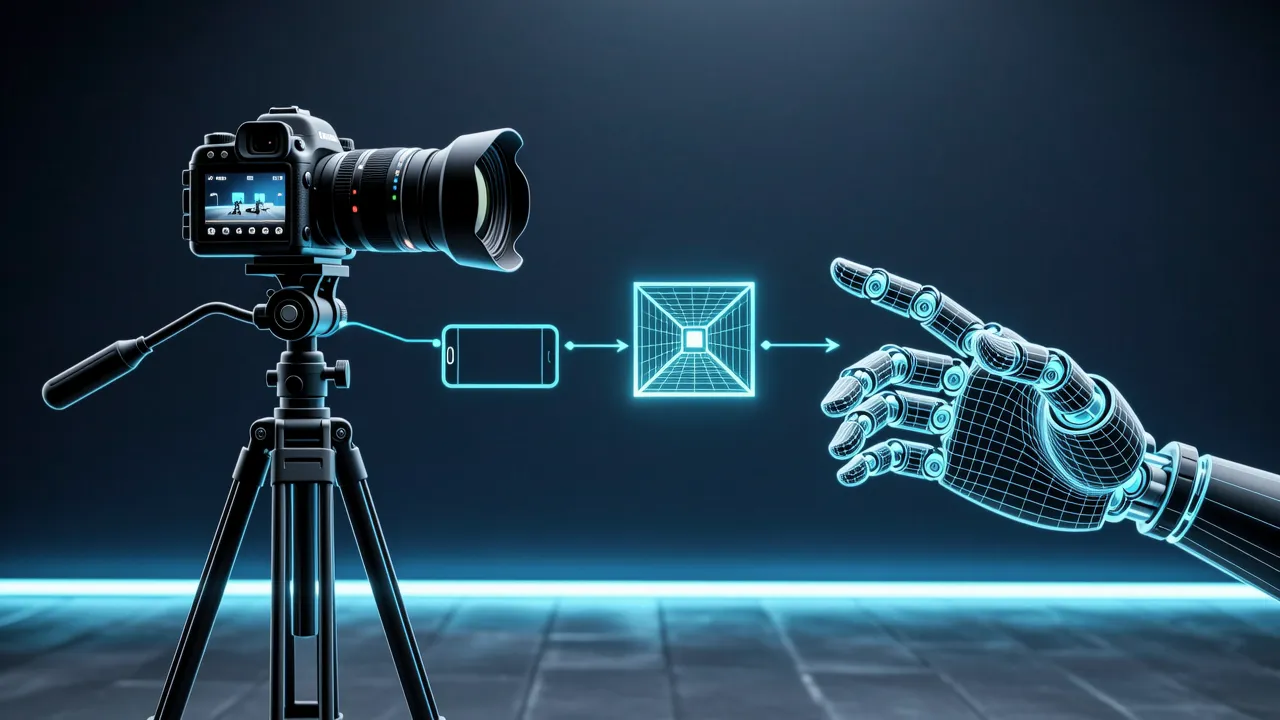
Most capable vision-language models are served from data centres: an image or video frame is sent to a remote server, and the answer comes back over the network. That arrangement works for chat and for batch processing of media, but it fits awkwardly with machines that have to act in the physical world — a robot arm, a drone in flight, a car — where the round trip to a server adds delay, depends on connectivity and moves raw sensor data off the device. Running the model locally, on the device itself, avoids those problems but is constrained by memory, power and compute.
What was announced
On 11 March 2026, Reka announced Reka Edge, a 7-billion-parameter vision-language model [1]. The company positioned it for physical AI on the edge rather than for cloud inference, meaning the intended deployment is on the device that senses the world rather than on a remote server [1]. Reka's stated argument is that frontier visual intelligence should be fast, lean and deployable anywhere [1].
Key details
Reka benchmarked the model against Qwen3.5 9B, Cosmos Reason2 8B and Gemini 3 Pro [1]. The comparison mixed open-weight models with a proprietary one, and the setup was described in some detail: all of the open-weight comparison models were hosted on Reka's own cluster and served with vLLM, an open-source inference server, while Gemini was the exception and was evaluated through its API [1]. Comparing a locally hosted model against an API-served one inevitably involves different serving stacks, and the announcement is explicit about which was which.
Two further details concern how the model fits onto hardware. Reka also offers a 3.5-bit Reka Quant format, which reduces the number of bits used per weight and therefore the memory the model occupies, for further memory savings beyond the base model [1]. And the model is available through a playground, an API and self-hosting, so the same model can be tried in a browser, called remotely, or run on hardware the user controls [1].
Reka named the target applications in the announcement: robots, drones, cars, smart glasses and media tagging [1]. The first four are devices that see and act in real time; the last is a data-processing task where images or video need labels attached at scale.
Why it matters
The announcement sits at the intersection of two trends: vision-language models getting smaller and more capable, and AI moving out of the data centre onto devices. A model that can describe a scene, read text in an image or answer questions about a camera feed, while running on hardware carried by a robot or worn on a head, changes what such devices can do without a network connection. Reka's framing — fast, lean, deployable anywhere — is a statement about that trade-off between capability and deployability [1].
The benchmark list is also a signal of the competitive field Reka places itself in: Qwen3.5 9B and Cosmos Reason2 8B are open-weight models in roughly the same size class, while Gemini 3 Pro represents the large proprietary systems that edge models are measured against. The availability of a quantized format and three delivery routes — playground, API and self-hosting — suggests the model is aimed both at developers prototyping and at teams deploying to hardware.
Sources
- 1
Cite this page: Reka releases the 7B edge vision-language model Reka Edge. TellWorld, https://www.tellworld.net/news/reka-edge-2026. Updated 2026-11-07