Background
A deep reasoning model is one built to work through intermediate steps — writing out a chain of reasoning — before it gives a final answer, an approach that tends to help on mathematics and other multi-step problems. Training models of this kind takes large amounts of computing power, and in China the question of which hardware that computing power comes from has become part of how such releases are described.
What was announced
On 15 January 2025, the Chinese company iFlytek released Spark X1, which it called China's first deep reasoning model trained on fully domestic compute [1]. CGTN reported that the model was jointly developed by iFlytek and Huawei [2]. iFlytek said the two companies had carried out "high-intensity" joint research to build Spark X1 [1].
The performance claims
iFlytek claimed that Spark X1 ranked first in China on Chinese-language mathematics, and that it beat o1 in some tests, including AIME and MATH 500 [2]. These comparisons were presented by the company at launch. Alongside the benchmark numbers, the emphasis of the announcement was on where the model was trained: iFlytek framed Spark X1 as evidence that a deep reasoning model could be produced on a domestic computing stack [1].
Three announcements in one event
The release did not stand alone. The same day, iFlytek upgraded Spark 4.0 Turbo, and it showed an end-to-end speech-to-speech simultaneous interpretation model with latency under 5 seconds [1]. Simultaneous interpretation means translating speech into another language while the speaker is still talking, rather than waiting for a pause, so latency — the delay before the translation reaches the listener — is the number that matters most for whether the experience feels usable.
Where it was used first
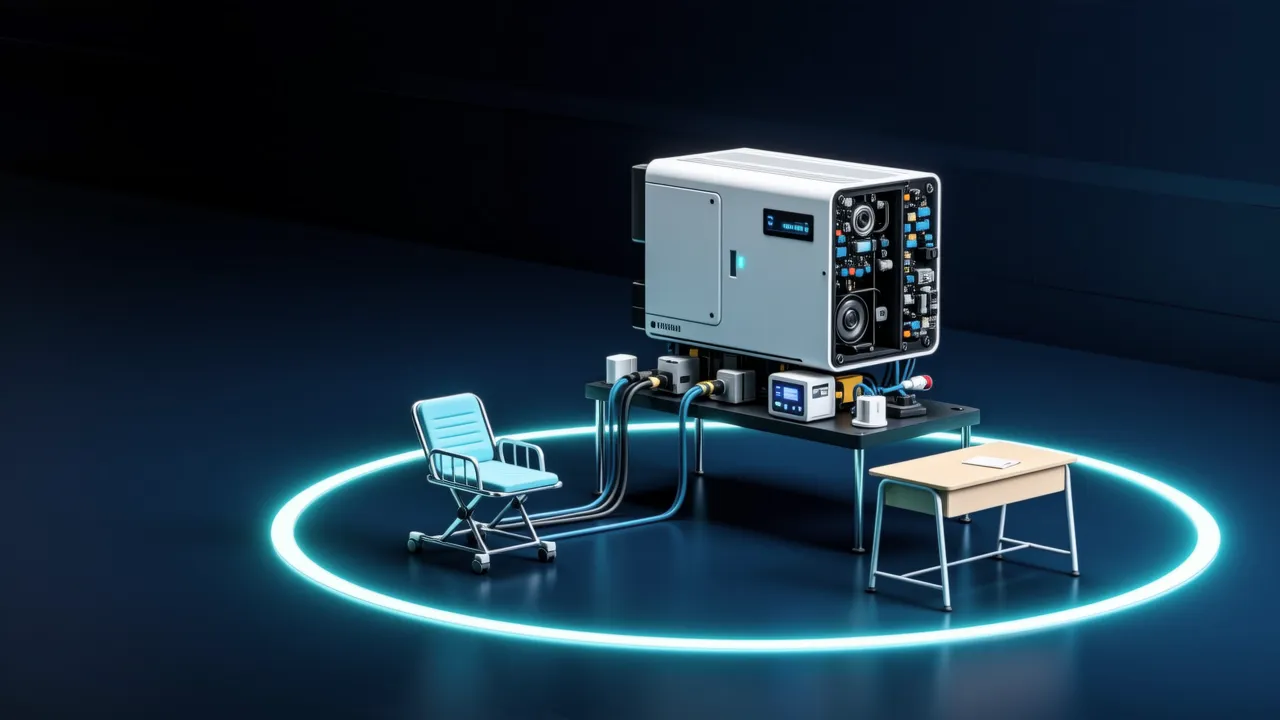
iFlytek said Spark X1 was already applied first in what it calls rigid-demand scenarios, such as education and healthcare [1]. In education, the model was already in use in pilots in about 100 areas; in healthcare, it was used for quality control of medical records [1]. Both are settings where an answer has to be dependable rather than merely fluent: a teaching tool is used by students directly, and checking records is a task where errors carry consequences.
Why it matters
The release is best understood as two claims made together. One is technical: that a model of this class can hold its own on mathematics benchmarks against o1, at least on the tests iFlytek chose to cite [2]. The other is about the supply chain behind it: that the training run itself was done on domestic compute, with Huawei as a partner in the research [1][2]. For readers following the field, the second claim is the one that distinguishes Spark X1 from the many reasoning models announced in the same period. iFlytek also pointed to concrete deployments at launch rather than describing the model only as a research result [1].
Sources
- 1科大讯飞发布基于全国产算力的深度推理大模型星火X1中国证券报·中证网
- 2
Cite this page: iFlytek releases Spark X1, a reasoning model trained on domestic compute. TellWorld, https://www.tellworld.net/news/spark-x1-2025. Updated 2026-11-08