Background
iFlytek is a Chinese AI company that sells models and related services to enterprises and public-sector customers. On 24 October 2024 it held its Global 1024 Developer Festival, the annual event at which it presents new technology to developers[1].
Model launches of this kind are usually framed as comparisons. A company picks a set of tasks — general language ability, mathematics, programming — and reports how its new model scores against well-known systems from other vendors. GPT-4 Turbo and GPT-4o, both from OpenAI, have served as common reference points for such comparisons, so a release that names them is aimed at readers who already know roughly what those models can do.
What was announced
At the festival iFlytek released Spark 4.0 Turbo[1]. The company claimed that the model beat GPT-4 Turbo on all seven of its core capabilities, and that on mathematics and coding it beat GPT-4o[1]. These were iFlytek's own claims; benchmark tables published by vendors describe performance on chosen test sets rather than how a model behaves inside a particular customer's workflow.
Mathematics and coding are the two areas vendors emphasise most, because they are easy to score automatically and because they correspond to tasks buyers care about: writing and checking code, working through quantitative problems, following long chains of steps to a result.
Computing and the next model
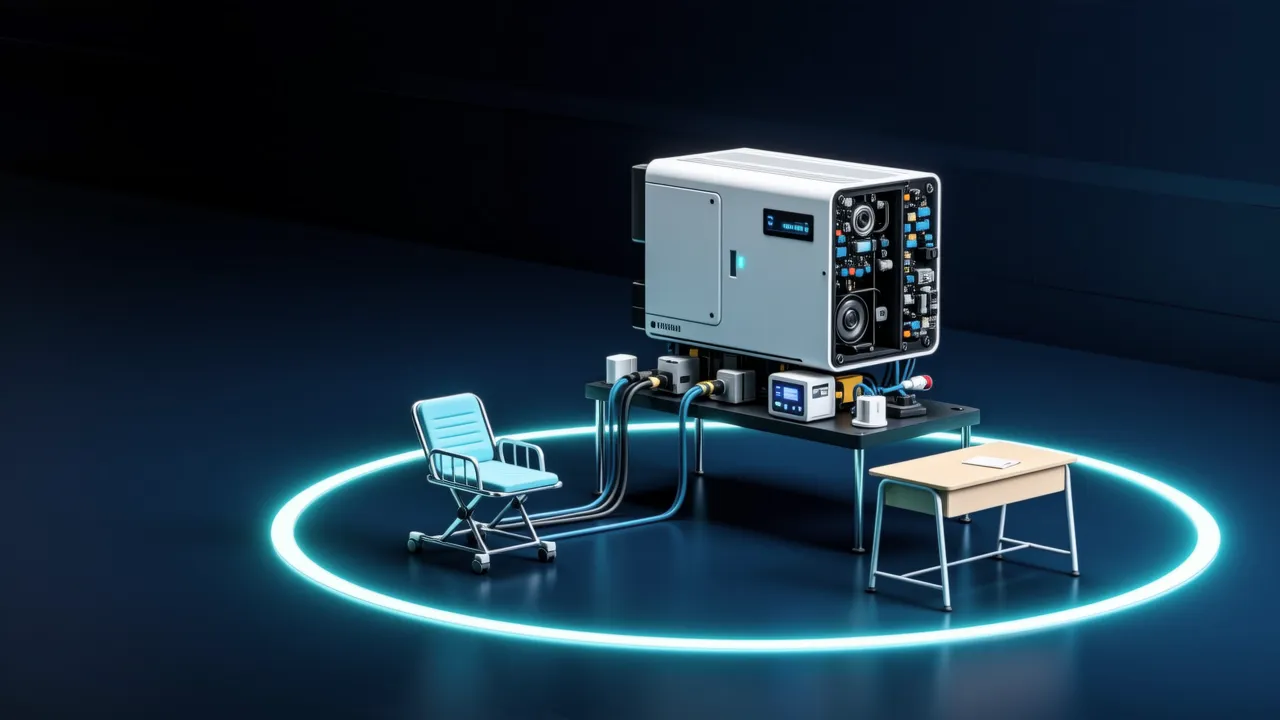
Alongside the model, iFlytek, Huawei and Hefei Big Data Asset Operation Co. launched a computing platform called Feixing No.2[1]. A platform of this kind is the physical layer beneath a model: clusters of accelerators, networking and scheduling software that together supply the compute used for training a model and for serving it to users. Announcing it at the same event signals that the model and the hardware it runs on are being presented as one package.
Liu Cong said that future work would include an o1-like reasoning model[1]. Reasoning models differ from ordinary chat models in how they spend computation: instead of answering immediately, they generate a longer internal chain of intermediate steps before giving a final answer, trading latency and cost for higher accuracy on problems that need several steps of deduction. Building one requires both training methods and inference infrastructure that can afford the extra computation.
The commercial side
iFlytek also gave numbers for its enterprise business. From January to September 2024 the company won 38 bid projects worth 216 million yuan, ranking first in the industry by both count and amount[1]. As of October 2024 it had co-built more than 20 industry large models with leading enterprises, covering more than 300 application scenarios[1]. Industry large models here means models tuned for a particular sector — a bank, a manufacturer, a hospital — usually built with the customer's own data rather than sold as a general chatbot.
Why it matters
The release is a compact picture of how Chinese model companies were positioning themselves in 2024: a general-purpose model marketed against the strongest American systems, a domestic computing platform underneath it, a roadmap toward reasoning models, and a business measured in procurement contracts and industry deployments[1]. Each of those pieces is a different kind of claim — a benchmark score, a piece of infrastructure, a research direction and a revenue figure — and each is checked by a different audience: developers, buyers of compute, researchers and procurement officers.
For a reader trying to judge such an announcement later, the useful habit is to separate what was shown from what was asserted. The launch of a platform and the count of signed projects are events that can be checked; the comparison with GPT-4 Turbo and GPT-4o is a claim about test scores that depends on which tests were run and how they were scored.
Sources
- 1
Cite this page: iFlytek releases Spark 4.0 Turbo. TellWorld, https://www.tellworld.net/news/spark-4-0-turbo-2024. Updated 2026-11-08