Background
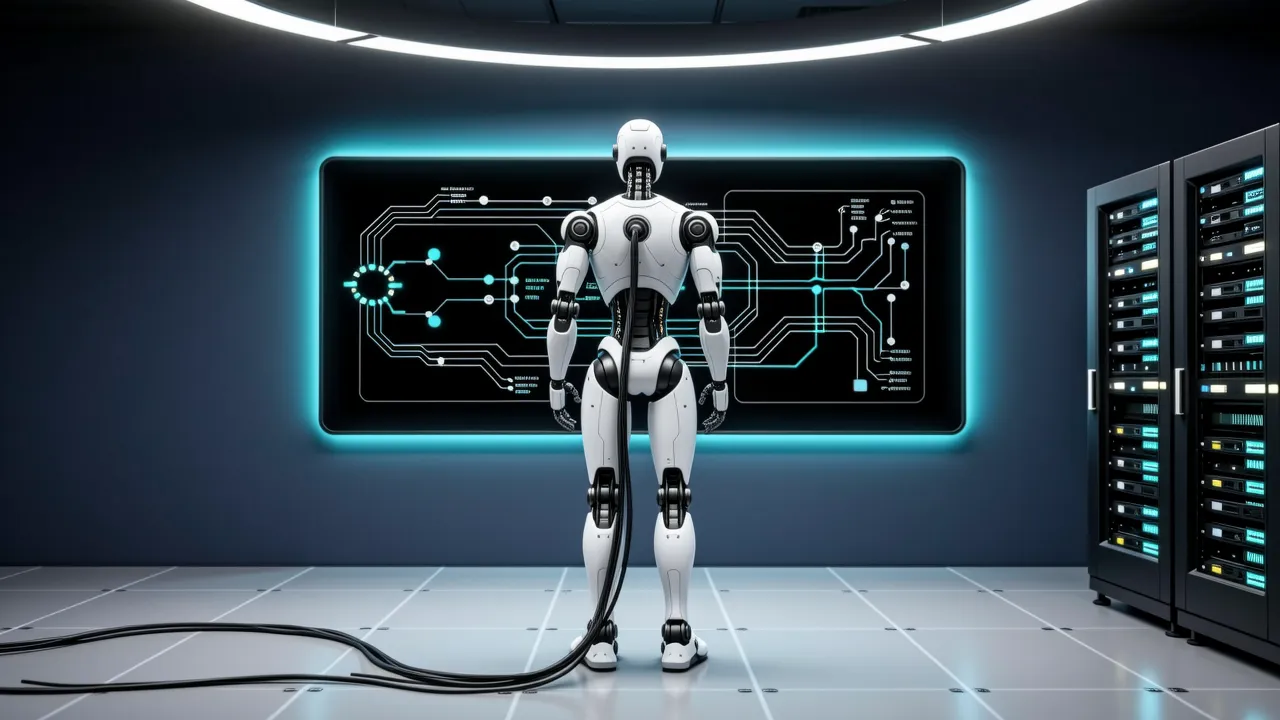
The robots that work in factories and warehouses today are, for the most part, built around a fixed routine: a motion, a position, a set of objects that does not change much. A general-purpose robot would have to cope with objects and instructions it has never seen, which is hard when every task needs its own control program. One response is the vision-language-action (VLA) model: a single model that takes camera images and a plain-language instruction as input and outputs the actions the robot should take, instead of relying on a separate hand-written pipeline for each task. Gemini 2.0 is a general-purpose model; the robotics models described here were built on top of it.
What was announced
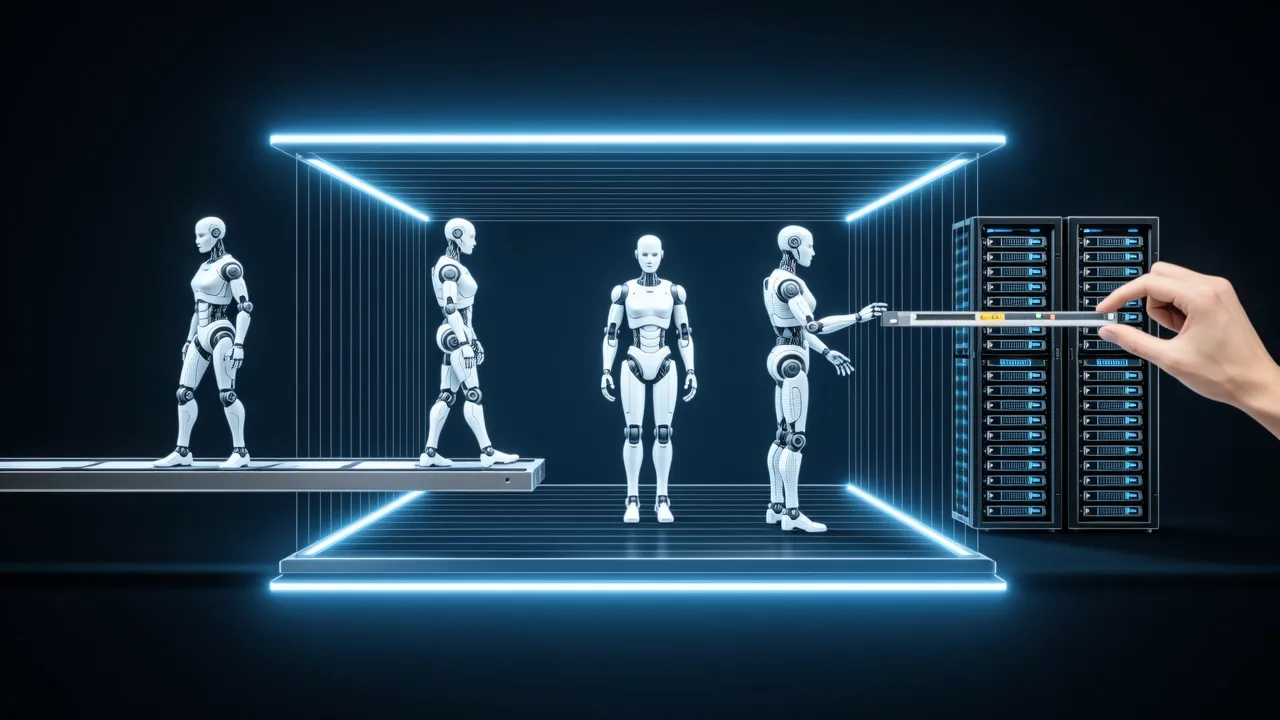
On 12 March 2025, Google DeepMind introduced two robotics models based on Gemini 2.0: Gemini Robotics and Gemini Robotics-ER.[1] They are aimed at different jobs. Gemini Robotics is a vision-language-action model that outputs robot actions.[1] Gemini Robotics-ER focuses on spatial and embodied reasoning — working out where objects are in space and what a given action would lead to — rather than on producing motor commands itself.[1] Thinking about the scene first and turning the decision into motion afterwards is a common arrangement in robot systems, and it is the reason the two models are presented separately rather than as one.
Partners and early access
Apptronik was named a partner for humanoid robots.[1] Google DeepMind also listed the trusted testers that had access to the models: Agile Robots, Agility Robots, Boston Dynamics and Enchanted Tools.[1] Letting outside companies try a model on their own hardware and tasks before release is one way to find out how it behaves in settings the developers did not build themselves.
Results
In its technical report, Google DeepMind said that Gemini Robotics more than doubles performance on a comprehensive generalization benchmark.[1] A generalization benchmark is designed to test how well a system handles tasks and situations that were not part of its training, so a result of this kind says something about whether a model can be used outside the setting it was tuned for, rather than only about how well it repeats a rehearsed task. Gemini Robotics-ER improves Gemini 2.0's pointing and 3D detection abilities by a large margin.[1] Pointing means locating an object in an image; 3D detection means estimating where that object sits in three-dimensional space. Both are basic skills for reaching for, picking up and moving things. In an end-to-end setting, Gemini Robotics-ER achieved a 2x to 3x success rate compared with Gemini 2.0.[1] That figure is measured when the reasoning model drives the action directly, without a person or a separate planner in between.
Safety
Along with the models, Google DeepMind released the ASIMOV dataset, which is meant to help researchers measure the safety implications of robotic actions.[1] A robot that gets something wrong is not like a chatbot that gets something wrong: a sentence can be taken back, while an action may already have moved an object or pushed against something. Comparing the consequences of different actions requires a shared way of measuring them, and the dataset is intended for that kind of measurement.
Why it matters
Two things stand out in the release. The first is the step from a general model that reads and talks to one that acts. A vision-language model works on text and images; a vision-language-action model has to close the loop and produce motion, which brings in problems — spatial layout, what an action will cause, how wrong an action can go — that language models never face. The split between Gemini Robotics and Gemini Robotics-ER reflects that: reasoning about space and consequence can be built and evaluated as its own capability, and then connected to the part that moves the robot. The second is what is being reported. The headline numbers are about generalization and about pointing and 3D detection, not about one task performed in one lab setup. Robots in real environments mostly meet situations that were not rehearsed, so a benchmark built around unseen tasks is closer to the question that matters. The ASIMOV dataset adds a third element: a way to talk about the consequences of an action, not only about whether it succeeded.
Sources
- 1Gemini Robotics brings AI into the physical worldGoogle DeepMind
Cite this page: Google DeepMind introduces Gemini Robotics. TellWorld, https://www.tellworld.net/news/gemini-robotics-2025. Updated 2026-11-08