Background
On 5 January 2026, at Hyundai's press conference at CES 2026, Boston Dynamics and Google DeepMind announced a partnership[1]. The announcement came less than a year after Google DeepMind released its Gemini Robotics models, a sign of how quickly large models are being pushed toward machines that move in the physical world[1].
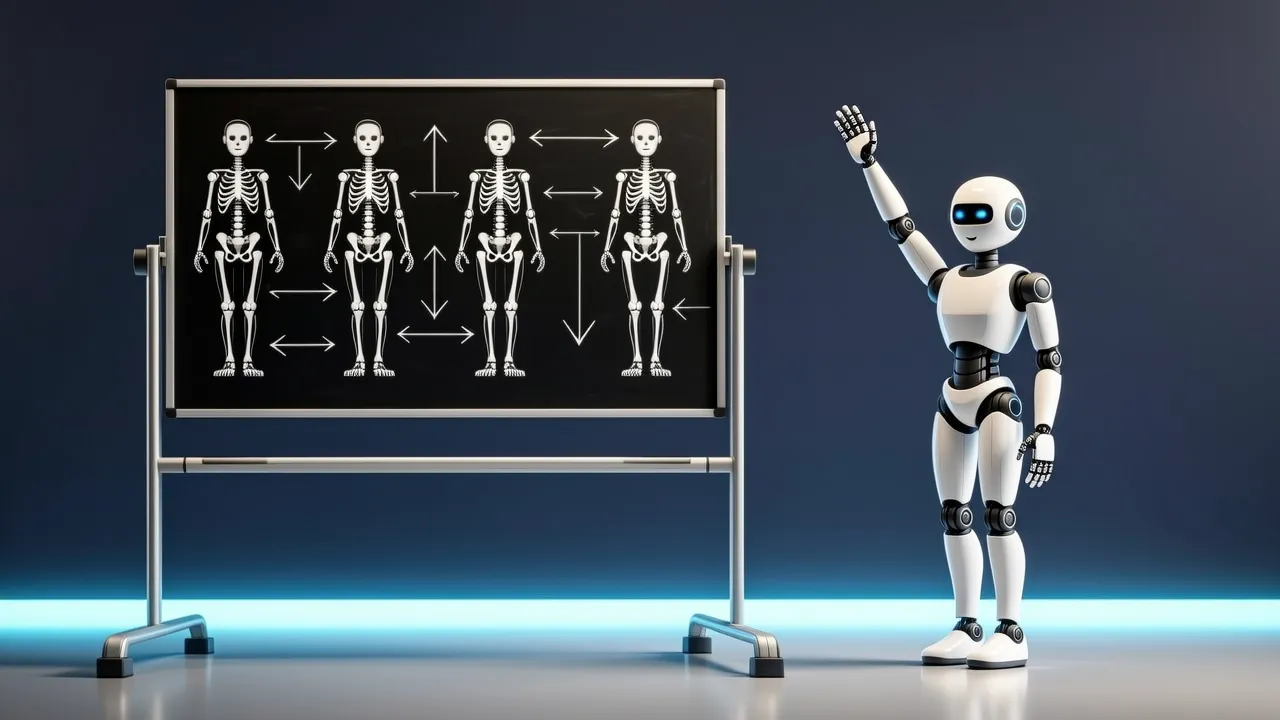
What is being brought together is a particular kind of software. A foundation model (基础模型) is trained on broad data first and then adapted to many tasks, instead of being written for one narrow job. Applied to a robot, the idea is that one model could give a machine a wide repertoire of movement and manipulation skills rather than a fixed script for each task.
What was announced
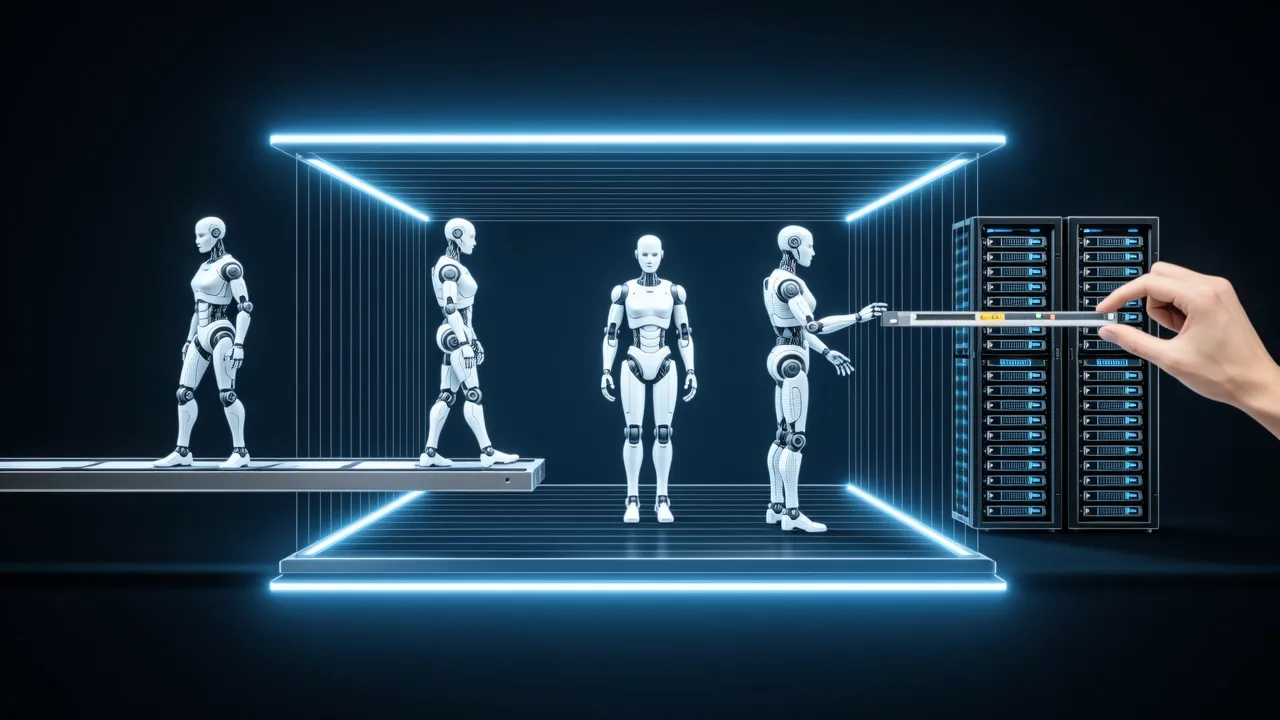
The partnership will use DeepMind's AI foundation models, with Atlas as the first test case[1]. Carolina Parada, DeepMind's senior director of robotics, said the aim is to develop the world's most advanced robot foundation model[1]. In other words, the humanoid is the place where the models will be tried out, not the only machine involved.
The hardware side
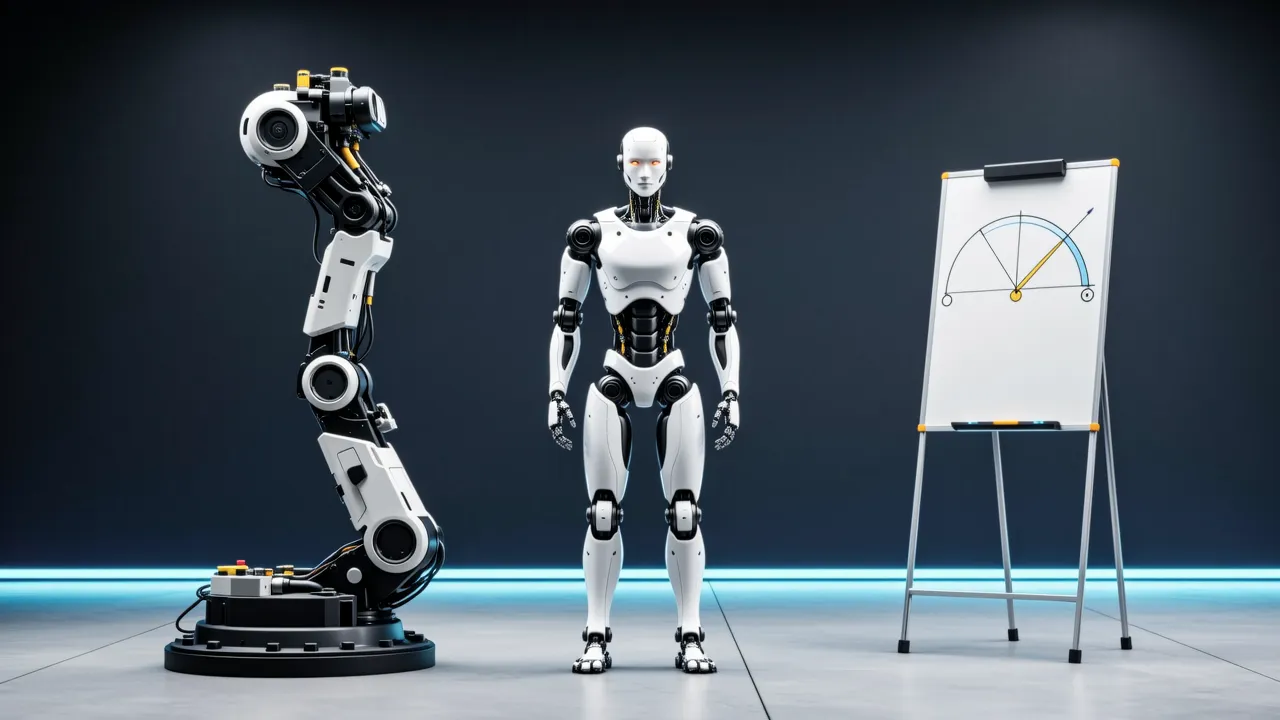
Boston Dynamics said Atlas is already in production and is headed to Hyundai's factory in Savannah, Georgia[1]. The Atlas product has 56 degrees of freedom with rotational joints[1]. A degree of freedom is one independent axis along which a joint can move; a machine with more of them can take on more postures and reach more places, at the cost of a harder control problem. Fifty-six is a large number for a humanoid, and it is precisely the kind of machine where learned control rather than hand-tuned programming becomes attractive.
The company's other products give a sense of what is already deployed. Spot is in customers' hands in more than 40 countries[1]. Stretch, the box-handling robot, has unloaded more than 20 million boxes globally since its launch in 2023[1]. Those numbers describe repetitive work already done at scale, in warehouses and at customer sites, rather than demonstrations.
Why it matters
The announcement pairs two different kinds of expertise. Boston Dynamics builds legged and mobile robots and has been selling them commercially; Google DeepMind builds large models and had put out a robotics-specific family of them shortly before[1]. Putting the two together on Atlas, and naming a factory as the destination for the hardware, points at the next step for humanoids: from staged demonstrations toward tasks in real facilities.
It also sets up a concrete test. A robot foundation model has to work on a machine with dozens of joints, in a setting where mistakes cost time and money. Making Atlas the first test case means the claims about general-purpose robot intelligence will be judged against a specific robot, in a specific plant[1]. The warehouse figures for Stretch show that the company's robots already run in production settings[1]; what the DeepMind partnership adds is an attempt to make the control side of the machine general rather than bespoke.
Sources
- 1
Cite this page: Boston Dynamics partners with Google DeepMind on Atlas. TellWorld, https://www.tellworld.net/news/atlas-hyundai-deepmind-2026. Updated 2026-11-08