Background
Many ordinary tasks still end with a phone call to a person: confirming a time, moving an appointment, asking a business whether a slot is free. Automating such calls is harder than it looks. The person on the other end does not follow a script, may interrupt, may ask a question back, and expects an answer within a fraction of a second.
The announcement
On 8 May 2018, at its I/O developer conference, Google unveiled a technology called Google Duplex[2]. The company described it on its AI Blog as a new technology for conducting natural conversations in order to carry out real-world tasks over the phone[1]. Google said the technology was aimed at specific tasks, such as scheduling certain types of appointments, rather than at conversation in general[1].
How it was built
Google described one design decision as the key research insight: Duplex was deliberately constrained to closed domains. Within a narrow task it could hold its side of a call, but it could not carry out general conversations[1].
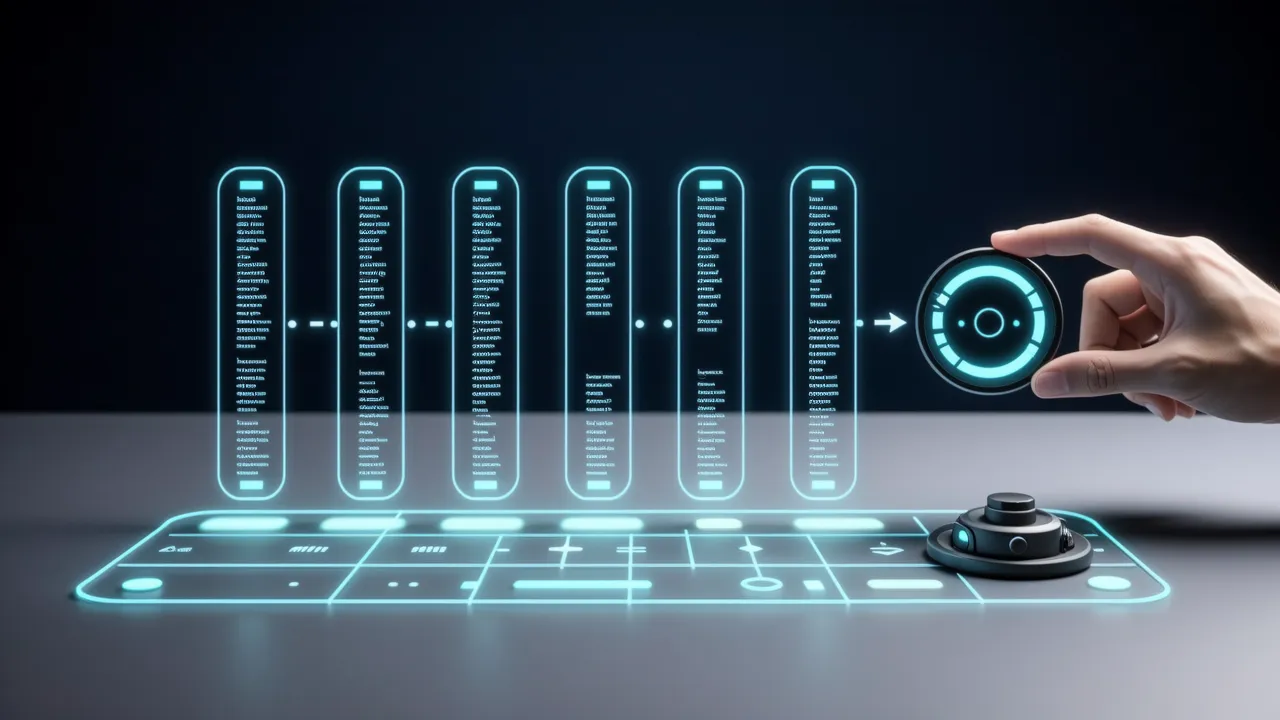
The core of the system was a recurrent neural network, a kind of model that processes a sequence step by step and keeps a running memory of what came before. It was built with TensorFlow Extended and trained on anonymised phone conversation data[1].
For the voice, Google combined two kinds of text-to-speech engine: a concatenative engine, which assembles speech out of recorded fragments of human speech, and a synthesis engine built with Tacotron and WaveNet, which generates the audio from a model instead. The system also inserted speech disfluencies — small filler sounds such as "hmm" and "uh"[1]. Those fillers matter because human speakers produce them constantly; without them a synthetic voice tends to sound unnaturally clean.
The constraint cut both ways. It made the task tractable, and it set a ceiling on what the system could do: anything outside the narrow domain was out of scope[1].
The disclosure question
Google said transparency was a key part of the service, and that it wanted to be clear about the intent of the call so that businesses understood the context[1].
Coverage of the announcement focused on whether that was enough. The Washington Post reported that in the demonstration calls the AI did not say it was a machine, and that the question of whether it should disclose this drew immediate scrutiny[2]. The same report quoted Google engineers saying they would be "experimenting with the right approach over the coming months"[2].
Why it mattered
The announcement put a concrete case in front of the public: a system that sounds enough like a person to get through a phone call, in a setting where the listener has no easy way of telling otherwise. It turned an abstract debate about conversational agents into a practical design question — whether a system should identify itself at the start of a call, and how. Google's own framing, that transparency mattered and that the approach was still being worked out, became the starting point of that discussion[1][2].
Sources
- 1
- 2
Cite this page: Google announces Duplex at I/O 2018. TellWorld, https://www.tellworld.net/news/google-duplex-2018. Updated 2026-11-08