Background
Kinect is a motion-sensing input device that Microsoft produced for the Xbox 360[3]. It is not held in the hands: Microsoft Research describes it as a controller-free interface that lets users interact with the console with a wave of the hand or the sound of the voice[2]. The body-tracking technology inside it did not begin with the product. Work on skeletal tracking started in September 2008, and Microsoft Research credits Jamie Shotton, Andrew Fitzgibbon, Andrew Blake, Toby Sharp and Mat Cook of Microsoft Research Cambridge with that work[2].
The launch
Kinect was first released in 2010[3]. The rollout was staggered by region rather than happening on a single day: North America on 4 November 2010, Europe on 10 November 2010, and Japan on 20 November 2010[3].
How it senses a body
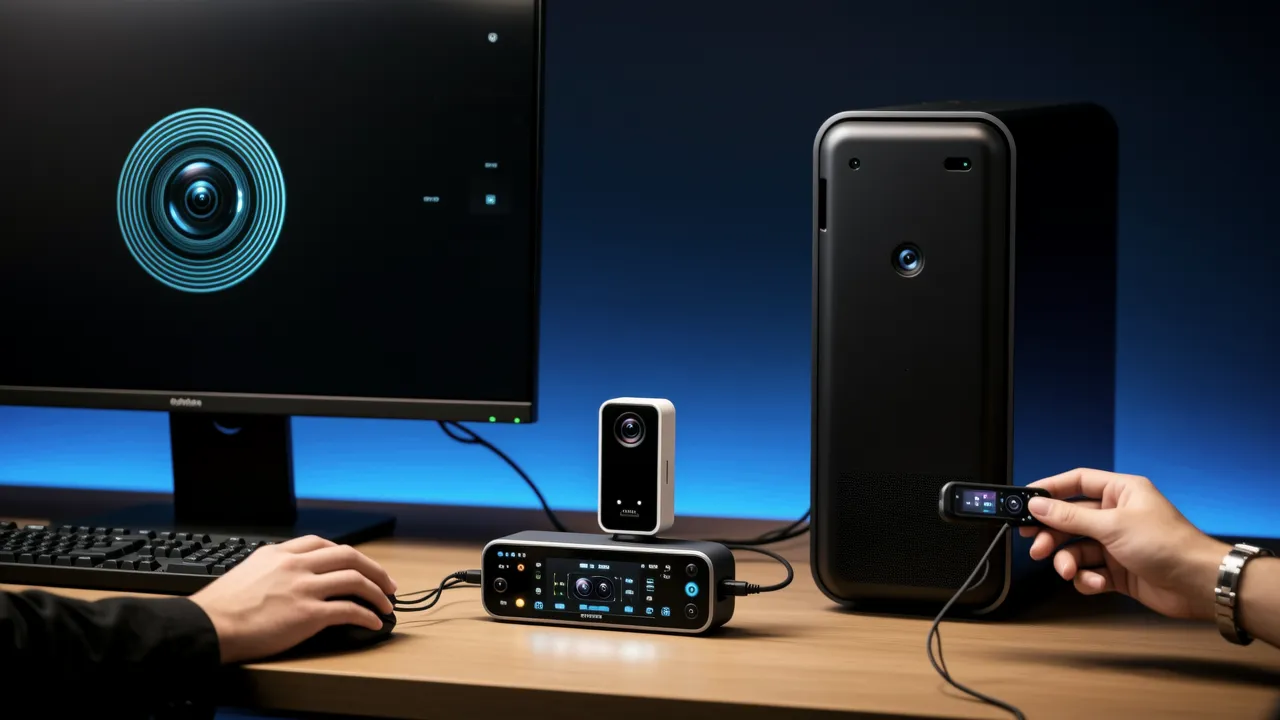
The devices contain RGB cameras together with infrared projectors and detectors, and they map depth through structured light or time of flight[3]. Both methods solve the same problem — working out how far away each part of the scene is — but they do it differently. Structured light means projecting a known infrared pattern onto the room and watching how the pattern bends and shifts across surfaces; the distortion carries distance information. Time of flight means timing how long a pulse of light takes to travel out to an object and back. Either way, the result is a depth map: a grid in which every pixel carries a distance instead of only a colour. From that depth data the system performs real-time gesture recognition and skeletal detection, estimating where a person's joints are and how they move[3]. That is what lets a player control a game without touching anything.
First weeks on sale
Microsoft says that within its first 60 days Kinect sold more than 8 million sensors, a figure it describes as a Guinness World Record for the fastest-selling consumer electronics device[1]. Microsoft Research gives the same number, stating that Kinect sold 8 million units in its first 60 days on the market[2]. A launch figure of that size reflects both the size of the Xbox 360 installed base the device attached to and the appeal of an input method that needed no controller at all.
Lifespan and significance
Kinect's commercial life was finite. Wikipedia lists 35 million units sold as of 25 October 2017, and gives the product a lifespan of 2010 to 2017[3]. Over that period the body-tracking research behind the device became one of the better-known pieces of work to come out of Microsoft Research Cambridge, and Microsoft Research has highlighted the skeletal-tracking effort and the team named above in that connection[2].
The device's place in the history of computing rests on what it made ordinary: a consumer product that read the shape and movement of a human body in real time, in a living room, using cameras and infrared depth sensing rather than a controller[3].
Sources
- 1Feeling the Kinect EffectMicrosoft
- 2Kinect Body Tracking Reaps RenownMicrosoft Research
- 3KinectWikipedia
Cite this page: Microsoft launches Kinect. TellWorld, https://www.tellworld.net/news/kinect-2010. Updated 2026-11-07