What was released
On 10 December 2025 the company Upstage published Solar Open 100B.[1] At that point it was Upstage's flagship model, with 102.6 billion parameters in total.[1] Only 12 billion of those parameters are active for each token the model processes, and the model card presents that sparse activation as the point of the design rather than a detail of the implementation.[1]
A sparse mixture of experts
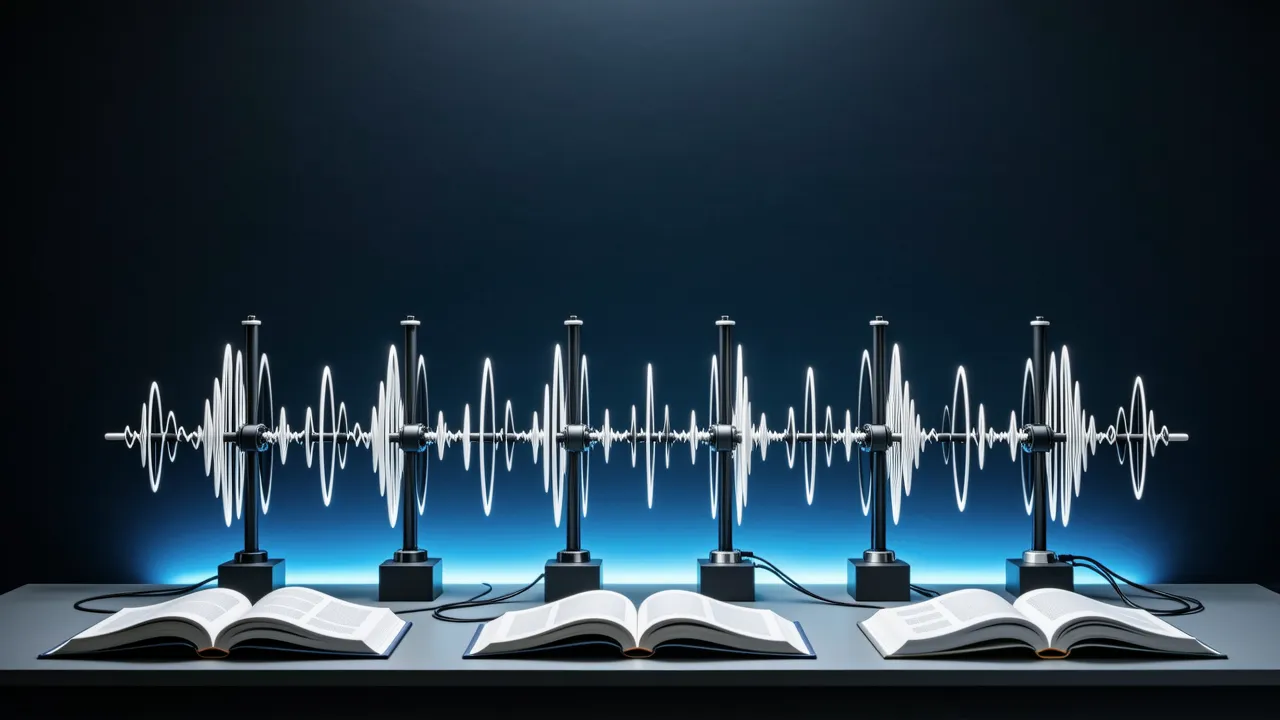
Numbers like these are easiest to read through the mixture-of-experts (MoE) idea. A dense model runs every parameter for every token. A sparse model keeps a large pool of parameters and routes each token through a small part of it, usually chosen by a small routing network. The total count describes how much the model can store; the active count describes what each token costs to compute. Solar Open 100B is designed so that the second number is a small fraction of the first.[1] The trade shows up most clearly when serving: memory usually still has to hold all the parameters, while the arithmetic per step is closer to that of a much smaller model.
Training and intended use
Training used 19.7 trillion tokens and NVIDIA B200 hardware.[1] Upstage said the model targets reasoning, instruction following and agentic use.[1] The last of these is the widest: agentic use means the model works inside a loop — calling tools, reading results, deciding the next step — instead of answering one question and stopping. Reasoning and instruction following are the groundwork for that: multi-step problems on one side, following specific requirements rather than giving a general answer on the other.
The technical report
The technical report came about a month later, on 11 January 2026.[2] It frames the work around a goal that the launch material does not lead with: building competitive models for languages that existing releases serve poorly.[2] It also reports 4.5 trillion synthetic tokens in the training data.[2] Synthetic data is training text produced by models rather than collected from people, and it is used to cover domains and languages where natural text is scarce.
Licence
The weights are released under the Upstage Solar License, which is not an open-source licence.[1] The difference is worth stating plainly. Open weights means the trained parameters can be downloaded and run; the licence attached to them is written by the publisher and can carry conditions that an open-source licence, by definition, does not — who may use the model, whether commercial use is allowed, what has to travel with a redistribution. Solar Open 100B is therefore open-weight but not open-source.[1]
Where it sits
Two things stand out. The first is the ratio between total and active parameters: it is the trade that lets a model of this size be served at something closer to the cost of a much smaller one, which is why the model card leads with it.[1] The second is the language motivation in the report, which places the model in a line of work aimed at languages that large frontier releases treat as an afterthought.[2] The choice of a custom licence rather than an open-source one sets the terms on which others can build on it.[1]
Sources
- 1Solar-Open-100B model cardHugging Face
- 2
Cite this page: Upstage open-weights its 102B mixture-of-experts model. TellWorld, https://www.tellworld.net/news/solar-open-100b-2025. Updated 2026-11-07