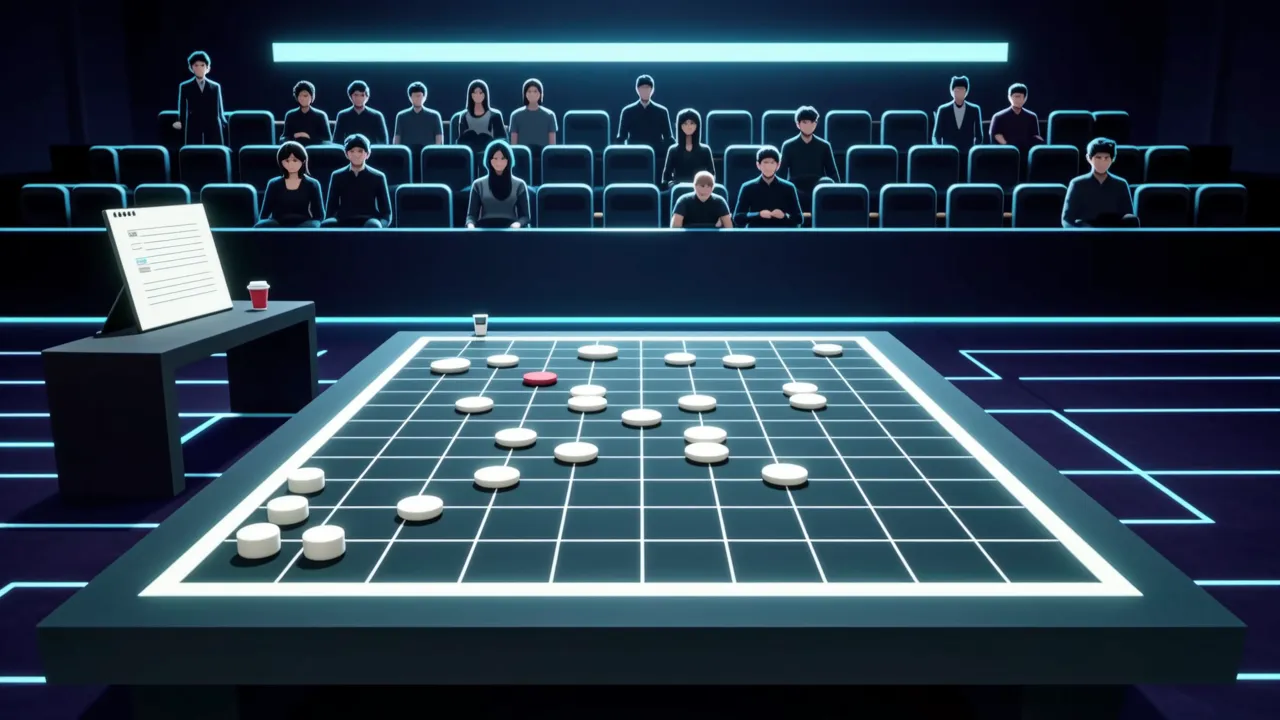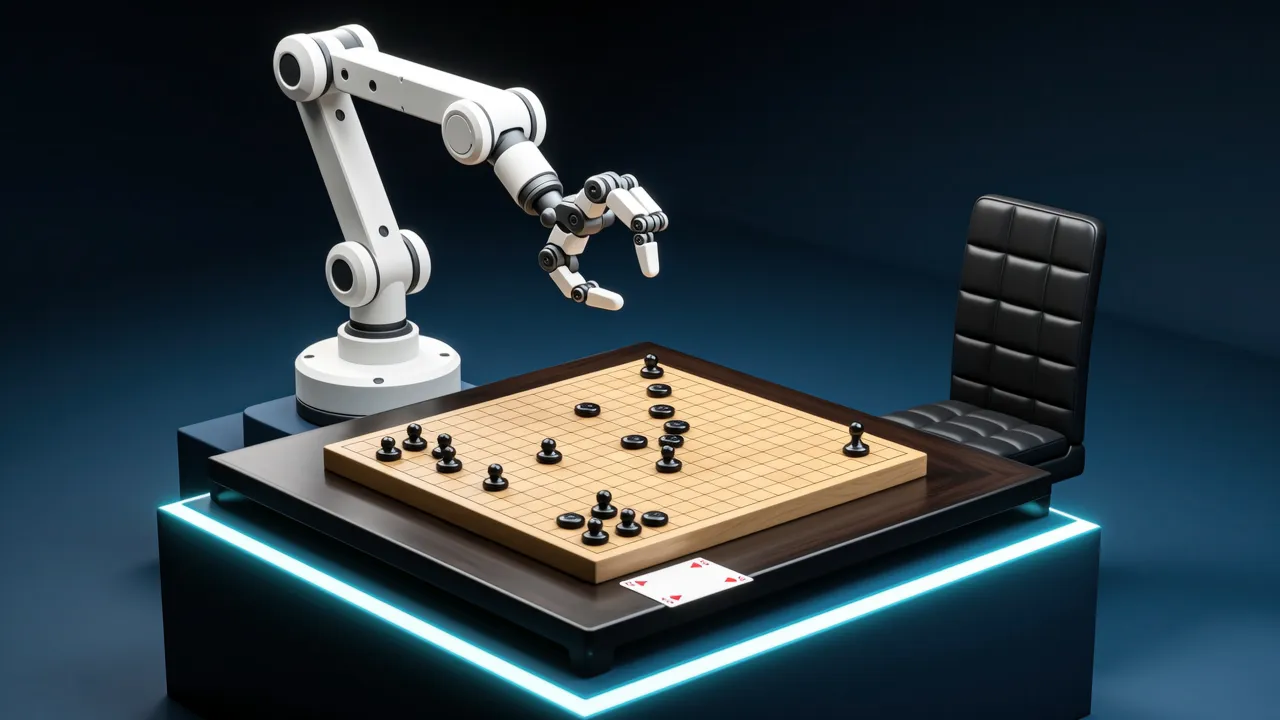
AlphaGo beats Ke Jie 3–0 and retires
In May 2017 AlphaGo beat Ke Jie, then the world's top-ranked Go player, in all three games of a match at the Future of Go Summit in Wuzhen, China. DeepMind retired the program from competition afterwards.
Total 10 · Clear filters
In May 2017 AlphaGo beat Ke Jie, then the world's top-ranked Go player, in all three games of a match at the Future of Go Summit in Wuzhen, China. DeepMind retired the program from competition afterwards.
In March 2016 DeepMind's AlphaGo beat Lee Sedol, an 18-time world champion Go player, 4–1 in a five-game match in Seoul, a result watched by more than 200 million people worldwide.
In February 2011 IBM's Watson beat Jeopardy! champions Brad Rutter and Ken Jennings in two televised matches, winning USD 77,147 for charity — a public test of machine question-answering, and IBM's chosen successor to its 1997 chess victory.
In 2011 ACM gave Judea Pearl the A.M. Turing Award for a calculus of probabilistic and causal reasoning, work that began with his invention of Bayesian networks and later produced the do-calculus for causal inference.
In 1988 the Kyoto Prize in Advanced Technology went to John McCarthy, honoured for founding artificial intelligence and for inventing LISP, the programming language built for symbol manipulation rather than numerical calculation.
In 1975 the ACM gave its A.M. Turing Award jointly to Allen Newell and Herbert A. Simon, citing two decades of work that helped establish artificial intelligence, the psychology of human cognition and list processing.
In 1971 the ACM gave John McCarthy the A.M. Turing Award, honouring the researcher who named artificial intelligence, co-founded MIT's AI Project and created the LISP language.
In 1969 the ACM named Marvin Minsky a Turing Award laureate for his central role in creating and shaping artificial intelligence. He had co-founded MIT's AI laboratory and written an early paper that put symbol manipulation at the centre of the field.
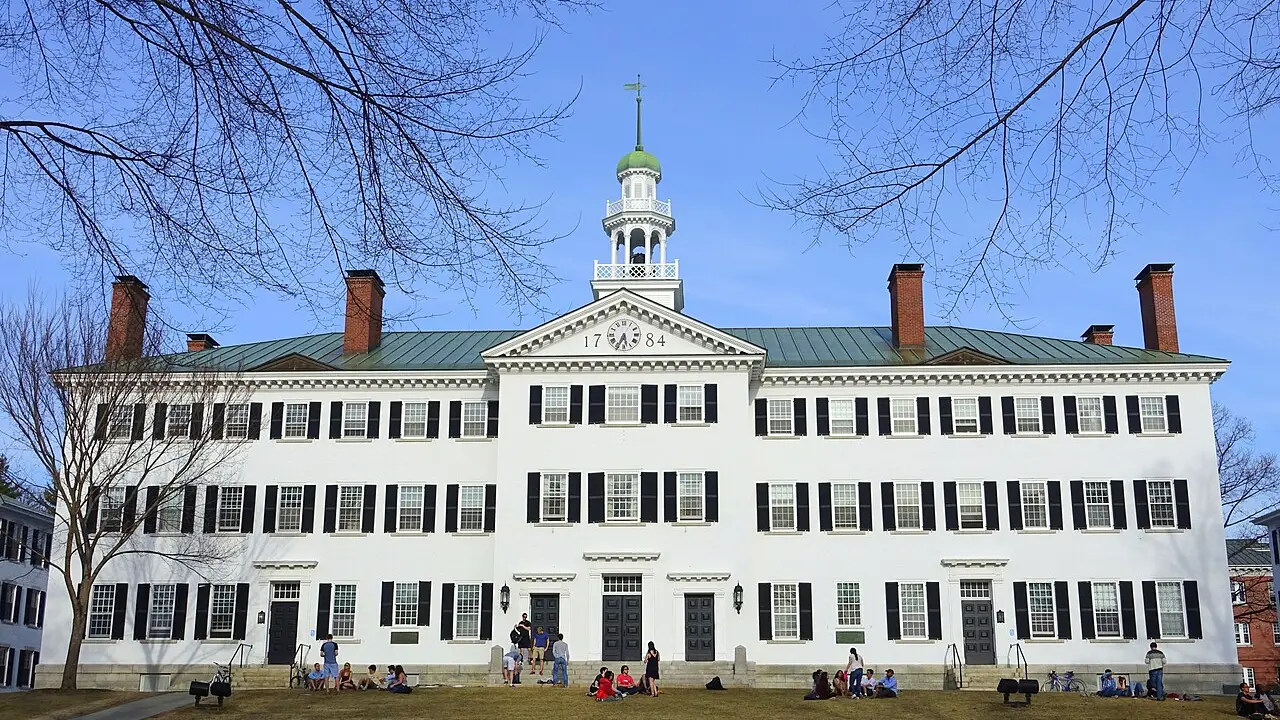
In the summer of 1956 a small group of researchers gathered at Dartmouth College for the Dartmouth Summer Research Project on Artificial Intelligence, widely regarded as the founding event of AI as a research field.
In August 1955 four researchers proposed a summer study at Dartmouth College on making machines simulate learning and other features of intelligence. The document is credited with introducing the term "artificial intelligence."