Background
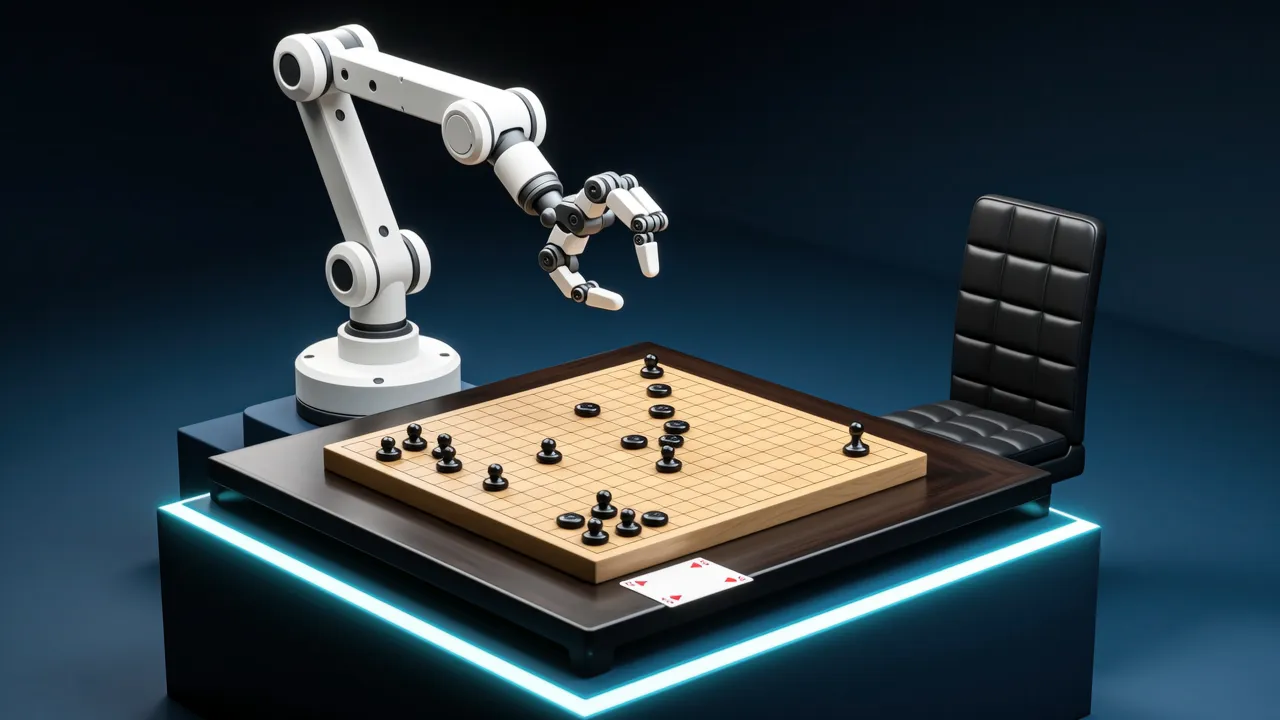
AlphaGo arrived in Wuzhen with a long winning run behind it. Months before the summit, a version known as AlphaGo Master played a series of online games against top players and compiled a 60–0 record between 29 December 2016 and 5 January 2017 [1].
Its opponent was Ke Jie, described by China Daily as the world's top-ranked player at the time of the match [2]. Go had long been treated as one of the last board games in which humans could hold their own against machines. The number of legal positions on a Go board is enormous, and strong play rests on long-range judgment that is difficult to write down as a set of rules. A match against the highest-ranked human player was therefore the clearest test available.
The match
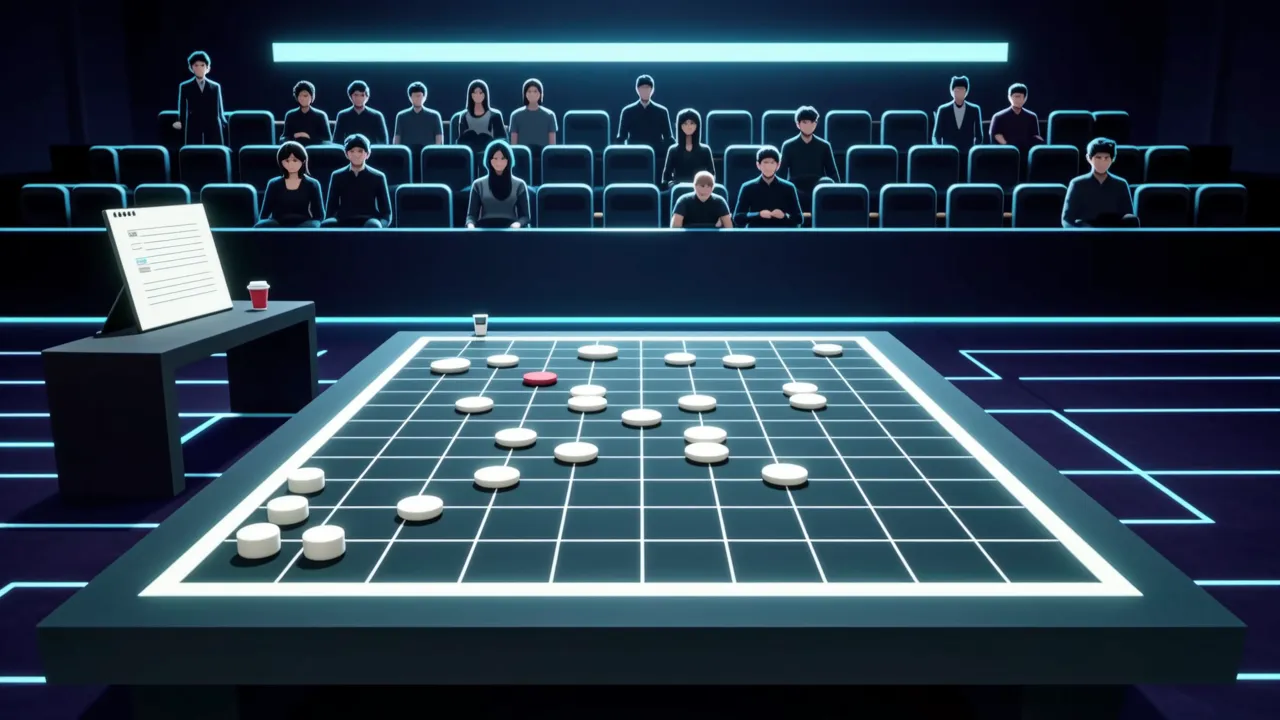
The setting was the Future of Go Summit in Wuzhen, China, in May 2017. The centrepiece was a three-game match between AlphaGo and Ke Jie, and AlphaGo won all three games [1][2]. Spreading the contest over three games meant the outcome rested on repeated play rather than on a single mistake or a single unusual opening.
Beyond the three games
AlphaGo did not only play alone at the summit. It also faced a team of five human players who worked on the same side, discussing and choosing moves together [1]. The format tested the program against collective human judgment rather than against one opponent.
The Chinese Weiqi Association awarded AlphaGo a professional 9-dan rank [1]. Professional dan ranks in Go are normally the product of tournament results accumulated over years; conferring the top rank on a program showed how the game's own institutions assessed its strength.
Retirement
After the Ke Jie match, DeepMind retired AlphaGo from competition [1][2]. Demis Hassabis, the founder of DeepMind, said the Ke Jie match would be the last game for AlphaGo [2]. A program built to test how far learning systems could go in Go would no longer appear in matches against human players.
Why it matters
What the summit produced was a clean, public result. The three wins over the top-ranked player, the team game, the 60–0 online record of the preceding weeks and the 9-dan rank together settled a question that had been open for years: whether a machine could play Go at the highest level. The answer was recorded in a form that was easy to check — game results and an official rank — rather than in a laboratory claim.
The retirement gives the event a second meaning. AlphaGo was not kept on as a playing machine to defend a record; the research effort behind it moved on. For people outside the field, the match against Ke Jie is the moment the question of machine Go was closed, and it is remembered less for any single move than for the fact that the series ended 3–0 and the program then stepped away from the board.
Sources
- 1AlphaGoWikipedia
- 2
Cite this page: AlphaGo beats Ke Jie 3–0 and retires. TellWorld, https://www.tellworld.net/news/alphago-ke-jie-2017. Updated 2026-11-08