Alibaba releases the Qwen1.5 open model family
On 4 and 5 February 2024 Alibaba released the Qwen1.5 open model family, with base and chat models from 0.5B to 72B parameters and a 32K context window across the lineup.
Total 83 · Clear filters
On 4 and 5 February 2024 Alibaba released the Qwen1.5 open model family, with base and chat models from 0.5B to 72B parameters and a 32K context window across the lineup.
On 6 November 2023 OpenAI held its first developer conference, DevDay, announcing GPT-4 Turbo with a 128K context window, custom GPTs built with a GPT Builder, and lower prices across its platform.
On 24 August 2023 Hugging Face raised a $235 million Series D led by Salesforce Ventures, valuing the open-model hub at $4.5 billion, more than double its 2022 valuation, with chipmakers and cloud providers among the investors.
On 24 August 2023 Meta released Code Llama, a family of code models built by further training Llama 2 on code. It came in 7B, 13B and 34B sizes, under the same community licence as Llama 2, and a 70B version followed in January 2024.
On 4 May 2023 the BigCode project, led by Hugging Face and ServiceNow, released StarCoder and StarCoderBase, two openly licensed code models of about 15.5 billion parameters trained on permissively licensed GitHub data.
On 9 March 2023 AI21 Labs announced Jurassic-2 and a set of Task-Specific APIs. The models came in three sizes and were free to use until 1 May 2023.
On 1 March 2023 OpenAI released gpt-3.5-turbo, the model behind ChatGPT, as an API priced at $0.002 per 1,000 tokens, and opened a Whisper speech API the same day.
On 28 November 2022 OpenAI released text-davinci-003 in its GPT-3.5 series; two days later came ChatGPT, fine-tuned from a model in the same series and free during its research preview.
On 12 September 2022 Meta announced that PyTorch would move to the Linux Foundation as the PyTorch Foundation, with a governing board that included AMD, AWS, Google Cloud, Microsoft Azure and NVIDIA. PyTorch stayed under the BSD-3-Clause licence.
On 21 June 2022 GitHub made Copilot generally available to individual developers at 10 US dollars a month, after a preview that drew more than 1.2 million developers. It marked the arrival of an AI coding assistant inside mainstream editors.
On 9 May 2022 Hugging Face announced a $100 million Series C round led by Lux Capital, valuing the company at $2 billion; the round was framed as building the GitHub of machine learning.
On 21 December 2021 Hugging Face acquired Gradio, a Python library for building web demos of machine-learning models that Abubakar Abid had started in 2019 and that had been used to build more than 300,000 demos.
On 10 August 2021 OpenAI released an improved Codex, a GPT model fine-tuned on public code, through its API in private beta. The model powered GitHub Copilot and came with the new HumanEval benchmark.
In August 2021 AI21 Labs launched AI21 Studio and its Jurassic-1 language models. The largest, Jumbo, had 178 billion parameters, and developers could use the models through an API or a web playground.
On 29 June 2021 GitHub announced GitHub Copilot as a technical preview, an AI pair programmer that suggests lines and whole functions as developers write code. It was powered by OpenAI Codex.
In June 2020 OpenAI announced an API that let outside developers access its AI models. By March 2021 more than 300 applications were using GPT-3 through it.
PyTorch was publicly released in January 2017 as a beta, with first-class Python integration and an imperative style. Built by people from the Lua Torch community with Facebook's backing, it later became a widely used deep-learning framework.
On 9 November 2015 Google released TensorFlow, its second-generation machine learning system, as open source under the Apache 2.0 licence, letting people outside Google build and train models with the same system Google used in its own products.
On 16 June 2011 Microsoft released a free beta of the Kinect for Windows SDK from Microsoft Research, giving developers depth, skeletal-tracking and microphone-array data on Windows 7.
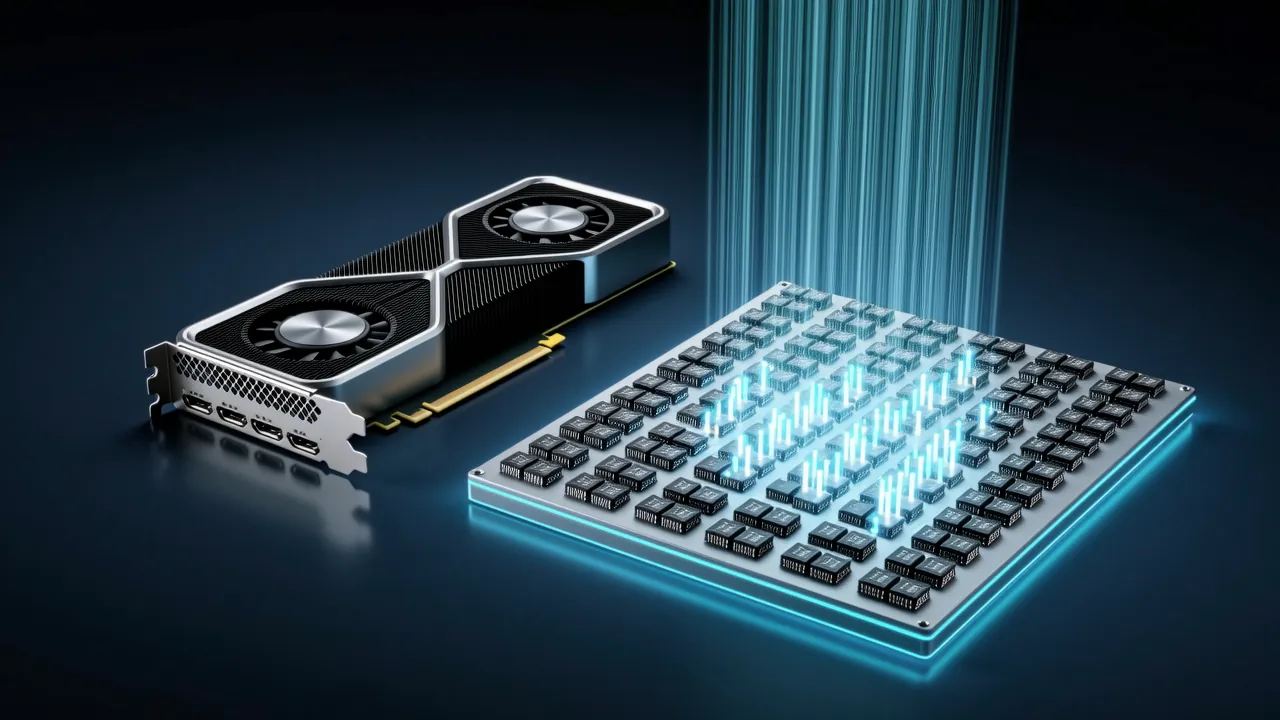
CUDA is NVIDIA's software platform for running general-purpose programs on GPU cores. CUDA Toolkit 1.0 shipped in June 2007, turning graphics chips into parallel processors for science and later for deep learning.