
Background
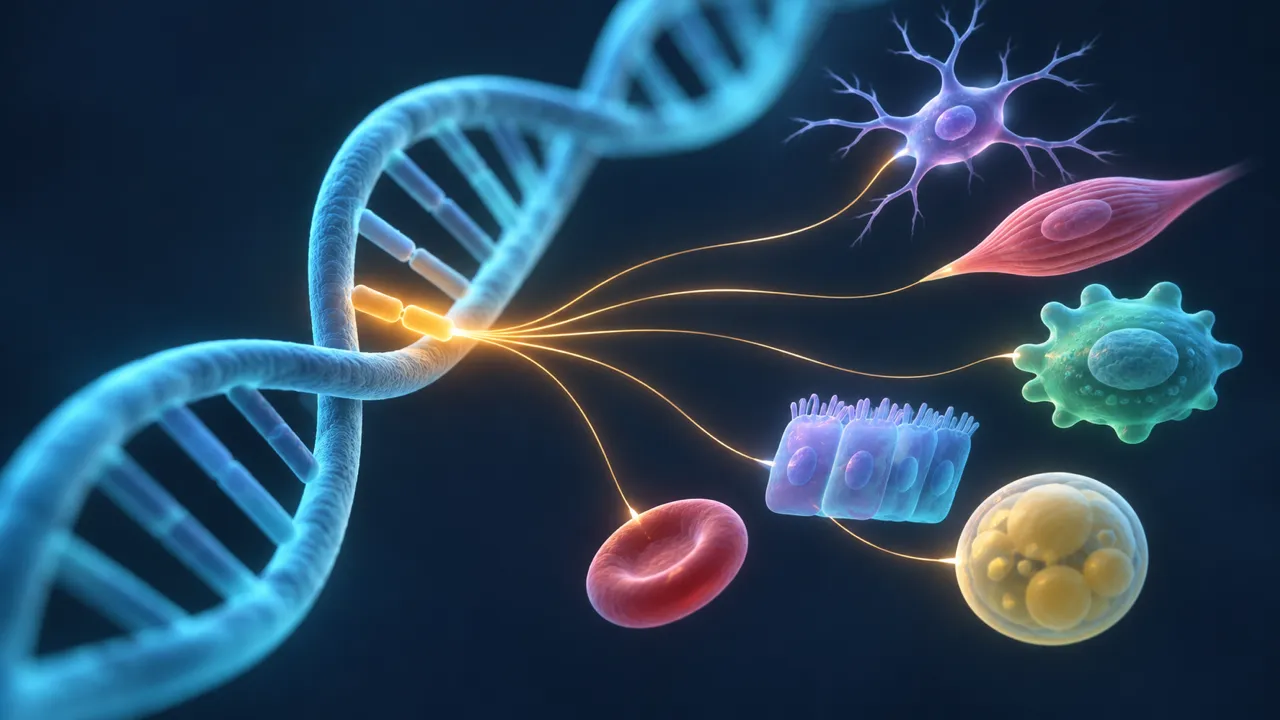
A DNA change can affect cells differently depending on which tissue or cell type it occurs in. The AlphaGenome line is aimed at understanding how cells read DNA, and predicting these effects is central to that goal.[1]
What happened
On November 11, 2026, Google DeepMind published AlphaGenome 2. The model predicts how DNA changes affect one tissue, cell type or state at a time.[1]
Alongside the model, the AlphaGenome Atlas covers all 9 billion possible single-letter changes in the human genome.[1]
Key details
Precomputed predictions cover trait-associated variants across hundreds of human cell and tissue conditions, so results for those variants already exist.[1] For new single-cell experiments, the model can work from just a few dozen cells.[1]
Access for non-commercial research is available through the API. Commercial research access is in private preview.[1]
A form for showcasing use cases closes on November 30. Selected projects may receive extra quota and credits.[1]
Impact
The release gives researchers both a full atlas of possible changes and precomputed predictions for trait-associated variants. The showcase form invites them to submit their projects, and the chosen ones may receive extra quota and credits. Access for now stays with non-commercial research, with commercial use still in private preview.[1]
Sources
- 1
Cite this page: Google DeepMind unveils AlphaGenome 2 for cell-type-specific DNA variant effects. TellWorld, https://www.tellworld.net/news/alphagenome-2-2026. Updated 2026-11-15