Background
Apple's foundation models are the large language models that power Apple Intelligence. A language model is trained on large amounts of text so that it can read and write language. A foundation model is a general version that many features can share. Apple presents its software plans each year at WWDC, the Worldwide Developers Conference, and in 2026 the company used the event to introduce its third generation of these models together with a new assistant.
What happened
On 8 June 2026, at WWDC, Apple introduced its third-generation foundation models, AFM 3. The family has two on-device models and three cloud models [1]. The same day Apple announced Siri AI, an assistant with a more personal character. It draws on personal context across messages, email and photos, is aware of what is on the screen, gives answers drawn from the web, and comes with a dedicated Siri app [2].
Personal context means information from a person's own data, which lets an assistant answer a question in light of their messages or photos. Onscreen awareness means the assistant can take into account whatever is currently displayed. Both features depend on the assistant having access to that data.
Key details
Developer testing began on 8 June 2026 for iOS 27, iPadOS 27, macOS 27 and visionOS 27. A public beta in English is due later in the year [2]. A beta is a test release made before the final version, so that developers and some users can try the features and report problems.
Availability differed by region. In the EU, Siri AI first launched on Mac and Vision Pro only. In China it was not available, pending regulatory approval [2]. The gap between the announcement and the availability of the feature shows that the timing of AI launches depends on rules in each market as well as on the software itself.
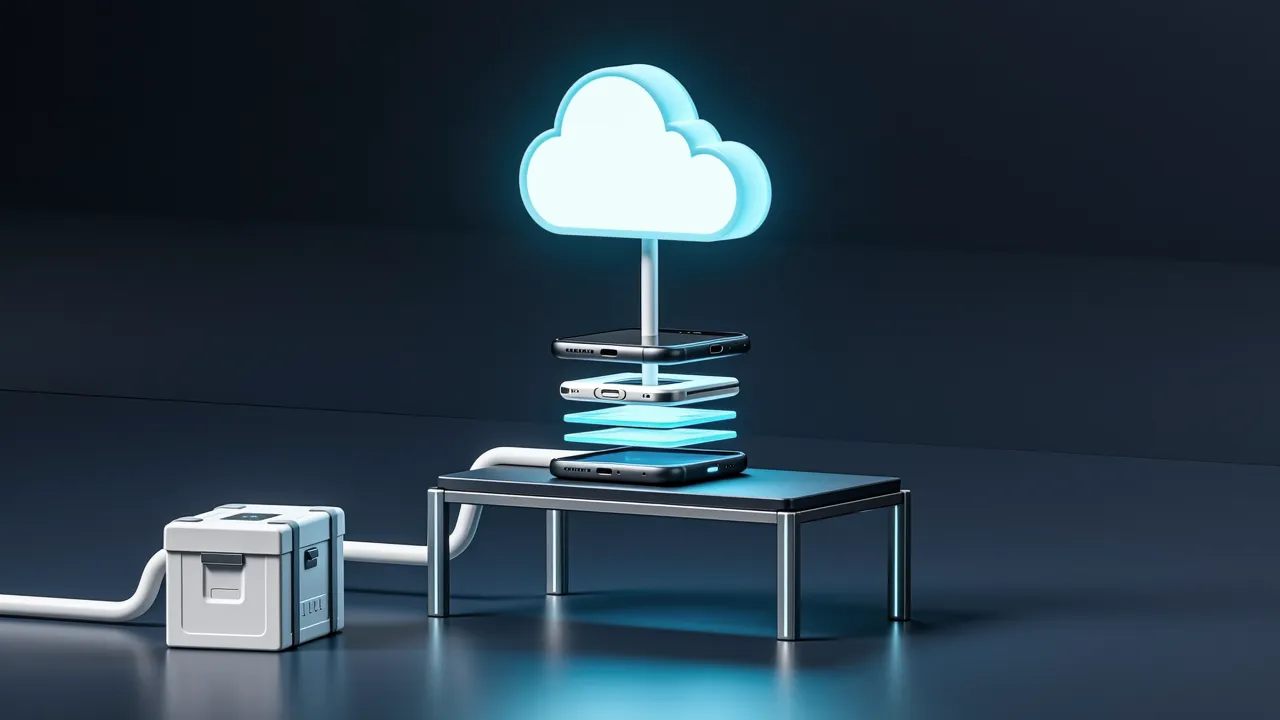
The server side of the family includes AFM 3 Cloud Pro, which runs on NVIDIA GPUs in Google Cloud under an expanded Private Cloud Compute [1]. Private Cloud Compute is Apple's system of servers for requests too heavy for a device. The expansion means that part of Apple's server side now runs on NVIDIA GPUs in Google Cloud. A GPU, or graphics processing unit, is the chip type most AI systems use to run models.
On the question of Google's role, Craig Federighi said the new Siri contains none of Google's Gemini models or infrastructure [3]. This is a statement about the Siri product. Readers who want the background on the partnership between the two companies can read the separate entry on the Apple and Google agreement.
Impact
For users, the most visible change is Siri. An assistant that draws on personal context across messages, email and photos, and that can see what is on the screen, works differently from a voice assistant that responds only to single commands. The dedicated Siri app gives it its own place on the device, apart from the rest of the system.
For developers, the announcement set the timetable for iOS 27 and the other system releases, and the beta phase has begun. For readers, the event shows the kind of decision that now sits behind an AI launch: a company must decide where its models run, which partners supply the infrastructure, and in which markets a feature can be offered.
Sources
- 1Introducing the Third Generation of Apple's Foundation ModelsApple Machine Learning Research
- 2
- 3
Cite this page: Apple introduces AFM 3 and Siri AI at WWDC 2026. TellWorld, https://www.tellworld.net/news/apple-foundation-models-3-2026. Updated 2026-11-08