Background
Siri did not begin as a feature on a phone. Wikipedia describes it as a spin-off from a project developed at the SRI International Artificial Intelligence Center, and SRI itself says Siri was born at SRI International[1][3]. The research behind it was shaped by a DARPA program: in 2003 SRI was awarded $22 million to develop a personalized cognitive assistant under the PAL program, and the project was named CALO[1]. According to SRI, CALO was a five-year collaborative effort that began in 2003 and involved more than 300 researchers from 22 research institutions[2].
That origin is worth spelling out. CALO was not a small team's prototype but a large, long-running collaboration whose goal was an assistant that could understand what a person wanted and handle tasks on their behalf. The assistant that eventually answered questions on a consumer handset grew out of this kind of publicly funded, multi-institution research rather than out of a single company's product lab.
What happened
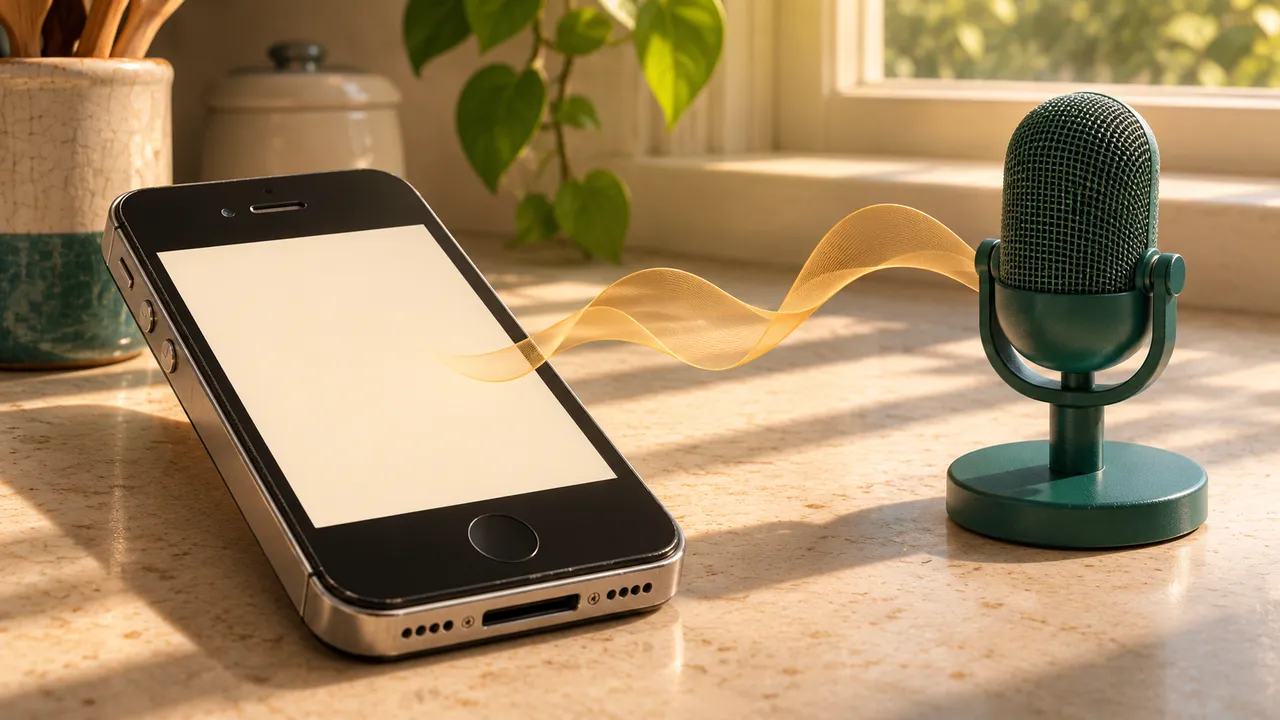
SRI spun off a company dedicated to developing Siri, named Siri, Inc., and Apple acquired Siri in 2010[1]. Before that acquisition, Siri had been released as an iOS app; once Apple bought the company, the separate app was removed from the App Store and the assistant was integrated into the iPhone 4S instead[3]. An integrated version of the digital assistant appeared in the iPhone 4S in 2011, and Wikipedia dates the release alongside the phone to 14 October 2011[1][3]. Siri is an intelligent assistant and chatbot that Apple purchased, developed and popularized[3].
Two handovers are visible here: a research organization passing its work to a spin-off company, and that company being bought by a large platform maker, after which the product stopped being a standalone download and became part of the system.
Key details
Two design choices define how the first Siri worked. Its speech recognition engine was provided by Nuance Communications, so the phone could take spoken input rather than only typed commands[3]. On top of that, Siri uses a natural-language user interface to answer questions and to delegate requests to Internet services — the user asks in ordinary language, and the system passes parts of the job to online services instead of demanding a fixed set of keywords[3].
Separating understanding the request from handing the work off is what makes an assistant feel conversational while much of the actual work is done elsewhere. The assistant does not have to know the answer itself; it has to know where to send the question.
Why it matters
Putting Siri inside the iPhone 4S, rather than leaving it as a separate download, changed how people met it: there was nothing to install, and the assistant sat inside the phone's software[3]. Removing the standalone app from the App Store underlined the same shift — the assistant was now a feature of a device, not a product of its own[3].
Read as a chain, the story runs from an SRI research project, through the spin-off Siri, Inc., to Apple and the iPhone 4S[1][3]. It is a compact example of how artificial-intelligence research travels from funded laboratories into everyday products, and of what changes when an assistant is built into the device people already carry.
Sources
- 175 Years of Innovation: SiriSRI International
- 275 Years of Innovation: CALOSRI International
- 3SiriWikipedia
Cite this page: Siri launches on the iPhone 4S. TellWorld, https://www.tellworld.net/news/siri-iphone-4s-2011. Updated 2026-11-07